Cello Fundamentals Flashcards
Cello Anatomy
The Cello's Anatomy
Before you can make music, it helps to know your instrument inside and out. The cello might seem like one big piece of wood, but it’s actually a carefully assembled collection of parts, each with a specific job. Let's start with the main part: the body.
The hollow body of the cello acts like an amplifier. It’s constructed from three main sections: the top plate (or belly), the back plate, and the ribs that form the sides. The top and back plates are carved from solid wood and are slightly arched. This shape isn't just for looks; it helps the instrument resonate and project sound.
Cut into the top plate are two distinctive f-holes. They allow the air inside the cello to vibrate and escape, which is crucial for producing the instrument's rich, warm tone. The widest parts of the body are called the upper and lower bouts, while the indented section in the middle is the c-bout.
Neck, Strings, and Fittings
Extending from the body is the neck, which ends in the pegbox and the decorative scroll. The front of the neck is covered by the fingerboard, a smooth piece of hardwood (usually ebony) where you’ll press the strings to change notes. At the top of the fingerboard, just before the pegbox, is a small grooved piece called the nut, which holds the strings in place.
The four strings are anchored at the bottom to the tailpiece. From there, they stretch over a carved piece of wood called the bridge and run up the length of the fingerboard. The bridge is not glued down; it’s held in place by the tension of the strings. Its job is to transfer the strings’ vibrations to the cello's body.
The strings themselves are typically made of a core material wrapped in metal windings. The four strings are tuned in perfect fifths. From thickest to thinnest, they are C, G, D, and A.
The tailpiece often has small metal knobs called fine tuners, which allow for precise, small adjustments to a string’s pitch. Finally, the endpin is the metal rod that extends from the bottom of the cello. It’s adjustable, allowing you to set the cello’s height so it rests comfortably against your body.
The Bow
The bow is just as important as the cello itself. It’s not just a stick with some hair on it. A modern cello bow consists of a carefully shaped stick, usually made of Pernambuco wood, that has a natural curve.
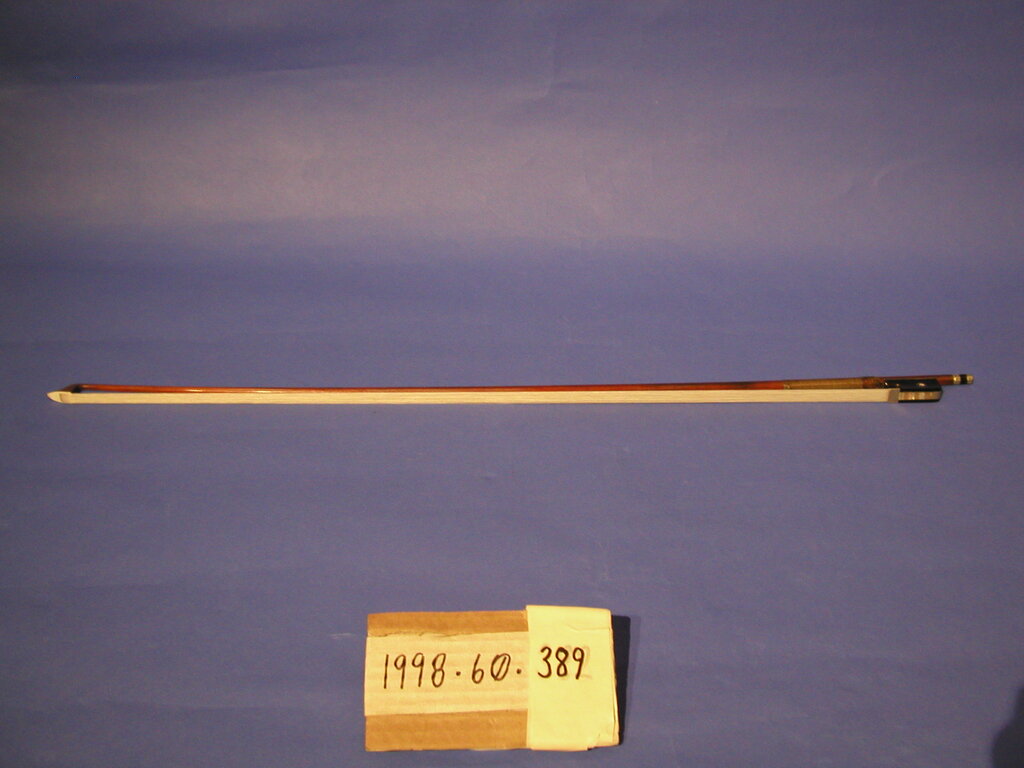
At one end is the tip, and at the other is the frog. The frog is the part you hold, and it contains a mechanism for tightening and loosening the bow hair. The hair itself is usually horsehair. Tiny, microscopic scales on the surface of the hair grip the strings when rosin is applied, causing them to vibrate and produce sound. The tension of the hair is adjusted with the screw at the end of the bow.
Developing proper right-hand, right-arm, and finger coordination is absolutely essential for achieving a masterful cello bow hold that produces rich, expressive sound.
Now that you're familiar with the parts of the cello and bow, let's test your knowledge.
What is the primary function of the f-holes on a cello's body?
What holds the cello's bridge in place on the top plate?
Understanding your instrument is the first step on a long and rewarding journey. Knowing what each part does will help you appreciate the incredible craftsmanship that goes into making a cello.