Cell Membrane Structure and Function
Phospholipid Bilayer
The Cell's Smart Barrier
Every living cell is wrapped in a thin, flexible layer called the cell membrane. This isn't just a simple bag; it's a dynamic, intelligent barrier that controls everything that enters and leaves the cell. The core structure that makes this possible is the phospholipid bilayer.
The main building blocks are molecules called phospholipids. Each phospholipid has a unique two-part personality. One part is its "head," which is hydrophilic, meaning it loves water. The other part is its two "tails," which are hydrophobic, meaning they fear water. This dual nature is called being amphipathic.
Amphipathic
adjective
A molecule that has both a hydrophilic (water-attracting) and a hydrophobic (water-repelling) part.
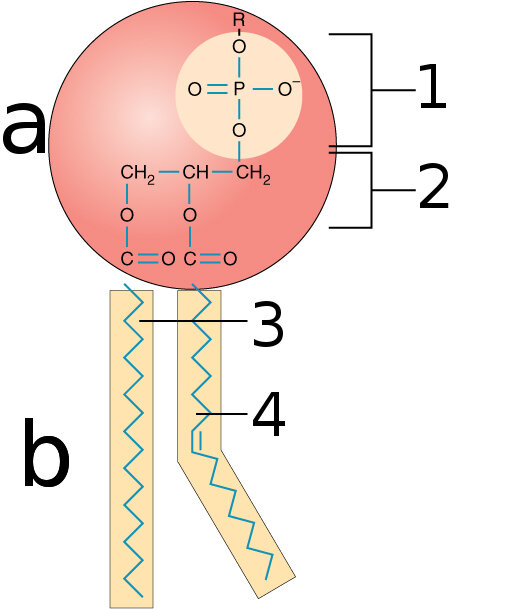
Since the inside and outside of a cell are watery environments, these amphipathic phospholipids do something clever. They spontaneously arrange themselves into a double layer, or bilayer. The water-loving heads face outwards, toward the water on both sides. The water-fearing tails tuck inward, facing each other and hiding from the water. This structure forms a stable, yet flexible, barrier.
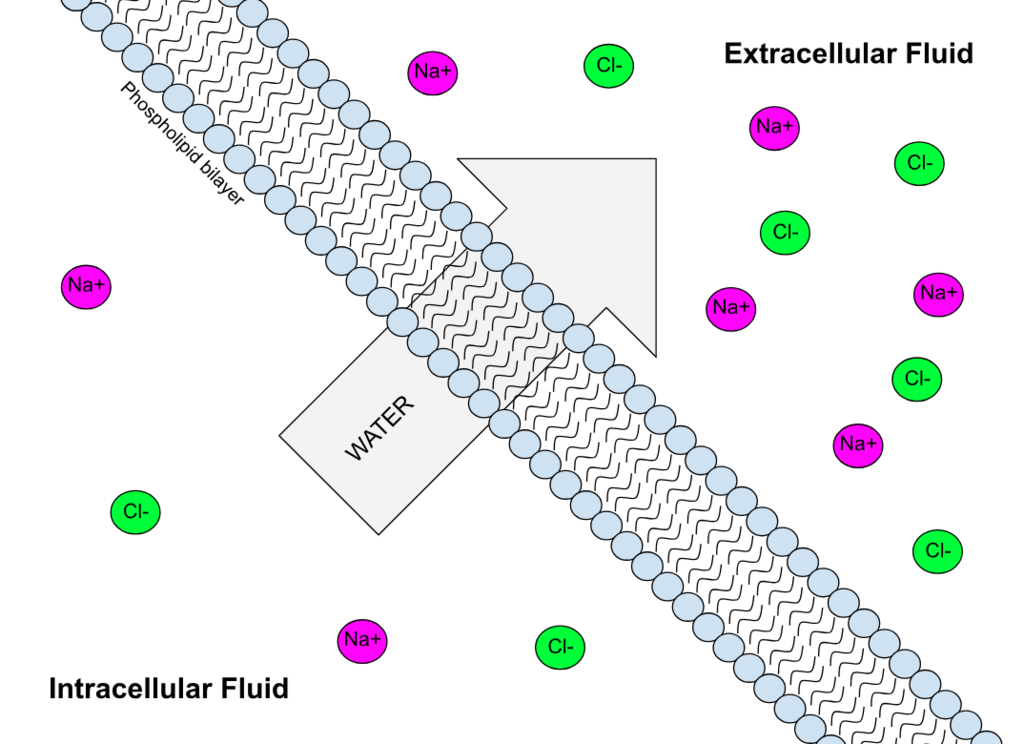
Being amphipathic, they are physically driven to assemble into a structure called ‘lipid bilayer‘, which allows them to keep their hydrophobic tails together, while exposing only their hydrophilic head groups to the surrounding water.
Fluidity and Stability
The phospholipid bilayer isn't a rigid wall. It's more like a fluid, soapy film. The individual phospholipids can move around, shifting positions with their neighbors. This fluidity is essential for the membrane's function, but it needs to be controlled. Too much fluidity and the membrane falls apart; too little, and it becomes stiff and brittle.
This is where cholesterol comes in. Cholesterol molecules wedge themselves between the phospholipids, acting as a fluidity buffer. They have a fascinating dual role depending on the temperature.
At high temperatures, when phospholipids tend to move apart and become too fluid, cholesterol restrains their movement, making the membrane less fluid and more stable. At low temperatures, when phospholipids pack together tightly and risk becoming rigid, cholesterol gets in the way. It prevents tight packing, ensuring the membrane remains fluid enough to function.
By moderating fluidity, cholesterol also helps to stabilize the membrane, making it less permeable to small, water-soluble molecules that could otherwise leak through. This bilayer, with its mix of phospholipids and cholesterol, forms a sophisticated and essential foundation for all cellular life.
What does the term "amphipathic" mean in the context of a phospholipid molecule?
How do phospholipids arrange themselves to form the cell membrane in an aqueous (watery) environment?