Cave Ecosystems
Cave Ecology Basics
The Underground Environment
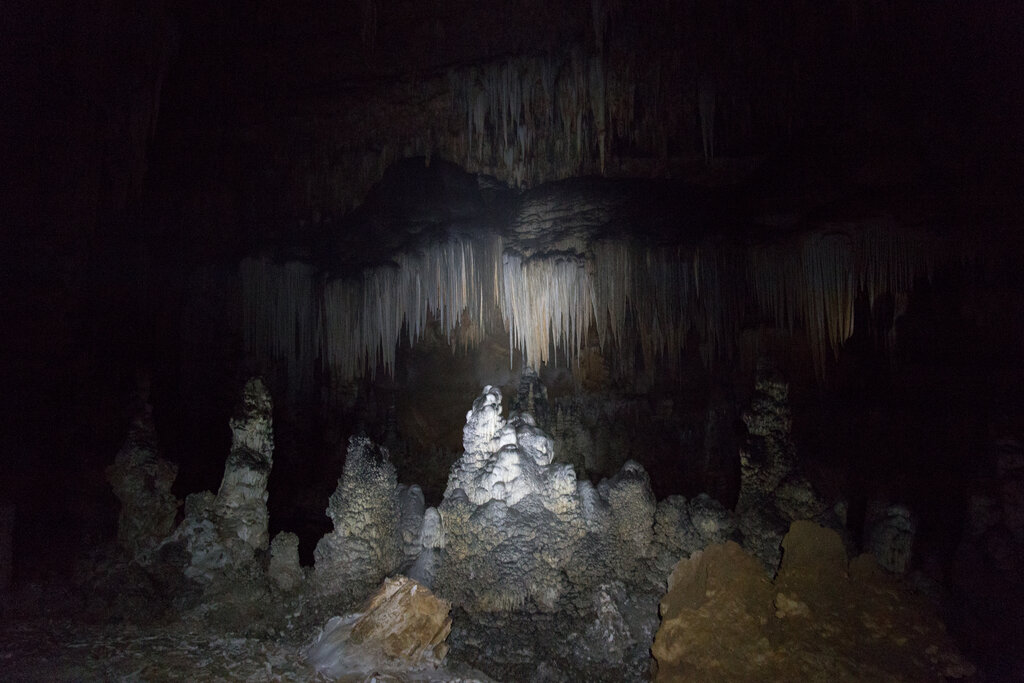
Caves are worlds apart from the surface. They are defined by a unique set of physical, or abiotic, factors that shape all life within them. The most obvious factor is the complete absence of sunlight. Beyond the entrance zone, caves exist in perpetual darkness, which means photosynthesis is impossible. No plants can grow here to form the base of the food web.
Temperatures underground are remarkably stable. They stay close to the average annual temperature of the region above ground, whether it's snowing or scorching on the surface. This creates a predictable, constant environment, free from seasonal swings.
Finally, the air in caves is typically saturated with moisture. With limited air circulation, water that seeps into the cave tends to stay, leading to extremely high humidity, often approaching 100%. This constant dampness influences everything from rock formations to the types of animals that can survive.
Who Lives Here?
Biologists classify cave-dwelling organisms based on how dependent they are on the underground environment. This helps us understand the different strategies for survival in the dark. Animals are grouped into one of three categories.
| Category | Meaning | Relationship to the Cave |
|---|---|---|
| Trogloxenes | Cave Guests | Use caves for shelter but must leave to find food. Examples include bats and some birds. |
| Troglophiles | Cave Lovers | Can live their entire lives in a cave but can also survive on the surface. Examples include some spiders and salamanders. |
| Troglobites | Cave Dwellers | Obligate cave-dwellers. They are so specialized they cannot survive outside the cave. |
Trogloxenes act as a vital link between the surface and the deep cave, bringing in nutrients. Troglophiles are adaptable, thriving in the cave's stability but not confined by it. Troglobites are the true specialists, completely committed to a life underground.
The Cave Food Web
Without sunlight, what fuels a cave's ecosystem? The energy must come from somewhere else. For most caves, the answer is the outside world.
Nearly all the energy in a cave is imported from the surface.
The primary energy source is detritus. This is simply organic material like leaves, twigs, and animal droppings that gets washed in by streams or blown in by the wind. Bacteria and fungi break down this material, and then other creatures feed on them, forming the base of the food chain.
A particularly rich form of detritus is guano, or bat droppings. In caves with large bat colonies, massive piles of guano can accumulate, supporting a complex ecosystem of insects, millipedes, and other invertebrates that feed exclusively on it.
A much rarer energy source is chemosynthesis. In some deep, isolated caves, specialized microbes can derive energy directly from minerals in the rock. By processing compounds like sulfur or iron, they create energy in a way that is totally independent of sunlight. These chemosynthetic bacteria can form the foundation of unique and self-sufficient underground ecosystems.
These unique energy sources and classifications of life highlight how cave ecosystems are fundamentally different from those on the surface. They are isolated, stable worlds running on imported fuel and inhabited by highly specialized creatures.