Causal AI Explained
Introduction to Causal AI
Beyond Predictions
Most of us think of AI as a powerful prediction machine. It can forecast stock prices, recommend movies, and even identify signs of disease in medical scans. It does this by finding patterns, or correlations, in vast amounts of data. For example, an AI might notice that when ice cream sales go up, so do shark attacks. A traditional AI model would simply register this link: more ice cream, more attacks. It predicts one based on the other.
But we know that selling fewer ice cream cones won't make the ocean safer. The two events are correlated, but one doesn't cause the other. A hidden factor, warm summer weather, causes both. This is the crucial difference between correlation and causation, and it's where a new kind of AI comes into play.
Causal AI is a branch of artificial intelligence that focuses on understanding cause-and-effect relationships. Instead of just identifying that two things happen together, it aims to figure out if one thing makes the other happen.
Why 'Why' Matters
Traditional AI is great at answering "what." What is the likely sales forecast for next quarter? What movie will this user enjoy? Causal AI, on the other hand, is designed to answer "why." Why are sales dipping in a specific region? Why did a marketing campaign succeed or fail?
This shift is a game-changer. An AI that understands causality can do more than just make predictions; it can recommend actions. It can simulate what would happen if a company changed its pricing, or if a doctor chose a different treatment. This allows for smarter, more reliable decision-making. Instead of just seeing a pattern, we can understand the underlying system that creates the pattern. This makes the AI's reasoning more transparent and trustworthy.
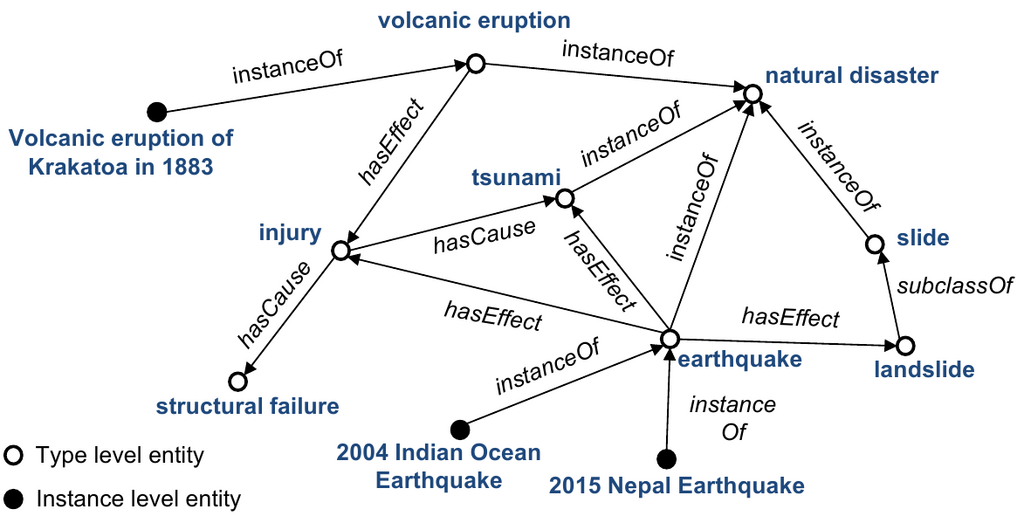
When an AI can explain its reasoning in terms of cause and effect, we can have more confidence in its conclusions. It’s no longer a “black box” that gives answers without explanation.
The Architect of Causality
The journey toward Causal AI owes a great deal to the foundational work of computer scientist and philosopher Judea Pearl. In the 1980s, he developed a mathematical framework for reasoning about causality. His work provided the tools to represent causal relationships graphically and to ask questions about interventions (what if we do X?) and counterfactuals (what if X had been done differently?).
A fundamental goal of scientific research is to learn about causal relationships.
Pearl's research, especially his development of a system called do-calculus, gave scientists and AI developers a formal language to talk about and analyze cause and effect. This laid the groundwork for building AI systems that don't just see the world as a collection of data points, but as a network of interconnected causal chains. By building on these principles, Causal AI helps us move from simply observing the world to truly understanding it.
Here's a quick review of the key ideas we've covered.
Ready to test your knowledge?
What is the primary question that Causal AI is designed to answer, which distinguishes it from traditional AI?
The classic example of ice cream sales and shark attacks increasing at the same time is used to illustrate:
Understanding the difference between correlation and causation is the first step toward appreciating the power of Causal AI.