Catholicism's Claim to Continuity
Introduction to Catholic Church's Self-Understanding
The Church's Self-Image
The Catholic Church sees itself not just as a denomination among many, but as the original Church established by Jesus Christ. This isn't a statement of arrogance, but a core belief rooted in its understanding of history and scripture. It views itself as a single, unified, and visible institution that continues the mission Christ gave to his apostles.
This self-perception is often described using four key characteristics, known as the Four Marks of the Church: One, Holy, Catholic, and Apostolic. These are drawn from the Nicene Creed, an ancient statement of faith. While we'll explore these marks in more detail later, they form the bedrock of the Church's identity. The 'oneness' refers to its unity in faith and governance, a single body with Christ as its head.
Imagine Christianity is a giant, ancient family. Catholicism is the biggest and oldest branch of that family.
This idea of an unbroken, visible society is central. For Catholics, the Church is not an abstract collection of believers but a tangible reality—a spiritual family into which one is incorporated through baptism. It's seen as both human and divine: human in its members and leaders, but divine in its origin, mission, and the grace it provides through the sacraments.
The Claim of the 'One True Church'
Flowing from this identity is the assertion that the Catholic Church is the 'one true Church'. This claim can be a point of contention, but understanding it from the Catholic perspective is crucial. It's not a denial of the faith or salvation of non-Catholic Christians. Instead, it's a statement about fullness.
The Church teaches that the complete means of salvation, as established by Christ, subsist fully within the Catholic Church. This includes the entirety of Christian doctrine, the seven sacraments, and the ordained ministry passed down from the apostles. Other Christian communities are acknowledged as possessing many elements of truth and sanctification, but the Catholic Church sees itself as the unique vessel where all these elements are found together in their intended fullness.
Think of it like a complete recipe. Other kitchens might have some of the same ingredients—flour, sugar, eggs—and can make wonderful things. But the Catholic Church believes it holds the original, complete recipe from the chef, with all the ingredients and instructions in their proper place. This view allows it to recognise the good and the true in other traditions while maintaining its unique claim.
Theological Foundations
This self-understanding isn't arbitrary; it's built upon specific theological foundations, primarily from the New Testament. A key passage is in the Gospel of Matthew, where Jesus speaks to his apostle, Peter.
Jesus says, "And I tell you, you are Peter, and on this rock I will build my church, and the gates of hell shall not prevail against it. I will give you the keys of the kingdom of heaven" (Matthew 16:18-19). Catholic teaching interprets this passage literally. 'Peter' (Petros in Greek) means 'rock'. The Church sees Peter as the rock foundation upon which Christ built His earthly, visible Church. The 'keys' symbolise authority and the power to govern the Church.
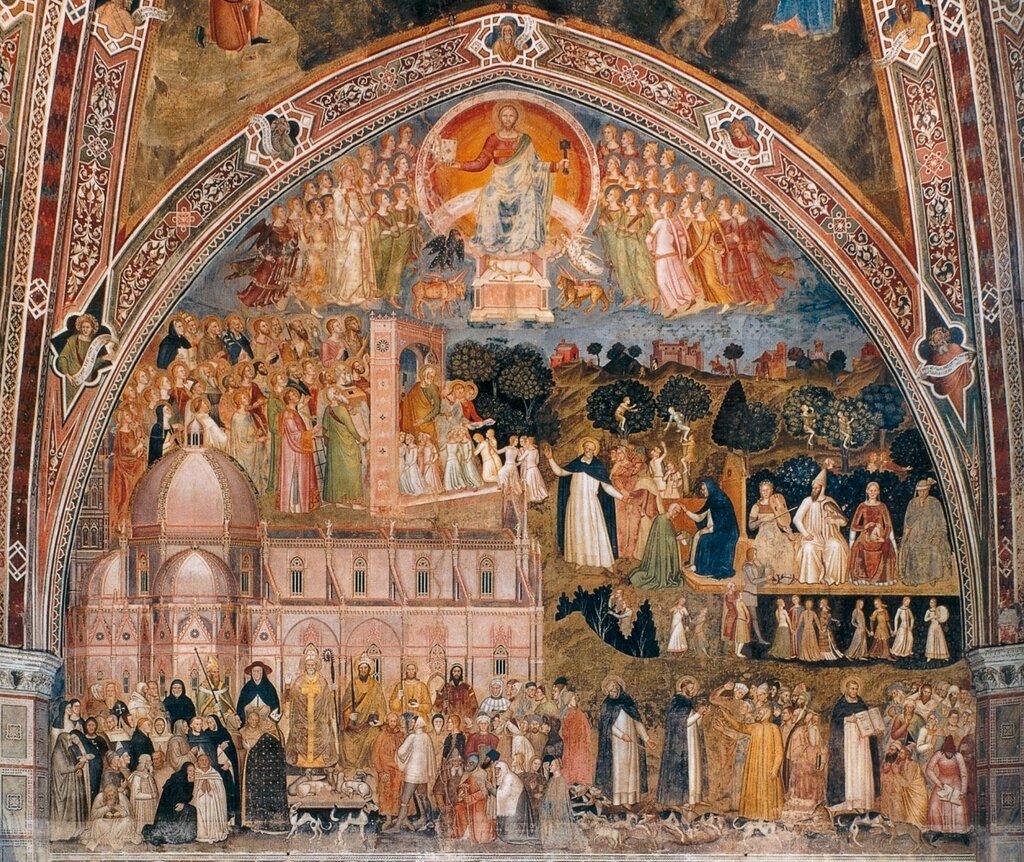
This authority, Catholics believe, was not meant to die with Peter. It was intended to be passed down through a continuous line of successors. This belief forms the basis for the papacy, with the Pope seen as the successor to Peter and the visible head of the Church on Earth.
Furthermore, Christ's final command to his apostles, often called the Great Commission, is another cornerstone. He tells them to "make disciples of all nations, baptising them... teaching them to observe all that I have commanded you" (Matthew 28:19-20). This is understood as the founding mission of the Church: a mandate to teach, sanctify, and govern in Christ's name until the end of time. The Church sees itself as the institution created to carry out this perpetual mission.
So, when the Catholic Church speaks of itself as the one true Church, it is making a claim about its nature and origins. It sees itself as a divinely founded, historically continuous, and visible society tasked with preserving and proclaiming the fullness of Christian revelation.
Let's check your understanding of these core ideas.
According to the Catholic perspective, what is the significance of Jesus calling Peter the 'rock'?
How does the Catholic Church understand its relationship with other Christian communities?
This self-perception is the lens through which the Catholic Church views its role in the world and its relationship with other Christian faiths.