Cat Training Essentials
Understanding Cat Behavior
The Mind of a Cat
To truly connect with a cat, you first have to understand them. Cats aren't small dogs. Their behavior is driven by a unique set of instincts shaped by their ancestors, who were solitary hunters. Understanding this foundation is the key to interpreting their actions and building a strong, positive relationship.
Everything a cat does, from kneading a blanket to watching a bird outside the window, has a reason rooted in its nature. By learning to see the world from their perspective, you can better meet their needs and understand their communication.
Natural Instincts
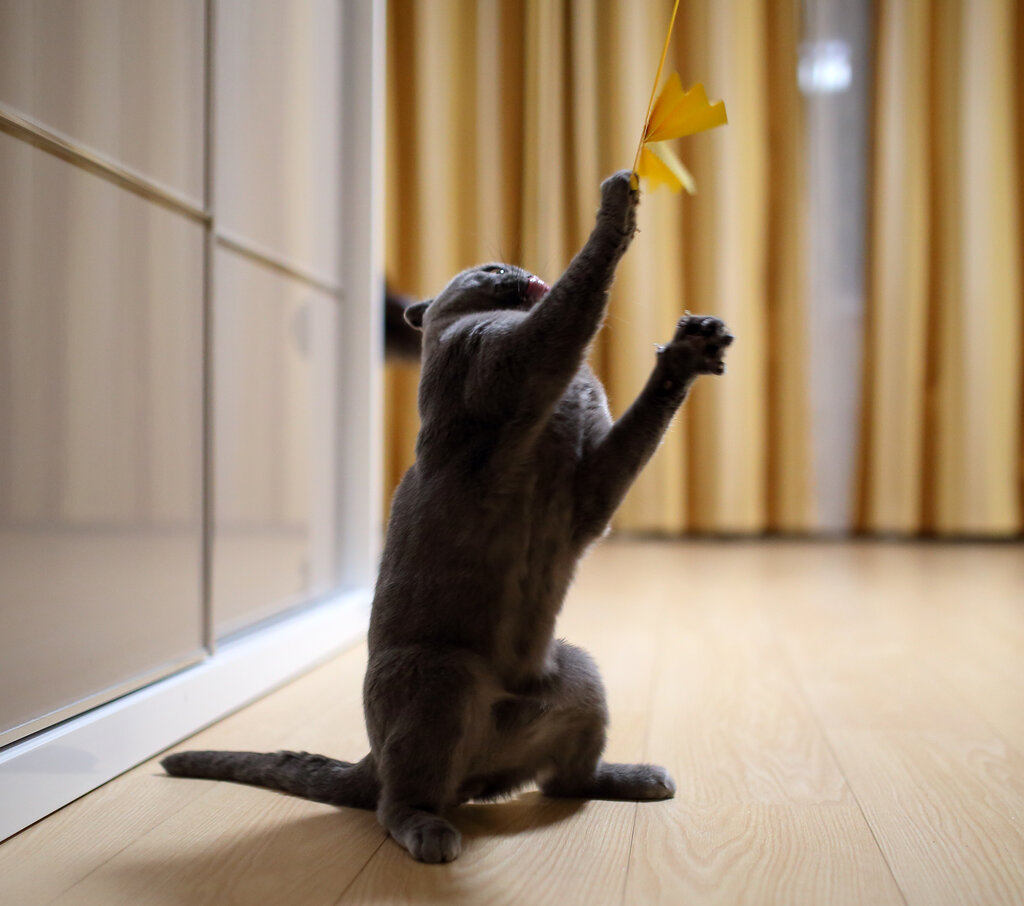
At its core, a cat is a predator. This doesn't mean they're aggressive, but that their daily life is guided by the drive to hunt. Even the most pampered housecat retains the instincts of its wild ancestors. You'll see this in their love of stalking toys, pouncing on imaginary prey, and their preference for high perches where they can survey their territory.
Playtime is serious business for a cat. It’s not just fun; it's a way for them to express their natural hunting sequence: stalk, chase, pounce, and capture.
Cats are also highly territorial. They feel safest in familiar environments where they know all the sights, sounds, and smells. This is why many cats dislike changes to their routine or environment, like moving furniture or having guests over. Their territory is their safe space.
How Cats Communicate
Cats communicate in subtle ways, primarily through body language and vocalizations. Learning their language helps you understand their mood and intentions.
A slow blink from a cat is a sign of trust and affection. It's often called a "kitty kiss." Try slow-blinking back to show them you're a friend.
| Body Part | Signal | Meaning |
|---|---|---|
| Tail | Held high, slight curve | Confident, friendly |
| Tail | Tucked low or between legs | Fearful, anxious |
| Tail | Thrashing back and forth | Agitated, overstimulated |
| Ears | Pointed forward | Alert, interested |
| Ears | Flattened against head | Angry, defensive, scared |
| Eyes | Pupils dilated (large) | Excited, fearful, playful |
| Body | Arched back, fur standing up | Frightened, aggressive |
Cats also use a range of sounds. A purr usually means contentment, but a cat might also purr when it's in pain or scared as a way to self-soothe. A chirp or trill is often a friendly greeting. Hisses and growls are clear warnings to back off. Adult cats rarely meow at each other; they developed that vocalization primarily to communicate with humans.
Scratching and Scent Marking
When your cat scratches the arm of your new sofa, it's not being destructive out of spite. Scratching is a deeply ingrained, necessary behavior. It helps them shed the outer layer of their claws, stretch their back and shoulder muscles, and mark their territory.
Cats have scent glands in their paws, so every time they scratch a surface, they leave behind a unique chemical signature that says, "This is mine." It’s both a visual and an olfactory message for other cats.
They also mark territory by rubbing their cheeks and forehead on objects, people, and other animals. This behavior, called bunting, deposits pheromones and is a sign of affection and ownership. It means they consider you part of their inner circle.
What is the primary ancestral instinct that drives much of a domestic cat's behavior?
When a cat scratches a sofa, it is primarily doing so to...
By understanding these core behaviors, you're better equipped to create an environment where your cat feels safe, understood, and happy.