Castilla La Mancha Explored
Geography
The Heart of the Peninsula
Castilla-La Mancha sits squarely in the middle of the Iberian Peninsula. It's a landlocked region, occupying a massive, high plateau known as the Southern Sub-plateau, or Submeseta Sur. This central position has shaped its history and character for centuries.
The region is a crossroads, sharing borders with seven other autonomous communities. To the north lie Castilla y León and the Community of Madrid. To the west is Extremadura. Aragón and the Valencian Community are its eastern neighbors, while the Region of Murcia and Andalusia sit to the south. This extensive network of borders makes it one of the most connected regions in Spain.
A Land of Plains and Peaks
The landscape of Castilla-La Mancha is defined by dramatic contrasts. Its most famous feature is the vast, flat plain of La Mancha. This expansive, arid tableland creates a seemingly endless horizon, famously depicted in Don Quixote. But the region is not entirely flat. It's ringed and crossed by significant mountain ranges that create distinct geographical zones.
The north is framed by the Sistema Central, while the northeast features the Sistema Ibérico. The southern edge is marked by the rugged Sierra Morena.
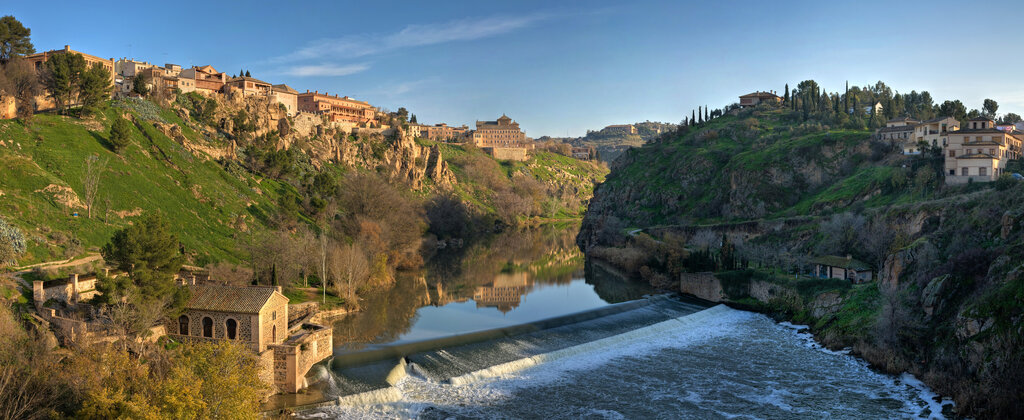
These mountains are not just borders; they are the sources of the region's great rivers. The Tagus (Tajo) and the Guadiana, two of Iberia's longest rivers, have their upper courses here. They cut through the plateau, creating fertile valleys and shaping the land as they flow west toward Portugal and the Atlantic.
Climate and Vegetation
Castilla-La Mancha's climate is predominantly Continental Mediterranean. This means hot, dry summers and cold winters. Rainfall is scarce, especially across the central plains, leading to a semi-arid environment. This climate profoundly influences life in the region, particularly its agriculture.
The natural vegetation is adapted to these tough conditions. You'll find holm oak forests and scrubland resilient to drought. In the higher elevations of the mountain ranges, the climate is more humid and cooler. Here, the landscape changes to include pine and oak forests, offering a stark contrast to the sun-baked plains below.
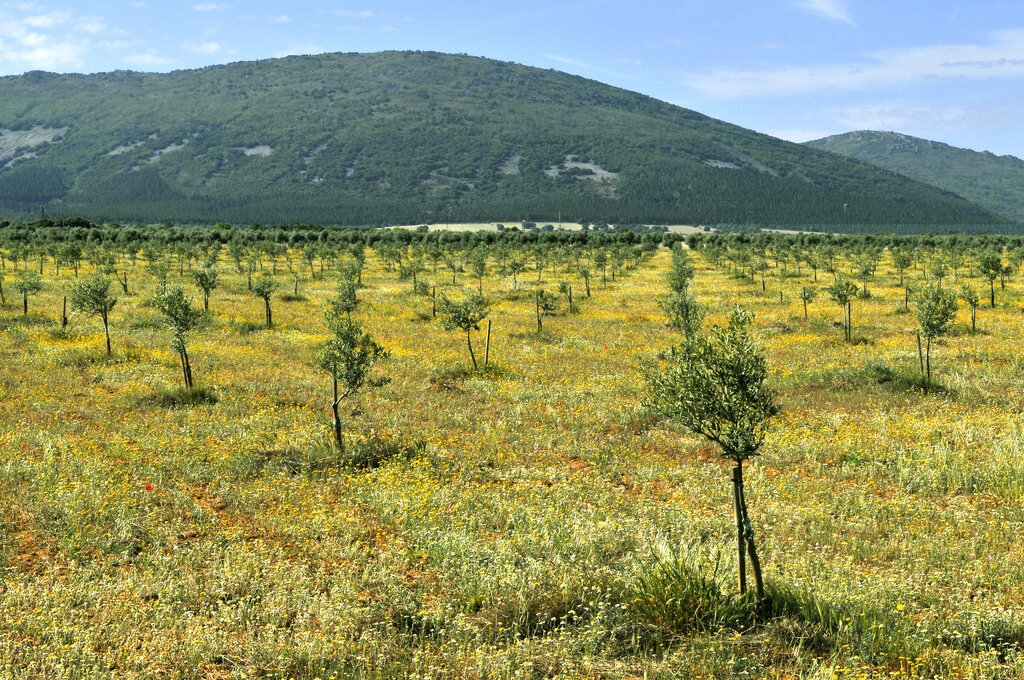
This climate is perfect for growing certain crops. The vast plains are covered with vineyards, olive groves, and fields of grain and saffron, all of which thrive in the dry, sunny conditions. The interplay between the flat terrain and the demanding climate has created one of Europe's most distinctive agricultural landscapes.
What is the most prominent geographical feature of Castilla-La Mancha's landscape?
Which of the following autonomous communities does NOT share a border with Castilla-La Mancha?
From its central plateau to its mountain borders, the geography of Castilla-La Mancha provides the foundation for its culture, economy, and history.