Cardiovascular Science Fundamentals
Cardiovascular System Overview
The Body's Delivery Service
Your body is a bustling community of trillions of cells, and like any community, it needs a reliable delivery service. This is the job of the cardiovascular system. It's a vast network responsible for transporting vital supplies to every cell and hauling away waste products. Without it, our cells couldn't survive for more than a few minutes.
This system has three main components working in perfect sync:
- The Heart: This powerful muscle is the central pump. It contracts and relaxes tirelessly, pushing blood throughout the entire body.
- Blood Vessels: These are the highways and local roads for the blood. They form a massive, closed network of tubes that reach every nook and cranny of your body.
- Blood: This is the transport fluid itself. It's a liquid tissue carrying everything from oxygen and nutrients to hormones and immune cells.
A Tale of Two Circuits
Blood doesn't just flow randomly. It follows two distinct, interconnected paths, or circuits. Each circuit has a specific job, and together they ensure the whole body gets what it needs.
First is the pulmonary circuit. This is a short loop that runs from the heart to the lungs and back again. Its only purpose is to get the blood oxygenated. Think of it as a refueling stop.
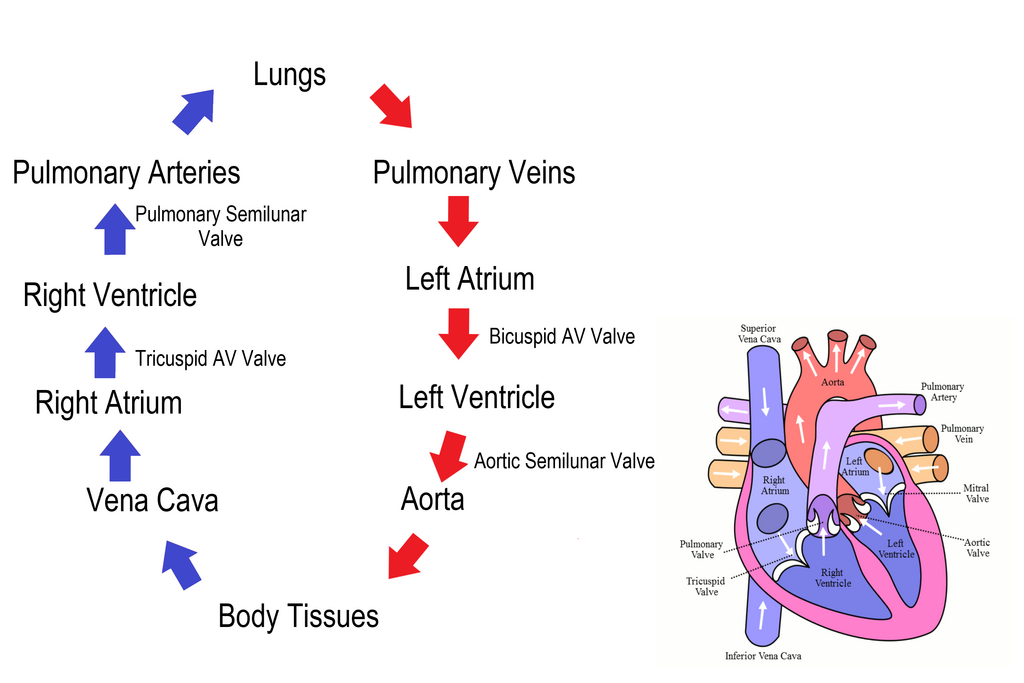
Once the blood is rich with oxygen, it's ready for its main journey. This is the systemic circuit. This much larger loop starts where the pulmonary circuit ends. The heart pumps this fresh, oxygenated blood out to the rest of the body—from your brain to the tips of your toes. Along the way, blood drops off oxygen and nutrients to the cells and picks up carbon dioxide and other waste products. This deoxygenated blood then travels back to the heart, where it's sent right back to the pulmonary circuit to start the process all over again.
Maintaining Balance
This constant, looping circulation is essential for homeostasis, which is just a way of saying it keeps your body's internal environment stable and balanced. By delivering oxygen, distributing nutrients from the food you eat, carrying hormones that act as chemical messengers, and removing toxic waste, the cardiovascular system ensures every cell has what it needs to function properly. It's the ultimate life-support system, working silently every second of every day.
What are the three main components of the cardiovascular system?
What is the primary role of the systemic circuit?