Cardiovascular Anatomy Essentials
Cardiovascular System Overview
The Body's Delivery Service
Your body is a bustling city of trillions of cells, and each one needs supplies to function and a way to get rid of trash. How does this massive delivery and waste-removal operation work? It's all managed by the cardiovascular system.
The cardiovascular system—also called the circulatory system—is the body’s transport network.
Think of it as a complex network of highways, delivery trucks, and a central dispatch center working 24/7. This system ensures that every part of your body gets exactly what it needs, exactly when it needs it.
Meet the Team
Three key components work together to make this transport system possible: the heart, blood vessels, and blood.
The Heart: This is the powerful pump at the center of it all. It’s a muscular organ that contracts continuously, pushing blood throughout your body. It doesn't create the supplies, but it provides the force needed to move them.
Blood Vessels: These are the roadways. They form a vast, branching network that reaches every corner of your body. There are three main types:
- Arteries: Carry blood away from the heart.
- Veins: Carry blood back to the heart.
- Capillaries: Tiny, thin-walled vessels that connect arteries and veins. This is where the actual delivery and pickup happens.
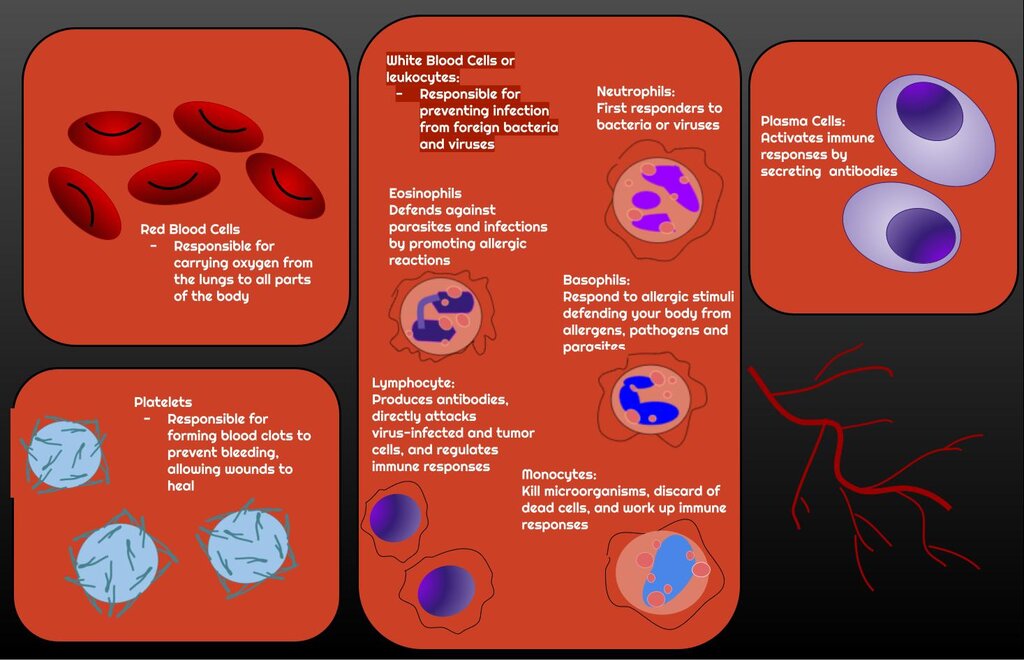
Blood: This is the delivery truck and its precious cargo. Blood is a living tissue that transports everything, including oxygen from your lungs, nutrients from your food, hormones that act as chemical messengers, and waste products to be filtered out.
Two Loops, One System
The circulatory system isn't just one big loop. It's actually two interconnected circuits that start and end at the heart: the pulmonary circuit and the systemic circuit.
This two-circuit system is incredibly efficient. It ensures that only oxygen-rich blood is sent to the body, and all oxygen-poor blood is sent to the lungs to get refilled.
The pulmonary circuit is a short loop between the heart and the lungs. Deoxygenated blood, full of carbon dioxide waste from the body's cells, is pumped from the heart to the lungs. In the lungs, the blood drops off the carbon dioxide (which you then exhale) and picks up fresh oxygen. This newly oxygenated blood then travels back to the heart.
The systemic circuit handles the rest of the body. Once the heart receives that oxygen-rich blood from the lungs, it pumps it out to all your other organs and tissues, from your brain to your toes. As the blood delivers oxygen and nutrients, it picks up carbon dioxide and other waste products. This deoxygenated blood then flows back to the heart, ready to enter the pulmonary circuit and start the cycle all over again.
This continuous, coordinated flow ensures every part of you stays alive and functioning. It's a simple but brilliant design that powers your entire body.