Card Payment Lifecycle Explained
Introduction to Card Payments
The Journey of a Card Payment
When you pay with a card, it feels instant. A quick tap, insert, or click, and you're on your way. Behind that simple action is a high-speed journey of data that travels across a global network, gets approved, and returns to the checkout counter in seconds. The core of this process is an authorization request: a message asking your bank, “Is this purchase okay?”
Let’s follow the path of that message, first in a physical store and then online.
In-Person Purchases
This is a “card present” transaction, where you and your card are physically at the point of sale. The process begins the moment you interact with the payment terminal.
This entire round trip happens in about two to three seconds. Though your part is done, the process isn't quite finished for the merchant. We'll get to that in a moment.
Online Purchases
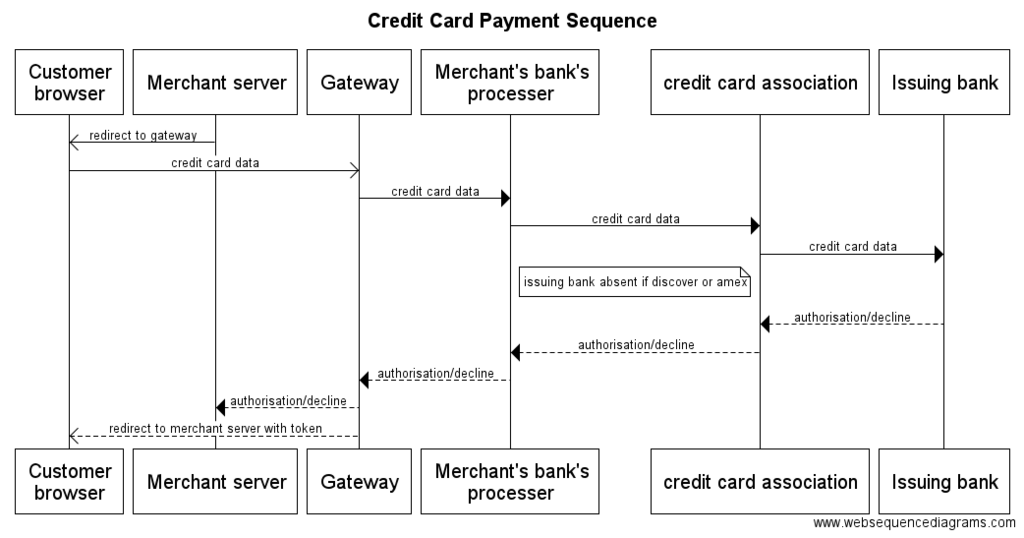
For online shopping, the flow is much the same, but it starts differently. This is a “card not present” transaction because the merchant can't physically verify your card.
Instead of a terminal, you type your card information into a payment form on a website. This data is securely captured by a payment gateway, which is a service that encrypts sensitive card details and sends them on their way. From there, the gateway sends the authorization request to your bank, receives the response, and relays it back to the website to show you a confirmation page. The fundamental back-and-forth with the bank remains the same.
Transaction Data
How does the system know where to send the request and how to record the sale? Every transaction is packed with key pieces of data that act as its unique fingerprint. These identifiers ensure money is pulled from the right account and sent to the right merchant.
| Identifier | What It Is |
|---|---|
| Primary Account Number (PAN) | Your main card number, typically 16 digits long. |
| Merchant ID (MID) | A unique code that identifies the business receiving the payment. |
| Terminal ID (TID) | A code that identifies the specific terminal used in the transaction. |
| Authorization Code | A code generated by the issuing bank to confirm its approval. |
These details are included in every authorization request and are stored to create a record of the transaction.
Real-Time vs. Batch
The authorization we've discussed—the yes or no from your bank—happens in real-time. It has to be fast so you aren't stuck waiting at the register.
However, the actual transfer of money from your bank to the merchant’s bank doesn't happen instantly. That part of the process is called settlement. Merchants typically bundle all their approved transactions from the day into a single group, or a “batch.” They send this batch for processing at the end of the day.
Think of it like this: Authorization is like making a reservation. The funds are held for the merchant, but the money hasn't moved yet. Settlement, which happens via batch processing, is when the merchant actually collects the funds for all their reservations from the day. This is why a pending charge on your account might take a day or two to officially post.
Real-time processing is for approval. Batch processing is for moving the money.
This basic flow forms the foundation of all card payments. While different players and security measures add more layers, the core journey of authorization and settlement remains constant.