Carbon Sequestration Explained
Introduction to Carbon Sequestration
What is Carbon Sequestration?
Carbon sequestration is the process of capturing carbon dioxide () from the atmosphere and locking it away for a long time. Think of it like taking excess carbon out of the air and putting it into storage.
Why is this important? Human activities, like burning fossil fuels, have released huge amounts of , a greenhouse gas that traps heat and warms the planet. By capturing and storing some of that carbon, we can help reduce the concentration of greenhouse gases in the atmosphere and slow down climate change.
The main goal is to remove carbon dioxide from the atmosphere and store it securely so it doesn't contribute to global warming.
Earth's Natural Balancing Act
Carbon is constantly moving around our planet in a process called the carbon cycle. It flows between the atmosphere, the oceans, the land, and all living organisms. For thousands of years, this cycle kept the amount of carbon in the atmosphere relatively stable.
Plants play a huge role by absorbing through photosynthesis. When they die, that carbon can get stored in the soil. The ocean also absorbs a massive amount of carbon from the atmosphere. Animals, including us, release carbon back into the air when we breathe. This natural give-and-take creates a balance.
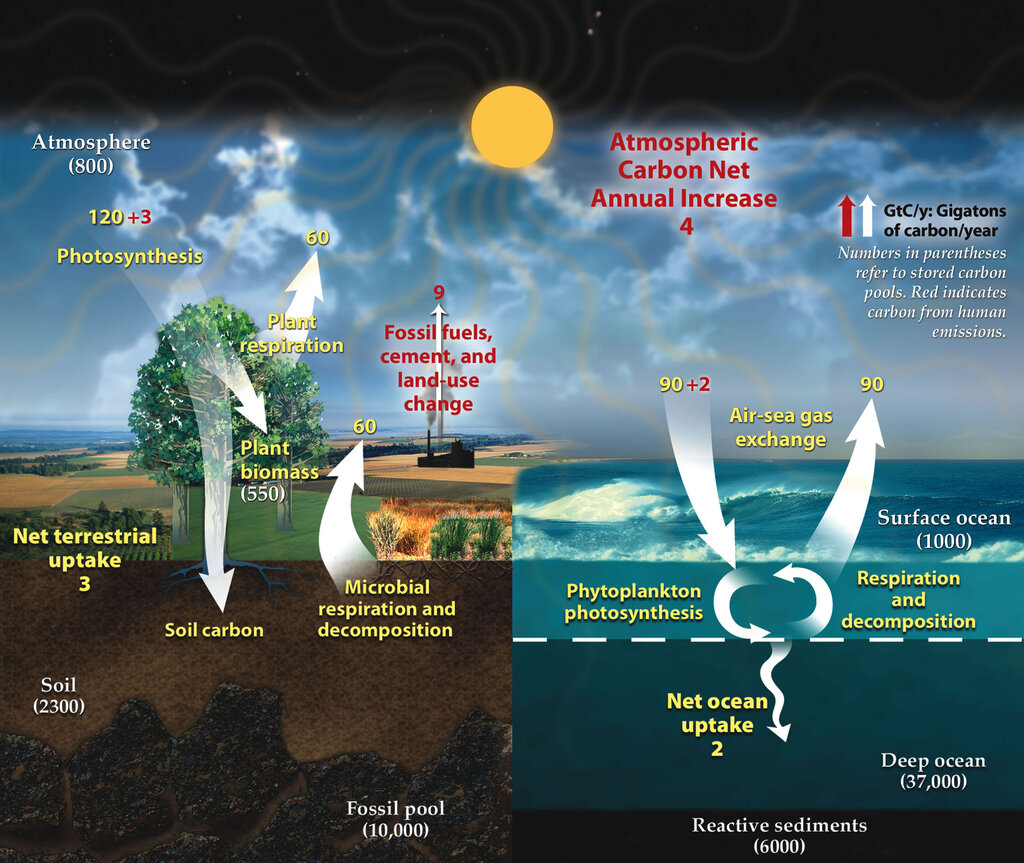
The problem is that human activities have thrown this cycle out of balance. We're adding carbon to the atmosphere much faster than Earth's natural processes can remove it. Carbon sequestration is about finding ways to help the planet catch up.
Two Paths to Storage
There are two main approaches to sequestering carbon: enhancing natural processes and creating new technological ones.
Natural sequestration works with nature's own systems, while technological sequestration uses human-made methods to capture and store carbon.
Natural sequestration, sometimes called biological sequestration, involves boosting the ability of ecosystems to absorb and store carbon. This includes planting more forests, managing farmland to increase carbon in the soil, and protecting coastal wetlands like mangroves, which are incredibly effective at storing carbon.
Technological sequestration, on the other hand, uses technology to capture at its source, such as a power plant, or even directly from the air. Once captured, the is compressed and transported to a storage site, where it's typically injected deep underground into stable geological formations. The idea is to lock it away permanently.
| Feature | Natural Sequestration | Technological Sequestration |
|---|---|---|
| Approach | Enhancing natural ecosystem processes | Using technology to capture and inject |
| Examples | Reforestation, soil management, wetland restoration | Carbon capture at power plants, direct air capture |
| Storage | Biomass, soil, oceans | Deep underground geological formations |
Both approaches have a role to play in tackling climate change. By understanding these fundamentals, we can better explore the specific methods used to put carbon back where it belongs: out of the atmosphere.
Ready to check your understanding?
What is the primary goal of carbon sequestration?
Human activities have thrown the natural carbon cycle out of balance by adding carbon to the atmosphere much faster than Earth's natural processes can remove it.