Carbon Accounting Essentials
Introduction to Carbon Accounting
What is Carbon Accounting?
Think of carbon accounting like financial accounting, but for greenhouse gases instead of money. It's the process of measuring the total greenhouse gas (GHG) emissions an organization is responsible for. The goal is to create a clear inventory, often called a carbon footprint, that shows exactly where these emissions come from.
Why track this? For one, it turns the abstract problem of climate change into a set of manageable data points. A company can't reduce its environmental impact if it doesn't know what that impact is. Carbon accounting provides the baseline needed to set meaningful reduction targets, track progress, and operate more efficiently. It's the essential first step for any organization looking to take climate action seriously.
The Gases We're Counting
While carbon dioxide () gets most of the attention, it's not the only gas that matters. Carbon accounting tracks several different greenhouse gases, which trap heat in the atmosphere and contribute to global warming.
Greenhouse Gas
noun
A gas in the atmosphere that absorbs and emits radiation, trapping heat. The primary GHGs from human activities are carbon dioxide, methane, and nitrous oxide.
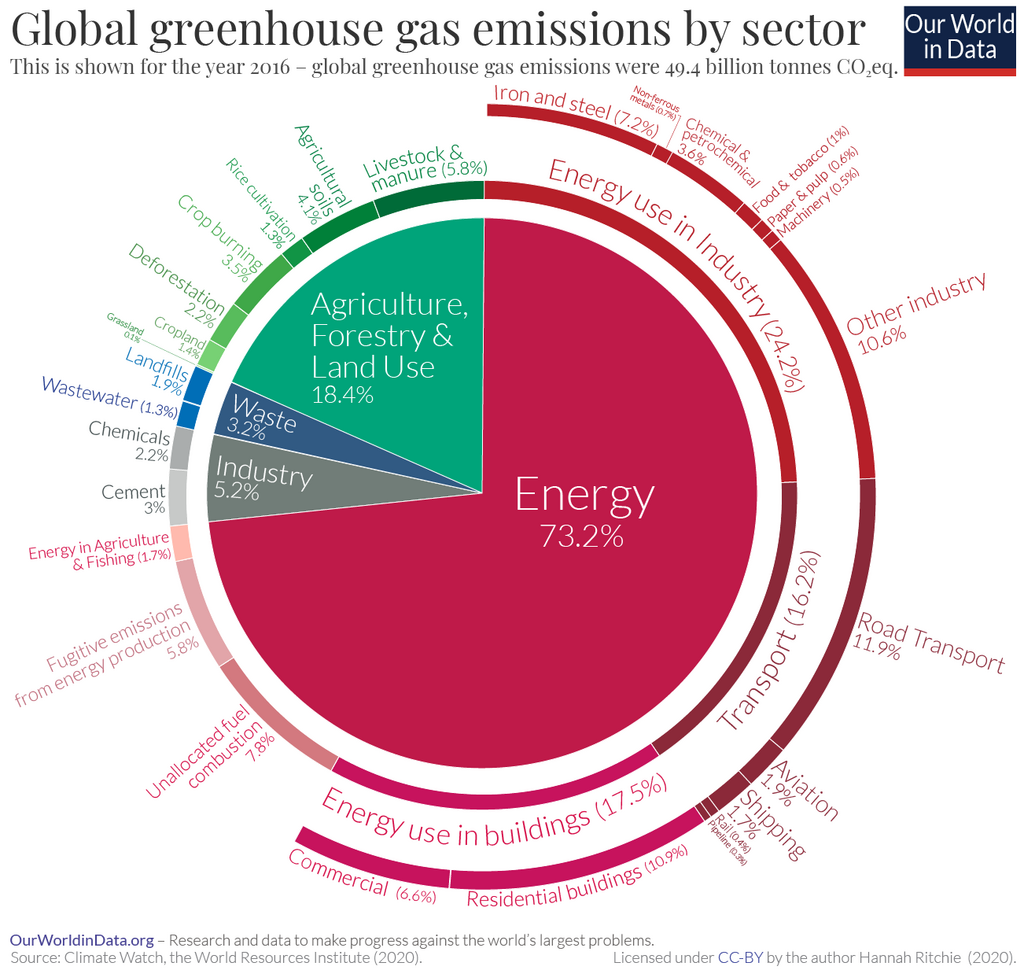
Other major GHGs include methane () and nitrous oxide (). Since each gas has a different warming effect, they are all converted into a single, standard unit: the carbon dioxide equivalent (). This allows for a simple, unified measurement of an organization's total climate impact.
Setting the Rules
To ensure measurements are consistent and comparable, organizations follow established standards. Just as financial accounting has rules like GAAP, carbon accounting has its own set of guidelines.
The two most recognized standards are the GHG Protocol and the ISO 14064 series.
The Greenhouse Gas (GHG) Protocol is the most widely used international standard. It provides a comprehensive framework and tools for businesses and governments to measure and manage their emissions. It breaks down emissions into different categories, or "scopes," which helps organizations identify where they have the most control to make reductions.
The ISO 14064 series is a set of international standards from the International Organization for Standardization. It provides specifications for quantifying, monitoring, and reporting GHG emissions and removals. It also offers guidance for validating and verifying GHG claims, adding a layer of credibility to a company's reported data.
Why Companies Count Carbon
Organizations engage in carbon accounting for a mix of reasons, ranging from regulatory pressure to strategic advantage. Increasingly, governments are requiring companies to report their emissions, making it a matter of compliance.
Beyond regulations, there's growing demand for transparency from investors, customers, and employees. People want to support businesses that are environmentally responsible. Accurate emissions reporting allows companies to demonstrate their commitment to sustainability and build trust.
Disclosures related to emissions and climate risk are going to become key data points for which investors can evaluate companies.
Finally, carbon accounting often reveals opportunities to save money. By tracking emissions, companies can pinpoint inefficiencies in their operations, such as wasted energy in buildings or fuel in transportation fleets. Addressing these issues not only lowers their carbon footprint but also reduces operational costs.
What is the primary purpose of carbon accounting for an organization?
Carbon accounting only tracks an organization's carbon dioxide () emissions.
In essence, carbon accounting provides the crucial data needed for effective climate strategy. It helps organizations understand their impact, comply with regulations, and find smart ways to become more sustainable.