Carbohydrates Explained
Carbohydrate Basics
What Are Carbohydrates?
Carbohydrates are one of the three main macronutrients, alongside proteins and fats, that your body needs to function. At their core, they are organic molecules made up of carbon (C), hydrogen (H), and oxygen (O) atoms. The name itself gives a clue: 'carbo' for carbon and 'hydrate' for water ().
The general chemical formula for many carbohydrates is , which means for every carbon atom, there's the equivalent of one water molecule. This simple ratio is the foundation for a vast array of different carbohydrate structures.
These molecules are essential for life, acting as the primary source of energy for our cells, tissues, and organs. Think of them as the body's preferred fuel.
Carbohydrates are an important source of energy in all human diets.
The Building Blocks
Carbohydrates are classified based on the number of sugar units they contain. The simplest form is a single sugar unit, called a monosaccharide.
Monosaccharide
noun
The simplest form of carbohydrate, consisting of a single sugar unit. It cannot be broken down into smaller carbohydrates.
The most common monosaccharides you'll encounter are glucose, fructose, and galactose. Glucose is the main type of sugar in the blood and the major fuel for the body's cells. Fructose is the sugar naturally found in fruit, while galactose is a component of the sugar in milk.
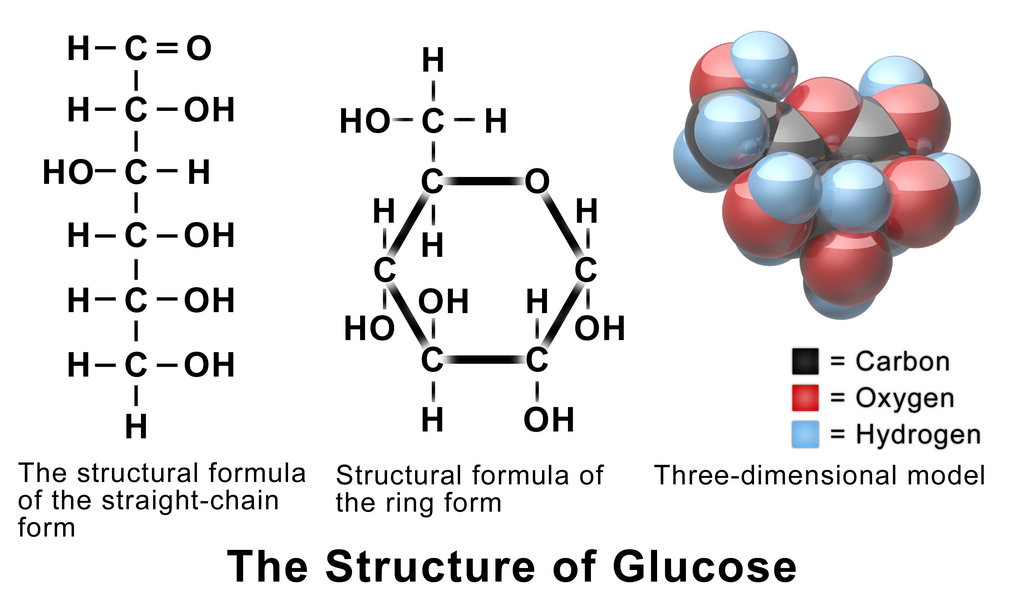
Here is what the chemical structure of glucose looks like. All three of these simple sugars share the same chemical formula, , but their atoms are arranged differently, which gives them unique properties.
When two monosaccharides link together, they form a disaccharide. The bond connecting them is called a glycosidic bond. Common examples include:
- Sucrose (table sugar), made of glucose + fructose.
- Lactose (milk sugar), made of glucose + galactose.
- Maltose (malt sugar), made of two glucose units.
Finally, when many monosaccharides are linked together, they create a long chain called a polysaccharide. These complex carbohydrates can be straight or branched chains of hundreds or thousands of sugar units.
Important polysaccharides include:
- Starch: The storage form of glucose in plants. We find it in foods like potatoes, rice, and wheat.
- Glycogen: The storage form of glucose in animals and humans. It's stored mainly in the liver and muscles.
- Cellulose: A structural component of plant cell walls. It provides fiber in our diet.
What Do They Do?
Carbohydrates have several crucial jobs in the body, but their primary role is providing energy. When you eat carbohydrates, your body breaks them down into glucose. This glucose enters your bloodstream and is transported to your cells to be used as immediate fuel for all your activities, from breathing to running a marathon.
Think of glucose as the gasoline for your body's engine. It's the most readily available fuel source to power cellular processes.
If you have more glucose than you need right away, your body stores it for later. It converts the excess glucose into glycogen and packs it away in your liver and muscles. When your blood sugar levels drop or you need an extra burst of energy, your body can quickly break down this stored glycogen back into glucose.
Beyond energy, carbohydrates also play structural and signaling roles. Some polysaccharides, like cellulose in plants, provide rigidity and support. In our bodies, carbohydrates are attached to proteins and lipids on the surface of cells, forming glycoproteins and glycolipids. These molecules act like identification badges, helping cells recognize and communicate with each other. This cell-to-cell communication is vital for immune responses and proper tissue formation.
Let's check your understanding of these fundamental concepts.