Car Transmission Maintenance Essentials
Transmission Basics
The Engine's Translator
A car's engine is powerful, but it has a narrow range where it operates most efficiently. It can't directly power the wheels because a car needs to do many different things, from starting from a dead stop to cruising at 70 miles per hour. That's where the transmission comes in. It acts as a go-between, translating the engine's power into usable force for the wheels.
Think of it like riding a bicycle with multiple gears. When you start or go uphill, you shift to a lower gear. It's easier to pedal, but you don't go very fast. This is high torque, or turning force. When you're on a flat road and want to speed up, you shift to a higher gear. Pedaling is harder, but each turn of the pedal makes the wheels spin much faster. This is high speed. A car's transmission does the exact same thing, just automatically or with your help.
The Core Components
A transmission is a box full of carefully arranged parts. While the designs can get complex, they all rely on a few key players to get the job done.
Gears
noun
Toothed wheels that mesh with other toothed wheels to transmit motion or to change speed or direction.
Gears are the heart of the transmission. By pairing gears of different sizes, the transmission can change the output speed and torque. A small gear driving a large gear reduces speed but increases torque. A large gear driving a small gear does the opposite.
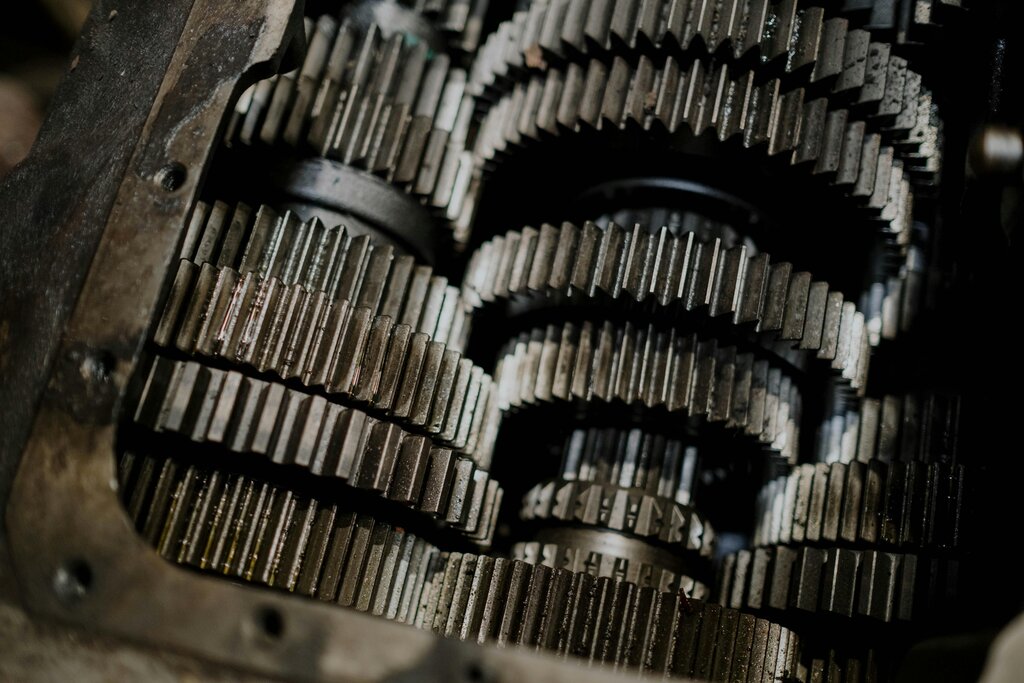
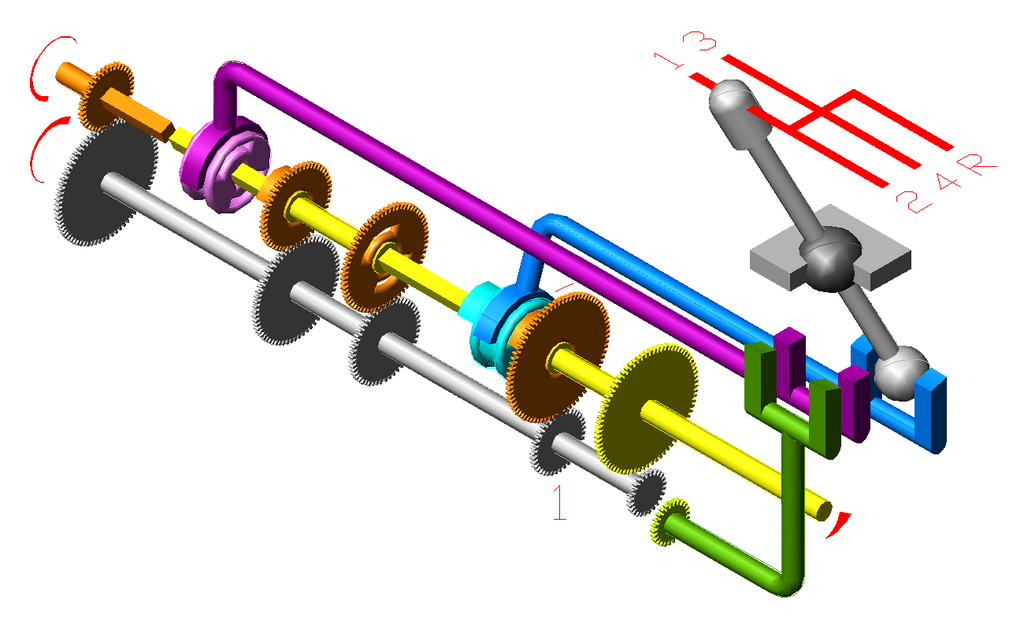
These gears are mounted on shafts. The input shaft takes power from the engine. The output shaft sends that power to the wheels. By engaging different combinations of gears between these two shafts, the car can achieve different speeds.
Finally, there's the clutch, which is essential for manual transmissions. The clutch is a mechanism that connects and disconnects the engine from the transmission. When you press the clutch pedal, you're temporarily breaking the connection, which allows you to shift gears smoothly without grinding them. In an automatic transmission, a device called a torque converter performs a similar function.
Balancing Speed and Torque
The whole point of these components is to manage the trade-off between speed and torque. You can't have maximum of both at the same time. The transmission's job is to provide the right balance for any situation.
Torque is the rotational force that gets the car moving. Speed is how fast the wheels are turning.
When you start from a stop, you need a lot of torque to overcome inertia. First gear provides this by using a gear ratio that multiplies the engine's turning force. As the car picks up speed, it doesn't need as much torque, so you shift into higher gears. These gears reduce the torque but allow the wheels to spin much faster for the same engine speed (RPM), which is more efficient for cruising.
| Gear | Torque | Speed | Typical Use |
|---|---|---|---|
| Low (1st) | High | Low | Starting from a stop |
| Mid (3rd) | Medium | Medium | Accelerating in the city |
| High (5th) | Low | High | Cruising on the highway |
This ability to vary speed and torque is what allows a single engine to power a vehicle through all kinds of conditions, from stop-and-go traffic to open highways.
Now, let's test your knowledge on these fundamentals.
What is the primary role of a car's transmission?
In a transmission, when a small gear drives a larger gear, what is the result?