Car Engine Basics
Engine Basics
Turning Fuel into Force
An internal combustion engine, or ICE, is the heart of most cars on the road. Its job is to convert the chemical energy packed inside fuel into the mechanical force that turns the wheels. Think of it as a device that harnesses thousands of tiny, controlled explosions every minute to create motion.
Specifically, an internal-combustion engine is a heat engine in that it converts energy from the heat of burning gasoline into mechanical work, or torque.
This conversion doesn't happen all at once. It's a rapid, repeating sequence of events known as a cycle. The most common type is the four-stroke cycle, a beautifully simple process that powers our world.
The Four-Stroke Cycle
The process can be summed up with a simple mantra: suck, squeeze, bang, blow. Each step is called a “stroke,” and it corresponds to the piston moving either up or down inside a hollow tube called a cylinder.
- Intake (Suck): The piston moves down, creating a vacuum that pulls a mixture of fuel and air into the cylinder.
- Compression (Squeeze): The piston moves back up, squeezing the fuel-air mixture into a much smaller space. This makes it highly combustible.
- Combustion (Bang): A spark plug ignites the compressed mixture. The resulting explosion forces the piston down with great power. This is the stroke that generates the engine's power.
- Exhaust (Blow): The piston moves up again, pushing the leftover burnt gases out of the cylinder to make way for the next cycle.
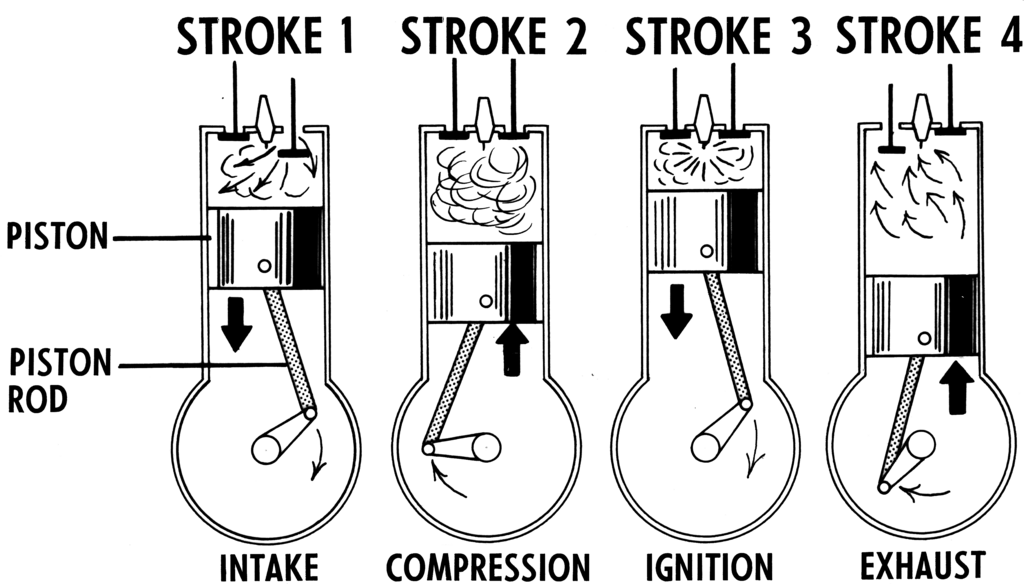
This four-step dance happens incredibly fast, thousands of times per minute, across multiple cylinders working in harmony.
The Key Players
To make this cycle happen, a few key components work together. The main stage for the action is the cylinder, which is a precisely machined tube within the engine block. It’s the container for the entire four-stroke process.
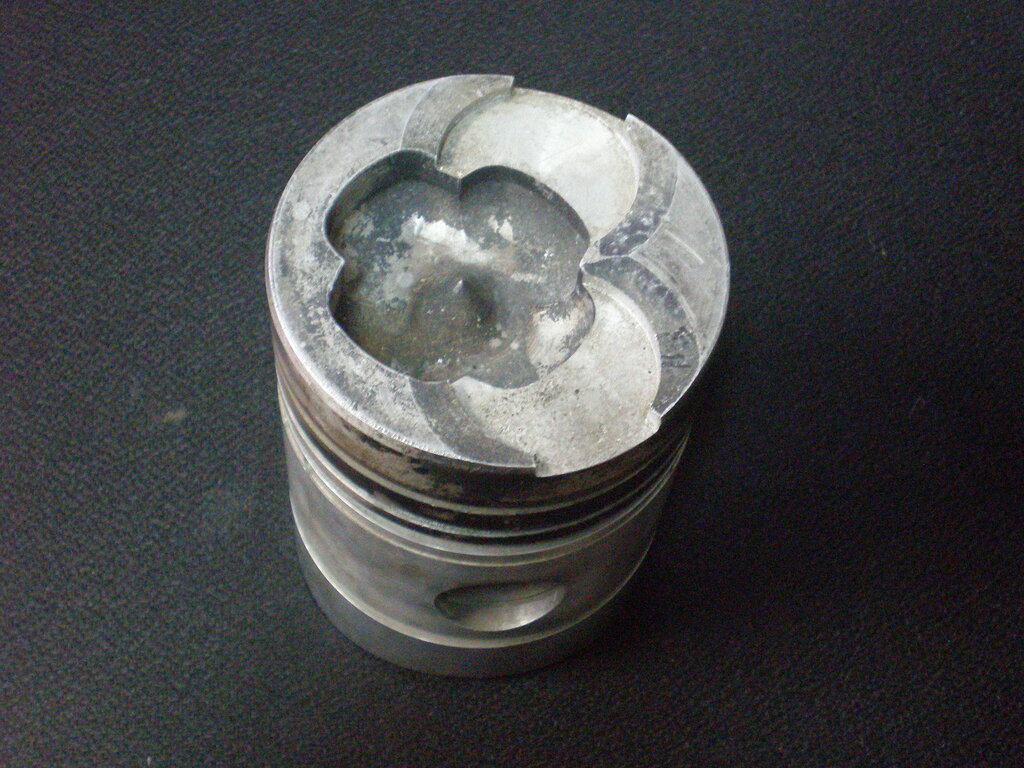
Moving up and down inside the cylinder is the piston. It’s a solid, cylindrical plug that forms a seal against the cylinder walls. During the combustion stroke, the expanding gases push down on the piston, transferring energy.
But how does that up-and-down motion turn the wheels? That's the job of the crankshaft.
The piston is attached to a crankshaft via a connecting rod. The crankshaft is an ingenious rotating shaft that converts the linear, up-and-down motion of the pistons into the rotational motion needed to power the car. It works much like a cyclist’s legs pushing pedals to turn the wheels of a bicycle.
Together, these components form the foundation of the internal combustion engine, turning simple chemical reactions into powerful, useful motion.
What is the primary function of an internal combustion engine?
What is the correct order for the four-stroke cycle?