Capitalism Explained
Introduction to Capitalism
What is Capitalism?
Capitalism is an economic system where private individuals or companies own the tools for producing goods and services, like factories, machines, and land. The main goal is to make a profit. In a capitalist system, decisions about what to make and how much it should cost are generally determined by supply and demand in the marketplace, rather than by a central government.
capitalism
noun
An economic and political system in which a country's trade and industry are controlled by private owners for profit, rather than by the state.
Think of it this way: if you bake cookies in your kitchen and sell them to your neighbors, you're engaging in a small-scale capitalist venture. You own the oven (a means of production), you're motivated by the potential profit from selling the cookies, and the price is set by what your neighbors are willing to pay.
The Core Principles
Three core ideas form the foundation of capitalism: private property, the profit motive, and free markets.
Private Property: This is the right of individuals and companies to own, use, and dispose of property as they see fit. This doesn't just mean your personal belongings like your phone or your clothes. In economics, it specifically refers to owning the means of production—the resources and equipment used to create wealth, like farmland, factories, and software.
Profit Motive: This is the driving force of capitalism. Businesses exist to generate profit, which is the money left over after all costs of production are paid. The desire for profit encourages businesses to be efficient, to innovate, and to provide goods and services that people want to buy. It's the incentive that fuels economic activity.
Free Markets: A market is any place where buyers and sellers meet to exchange goods and services. In a free market, prices are determined by the forces of supply and demand with minimal government interference. If many people want to buy a product that is scarce, the price will likely go up. If a product is widely available but few people want it, the price will fall.
Together, these principles create a system where individual self-interest, guided by market prices, can lead to broader economic prosperity.
A Brief History
Capitalism as we know it didn't appear overnight. It evolved over centuries out of earlier economic systems. In medieval Europe, feudalism was dominant. Under this system, wealth was based on land ownership, and most people worked the land for a lord in exchange for protection.
Starting in the 16th century, a new system called mercantilism emerged. Nations focused on accumulating wealth, primarily gold and silver, through trade, often by establishing colonies. This period saw the growth of a merchant class and the expansion of trade networks.
However, it was the Industrial Revolution in the 18th and 19th centuries that truly cemented capitalism as the dominant economic system in the Western world. New technologies led to the rise of factories and mass production. This shifted the economic focus from land to capital—the money, machinery, and infrastructure needed to run large-scale businesses.
How Capitalism Differs
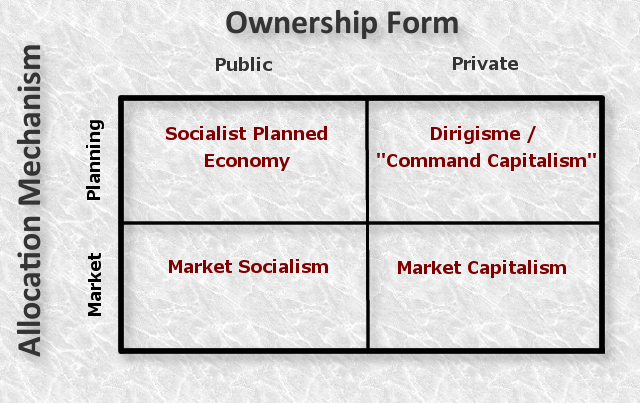
To understand capitalism better, it helps to see how it compares to other economic systems. The key difference usually comes down to one question: Who owns and controls the means of production?
| System | Ownership of Means of Production | Allocation of Resources |
|---|---|---|
| Capitalism | Primarily private individuals and corporations. | Determined by supply and demand in free markets. |
| Socialism | Primarily the state or public; some private ownership. | A mix of central planning and market forces. |
| Communism | All property is communally owned (in theory). | Determined by central government planning. |
| Feudalism | Land is owned by nobility, worked by peasants. | Based on tradition and hereditary social class. |
This table shows the fundamental distinctions. While capitalist economies rely on markets and private initiative, other systems like socialism and communism emphasize public ownership and central planning to allocate resources and distribute wealth.
Now, let's test your understanding of these core concepts.