Capillary Action Explained
Introduction to Capillary Action
The Unseen Climb
Have you ever spilled a drink and watched a paper towel soak it up almost instantly? Or noticed how a paintbrush seems to magically drink up water? This isn't magic. It's a phenomenon called capillary action.
Capillary action is the movement of a liquid through a narrow space, like the tiny gaps in a paper towel or the bristles of a brush. What's amazing is that this movement can happen on its own, sometimes even against the pull of gravity. To understand how it works, we need to look at the forces at play on a molecular level.
A Tale of Two Forces
Everything about capillary action comes down to a tug-of-war between two forces: cohesion and adhesion.
Cohesion
noun
The force of attraction between molecules of the same substance.
Think of cohesion as teamwork. Water molecules () are attracted to each other, so they tend to stick together in groups. This is what gives water its surface tension, creating a sort of 'skin' on its surface.
Adhesion
noun
The force of attraction between molecules of different substances.
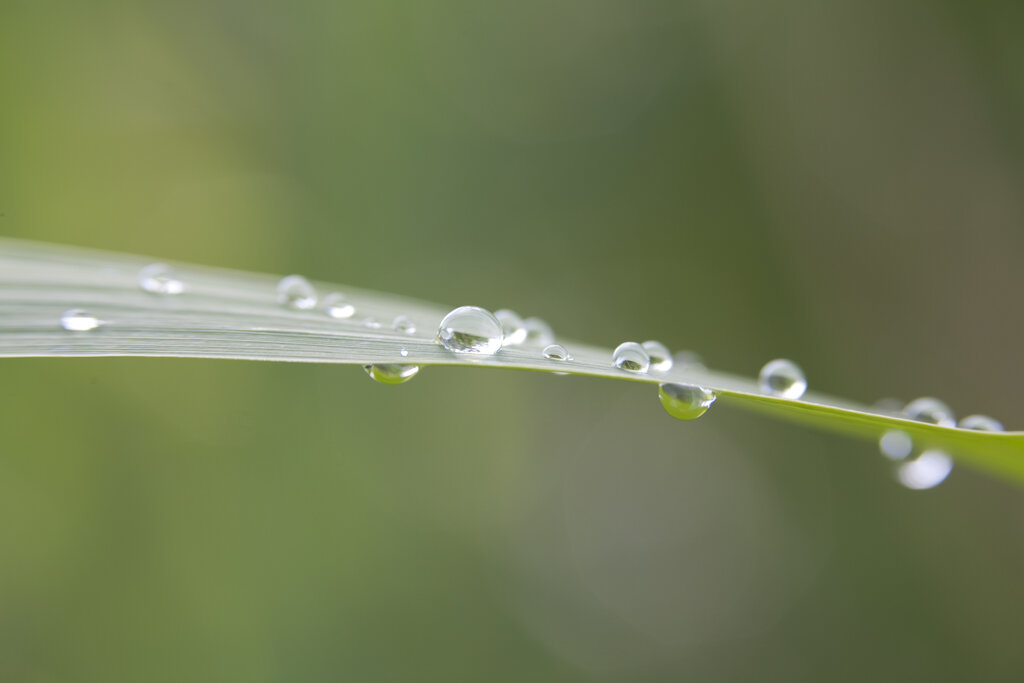
Adhesion is about sticking to others. For example, water molecules are also attracted to molecules in other materials, like glass, paper, or soil. When you see a drop of dew clinging to a spider web, you're seeing adhesion in action.
Capillary action happens when the force of adhesion is stronger than the force of cohesion.
Winning the Tug-of-War
Imagine placing a thin glass tube into a beaker of water. The water molecules are more attracted to the glass (adhesion) than they are to each other (cohesion). Because of this, the water molecules at the edge of the tube start to 'climb' up the glass walls.
Thanks to cohesion, these climbing molecules pull their neighboring water molecules along with them. This process continues, pulling the column of water up into the tube until the downward force of gravity balances out the upward pull of adhesion. This curved upper surface of the liquid is called a meniscus.
When adhesion is stronger than cohesion, the liquid climbs the walls of the container, forming a concave (curved inward) meniscus.
But what if cohesion is stronger? With a liquid like mercury, the molecules are much more attracted to each other than to the glass. In this case, the liquid pulls inward, away from the container's walls. This creates a convex (curved outward) meniscus, and the liquid level in the tube is actually pushed down.
The narrower the space, the more dramatic the effect. In a very thin tube, more of the liquid is in contact with the surface relative to its total volume, allowing the adhesive forces to lift the liquid higher.
This is exactly how plants pull water from the ground all the way up to their leaves. The xylem in a plant's stem contains millions of tiny tubes. Water adheres to the walls of these tubes and cohesion pulls the rest of the water column along, like a long chain. The same principle explains why a paper towel is so absorbent. It's made of cellulose fibers with tiny gaps between them, creating countless narrow spaces for water to climb into.
Time to check your understanding of these molecular forces.
What is the primary cause of capillary action?
When water forms a dewdrop on a spider web, clinging to the silk threads, which force is primarily being demonstrated?
From a simple spill to the tallest trees, capillary action is a fundamental process that shapes the world around us, all thanks to the constant push and pull between molecules.