Candle Range Theory Masterclass
Defining Reference Ranges
From Candle to Range
You already know that individual candlesticks tell a story of price movement. But some candles tell a much bigger story. In Candle Range Theory (CRT), we look for specific candles on a high timeframe (HTF) that define a complete trading range on a lower timeframe (LTF).
Think of a single daily candle. Within its high and low, an entire day's worth of price action took place, which you could see as 24 separate hourly candles. A CRT 'Reference Candle' is a daily candle whose range acts as a strong container for price. These are not random candles; they typically form after interacting with a significant price level, such as an Order Block or a Fair Value Gap. This interaction suggests a large volume of institutional orders entered the market, establishing a clear area of interest.
The highest point of the reference candle, including the wick, is the Candle Range High (CRH). The lowest point is the Candle Range Low (CRL). These two points are not just prices; they are the boundaries of our trading arena. Within this range, we can anticipate price to react at key levels derived from the candle itself.
Marking Your Boundaries
Once you've identified a promising daily reference candle, the next step is to mark its boundaries. This is a mechanical process: draw a horizontal line at the exact high (CRH) and another at the exact low (CRL). These lines extend across your lower timeframe chart, like an H1 or H4 chart, creating a bounded playground for price.
Not all ranges are created equal. We want to trade 'clean' ranges, not 'messy' ones. A clean range is one where, after the reference candle closes, price spends a significant amount of time trading inside the CRH and CRL without immediately breaking out. A messy range is the opposite: price might consolidate right on the CRH or CRL, or break out decisively almost immediately, offering no clear trading opportunities within the range.
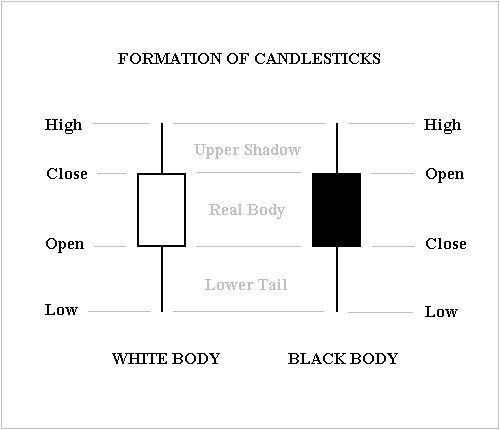
The candle's open and close prices are also vital clues. They reveal the net result of the battle between buyers and sellers during that period. A bullish candle that closes near its high shows strong buying pressure. Conversely, a bearish candle closing near its low indicates seller dominance.
In CRT, a strong close validates the range. A bullish reference candle should ideally close in its upper half, and a bearish one in its lower half. This confirms the directional intent established by the initial move.
The Anatomy of a Candle Range
Beyond the high and low, the candle's body itself contains critical information. We can divide the entire candle range, from CRH to CRL, into sections to identify high-probability reversal points. The most important of these is the 50% level, or equilibrium.
The EQ level acts as a center of gravity. Price action above the EQ is considered to be in a 'premium' zone, where it's more favourable to look for selling opportunities. Price action below the EQ is in a 'discount' zone, a better area to look for buys. Institutions prefer to buy at a discount and sell at a premium, and this simple division of the range helps us align with that logic.
Here's a breakdown of the key levels within a reference candle's range:
| Level | Description | Market Psychology |
|---|---|---|
| Candle Range High (CRH) | The absolute high of the candle. | The upper boundary; potential resistance. |
| Premium Zone | The area above the 50% Equilibrium level. | Prices are 'expensive'; sellers are interested. |
| Equilibrium (EQ) | The 50% midpoint of the CRH and CRL. | The fair value price; a key pivot point. |
| Discount Zone | The area below the 50% Equilibrium level. | Prices are 'cheap'; buyers are interested. |
| Candle Range Low (CRL) | The absolute low of the candle. | The lower boundary; potential support. |
By viewing a single HTF candle not as one piece of information but as a structured range with defined levels, you shift from simply reading patterns to understanding the boundaries of liquidity. This is the foundation of trading with Candle Range Theory.