Candle Range Theory Entry Masterclass
HTF Reference Candle
The Reference Candle
In trading, not all candles are created equal. Some are just noise, while others contain a complete story of market dynamics. Candle Range Theory, or CRT, starts by finding one of these story-rich candles on a higher timeframe (HTF). We call this the 'Reference Candle'.
Think of a daily or weekly chart. Instead of seeing a sea of price bars, CRT teaches you to view a single significant candle as an isolated, tradable range. Its high and low are not just price points; they are boundaries of liquidity, marking a self-contained battlefield where buyers and sellers fought for control. The price action that happens inside this single HTF candle forms an entire market structure on lower timeframes.
An HTF candle isn't just a bar on a chart. It's a container for a lower-timeframe trend.
The goal is to find a candle that signals institutional interest. We don't pick just any candle. We look for one that interacts with a key Point of Interest (POI). A POI is a specific area on the chart where we expect a significant price reaction, often because big players, or 'Smart Money', have placed orders there previously.
Selecting the Right Candle
A strong Reference Candle typically taps into an existing higher-timeframe POI. The two most common and reliable POIs for this are:
- HTF Order Blocks: These are specific candles, usually the last up-candle before a strong down-move (or vice-versa), where large orders were likely placed. When price returns to this level, those orders can be triggered, causing a sharp reversal.
- Fair Value Gaps (FVGs): An FVG is a three-candle pattern that shows a market inefficiency or imbalance. It represents a gap in price delivery that the market often seeks to 'fill' or rebalance later. A candle that reacts to an FVG is a prime candidate for a Reference Candle.
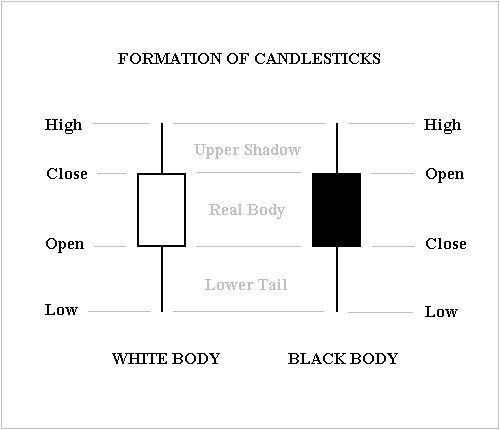
Once you've identified a candle reacting to a POI, you mark its absolute high and low. These levels become your 'CRT High' and 'CRT Low'. This defined range is now your entire world for the trade setup. Everything that happens between these two points is considered 'internal range' price action. The movements outside are what we watch for confirmation or invalidation.
Why It Works
This method aligns your trading with larger market movements. By using a higher timeframe for context, you filter out the noise of lower timeframes and focus only on ranges that have institutional backing. When you define a CRT High and Low, you've created a clear framework. The expectation is that price will move from one side of this range to the other to seek before making a larger move.
Use higher timeframes (daily or above) to identify the overall market structure.
This is the first step in multi-timeframe analysis. You establish your bias and your playground on the HTF. Later, you will learn to drop down to lower timeframes to find precise entries within this established range. But without a valid Reference Candle, any lower-timeframe analysis is like navigating without a map. It lacks context and is prone to false signals.
Time to review the core ideas before we see how to use them.
Let's check your understanding of these foundational concepts.
According to Candle Range Theory (CRT), what is the primary characteristic of a strong 'Reference Candle'?
A Fair Value Gap (FVG) is considered a reliable Point of Interest because it represents a/an ______ that the market is likely to revisit.
By mastering the selection of a Reference Candle, you've built the foundation for the entire Candle Range Theory. You now have a reliable way to define high-probability trading ranges based on institutional context.