Canadian Construction Code Compliance
Regulatory Framework Mapping
Navigating Canada's Regulatory Landscape
Understanding how construction projects are regulated in Canada can feel like solving a complex puzzle, but the secret lies in mastering the hierarchy of authority. This chapter will break down the relationship between the National Building Code, provincial statutes, and industry-specific standards to help you confidently identify the Authority Having Jurisdiction for any project. By the end, you will be able to map out the legal framework governing energy and infrastructure works, ensuring your next project starts on solid regulatory ground.
The Gatekeeper of Compliance
In the world of Canadian construction and engineering, the (AHJ) is the ultimate gatekeeper. While we often talk about the (NBC) as the standard for safety and performance, it is actually a paper tiger on its own. The NBC is a model code—a set of highly researched recommendations—but it lacks the force of law. It only becomes enforceable when a province or territory adopts it through a specific piece of legislation, turning a 'model' into a 'statute.'
statute
noun
A written law passed by a legislative body, such as a provincial parliament, which is enforceable in court.
This mechanism of adoption is rarely a simple 'copy and paste.' Provinces frequently amend the NBC to suit their local climate, geography, or economic priorities. This creates a regulatory patchwork that professionals must navigate carefully.
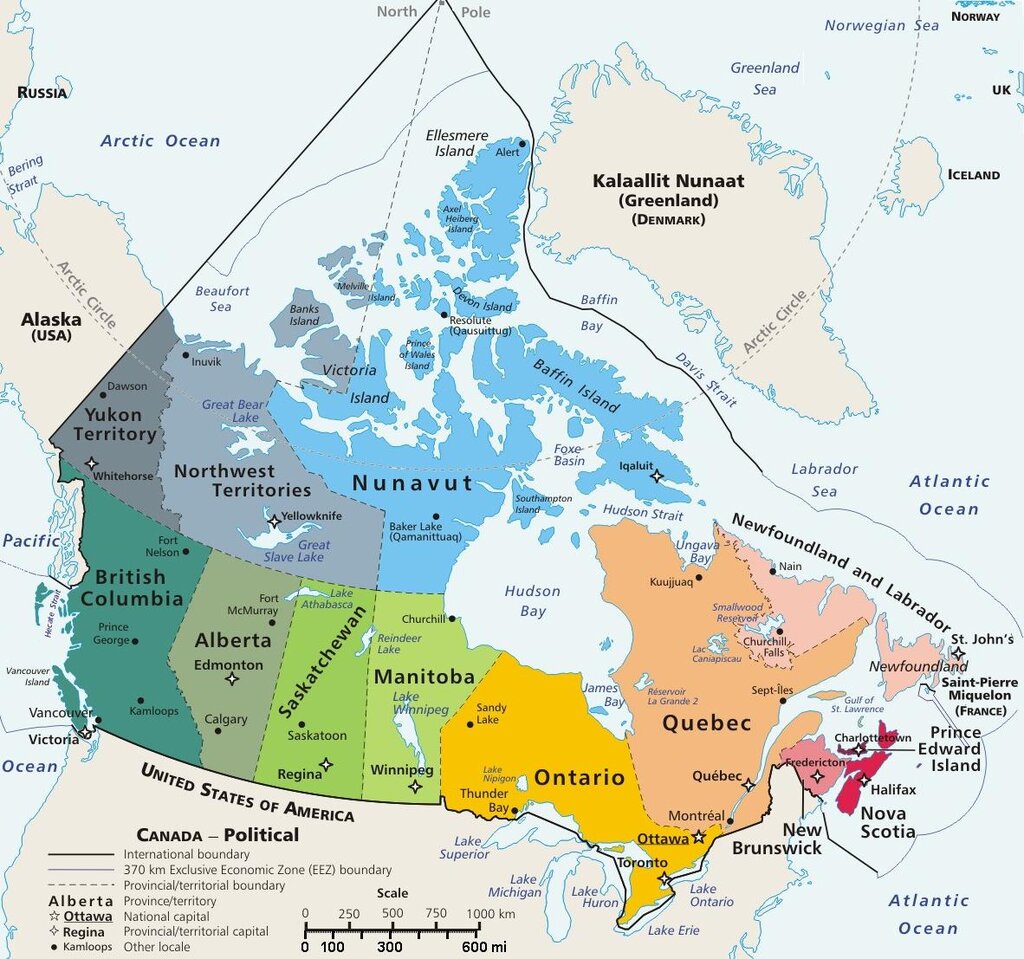
For instance, British Columbia faces significant seismic risks. Consequently, the B.C. Building Code includes rigorous amendments regarding earthquake resiliency that you won't find in the national model. Meanwhile, Alberta might prioritize structural standards related to extreme heavy-snow loads or industrial-scale oil and gas infrastructure. Knowing the national code is a great start, but knowing the provincial amendment is what keeps you out of legal trouble.
Shifting Authority in Infrastructure
For standard commercial or residential buildings, your AHJ is usually a municipal building department. However, for large-scale energy and infrastructure projects, the lines of authority often shift. In these complex environments, the AHJ might not be a city inspector, but a specialized provincial regulator.
In Alberta, for example, the Alberta Energy Regulator (AER) often acts as the primary authority for oil, gas, and coal projects, overseeing everything from initial application to final reclamation. In Ontario, the Ontario Energy Board (OEB) plays a similar role for electricity and natural gas utilities. Navigating these projects requires identifying which specific board holds the 'statutory' hammer for your particular site.
A best practice regulatory hierarchy, particularly in building regulation, involves a clear demarcation between the Building Act, Building Regulations, and Building Code.
Understanding this hierarchy is more than an academic exercise; it is a risk-management strategy. By identifying the AHJ early, you can engage them during the planning phase to streamline permits and ensure that your technical designs align with the local interpretation of the law. Let's test your understanding of how this authority shifts depending on the project type.
Identifying the AHJ is the first step in ensuring your project moves from a blueprint to a finished structure without regulatory delays. By recognizing the transition from model code to enforceable law, you can better anticipate the specific local requirements that will define your project's success.
 How do industry standards like CSA Z662 override building codes?
When Standards Supersede Codes
In the complex world of industrial infrastructure, general building codes often take a back seat to highly specialized standards. A prime example is , the Canadian standard for oil and gas pipeline systems. To the uninitiated, it might look like these standards are rebels that simply ignore the law of the land. In reality, this is a nested hierarchy. While a municipal building code handles general structures, it is often not equipped to manage the extreme pressures or environmental risks of a pipeline. This is where the concept of becomes the bridge between general law and technical expertise.
Think of the Building Code as the general operating system of a computer. Standards like CSA Z662 are specialized applications that have explicit legal authority to take over when the work becomes highly specific.
This is not a conflict of laws, but rather a hierarchy of technical specificity. Provincial statutes typically dictate that for high-risk infrastructure, the standard of care is defined by the CSA rather than a generic code. For instance, if a pipeline engineer is designing a pressure system, they must follow CSA Z662 even if a local municipal building code suggests a different approach for standard plumbing. The law recognizes that the specialized standard is the superior authority for that specific application.
| Project Element | Primary Reference | Legal Basis |
|---|---|---|
| Office Building | Provincial Building Code | Provincial Statute |
| Natural Gas Pipeline | CSA Z662 | Pipeline Act / Regulation |
| Pressure Vessels | CSA B51 | Safety Codes Act |
| Electrical Wiring | CSA C22.1 (CEC) | Electrical Safety Regulation |
Regulatory bodies, such as the Alberta Energy Regulator or the BC Energy Regulator, explicitly demand adherence to these standards. They are effectively delegating their authority to the expert consensus found in the CSA documents. This delegation ensures that the people overseeing the safety of the project are using the most rigorous, industry-vetted criteria available. For a project manager, this means your 'Standard of Care' is anchored in these referenced documents, and failing to follow them is a direct violation of your provincial operating license.
Navigating this layered compliance environment requires a clear understanding of which 'specialized application' is currently running on top of the 'operating system' of provincial law. By mastering the hierarchy of these standards, engineers and project managers can ensure that their technical designs are not just safe, but fully compliant with the specific legal mandates of their industry. This structured approach to regulation provides a predictable path forward for even the most complex infrastructure projects.
Managing As-Built Deviations
In a perfect world, every shovel hits the dirt exactly where the blueprint says it should. In the real world, you hit bedrock, find an unmapped utility line, or realize the terrain has shifted since the last survey. These discrepancies lead to an —a change from the original engineered design that occurs during construction.
It is vital to understand that a deviation is not automatically a 'violation' or a failure. It is simply a reality of field-level problem solving. However, because the original design was the basis for your legal permit, any change creates a gap in your regulatory compliance. An as-built is a legal document, not just a historical record of what happened; it represents the final you provided to the public and the environment.
The Management Workflow
Managing these deviations requires professional rigour to bridge the gap between field efficiency and legal necessity. You cannot simply 'fix it in the field' and walk away. The process generally follows four critical steps to ensure the final product still aligns with the underlying legal standards of the province and the .
| Step | Action | Objective |
|---|---|---|
| 1. Identification | Field staff flag the discrepancy immediately. | Prevent unvalidated work from proceeding. |
| 2. Engineering Assessment | Engineer reviews the change against the code (e.g., CSA Z662). | Confirm the new design meets safety 'intent'. |
| 3. AHJ Engagement | Notify the regulator if the deviation affects the permit. | Determine if a formal permit revision is needed. |
| 4. Documentation | Update the red-line drawings and final as-builts. | Create a legal record of the final configuration. |
The most difficult part of this process is the trade-off between momentum and precision. In the heat of construction, there is immense pressure to keep moving. However, if an Engineering Assessment reveals that a field-made change doesn't meet the code's intent—for example, if a pipe wall thickness is insufficient for a new, higher-pressure route—the work must be redone. This is the 'incorporation by reference' principle in action: the law doesn't care how hard the change was to make; it only cares that the result matches the referenced standard.
Validating the Change
Every deviation must be formally re-validated. This means that a Professional Engineer (P.Eng.) typically needs to sign off on the change, essentially stating that the 'as-built' version is just as safe as the 'as-designed' version. Without this re-validation, the project exists in a legal limbo. The regulator cannot confirm that the project adheres to the provincial Safety Act, and the owner may face significant liability if a failure occurs later.
By treating as-built deviations as a structured process rather than a field-level nuisance, you protect the project's legal standing. This rigour ensures that when the project is handed over to the operator, every bolt, weld, and trench is backed by the full weight of engineering validation and regulatory transparency.