CAN Bus Protocol Explained
Introduction to CAN Bus
What is a CAN Bus?
Think of a modern car. It has a brain for the engine, another for the brakes, one for the airbags, and dozens more for everything from the power windows to the radio. How do all these little computers, called Electronic Control Units (ECUs), talk to each other? They use a Controller Area Network, or CAN bus.
A CAN bus is like a nervous system for a machine. It's a messaging standard that lets all the different ECUs communicate with each other directly, without needing a central computer to play traffic cop. It's a shared network, meaning multiple devices can send and receive information over the same pair of wires.
This setup is simple but powerful. Instead of a tangled mess of point-to-point wires, every ECU connects to the same two-wire bus. This allows any device on the network to broadcast a message that all the others can hear.
A Quick History Lesson
Before the 1980s, adding a new feature to a car meant adding more wires. A lot more wires. Anti-lock brakes needed their own wiring. Power seats needed their own. This resulted in massive, heavy, and complex wiring harnesses that were expensive to build and difficult to troubleshoot.
Imagine needing a separate, dedicated phone line running from your house to every single person you ever wanted to call. It would be an logistical nightmare. That's what cars were becoming.
To solve this, the German company Bosch developed the CAN protocol in the mid-1980s. The goal was to replace the complex wiring with a simple, two-wire bus that was reliable, fast, and robust enough to handle the harsh environment of a vehicle. It was later standardized as ISO 11898, making it a universal solution.
Where CAN Bus Shines
The most common application for CAN is in automobiles. It connects nearly everything. The engine control unit sends engine speed data to the network, which the transmission control unit uses to shift gears and the instrument cluster uses to update the tachometer.
When you press the brake pedal, the anti-lock braking system (ABS) sends a message over the CAN bus to turn on the brake lights. This single system connects the powertrain, safety systems, and creature comforts into one cohesive network.
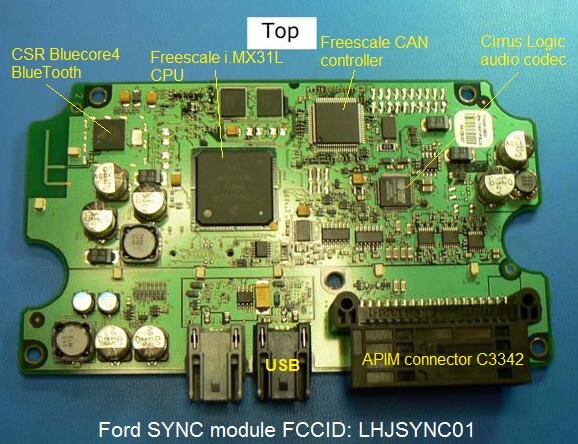
But CAN isn't just for cars. Its reliability has made it popular in many other fields. You can find CAN bus in:
- Industrial Automation: Connecting sensors, motors, and controllers on a factory floor.
- Medical Equipment: Linking components in MRI machines, patient beds, and surgical tools.
- Aerospace: Managing systems on aircraft and satellites.
- Building Automation: Controlling elevators, lighting, and HVAC systems in large buildings.
Any system where multiple smart devices need to communicate reliably in a potentially noisy environment is a good candidate for a CAN bus.
Key Advantages
So why did CAN become so dominant? It comes down to a few core benefits.
Less Wiring, Less Cost: The most obvious advantage is the dramatic reduction in wiring. Replacing hundreds of wires with just two saves weight, space, and money, both in materials and installation time.
Robust and Reliable: CAN was designed from the ground up to be resistant to electrical noise and interference. This is crucial in a car, where spark plugs and electric motors create a very harsh electrical environment.
Easy Diagnostics: Since all the ECUs are on one network, a mechanic can plug a diagnostic tool into a single port (like the OBD-II port under your dashboard) and listen in on the entire car's conversation. This makes finding and fixing problems much faster and easier.
Message Prioritization: CAN has a clever way of ensuring the most important messages get through first. A message from the brake system, for example, will always have priority over a message from the radio, ensuring critical safety functions are never delayed.
This combination of simplicity, reliability, and efficiency is why the CAN bus, a technology conceived decades ago, remains a cornerstone of modern electronics.