Calisthenics Fundamentals
Introduction to Calisthenics
The World Is Your Gym
Strength training doesn't have to involve clanking weights or complicated machines. In fact, one of the oldest and most effective ways to build a strong, capable body requires only one thing: you.
This is the core idea behind calisthenics. It's a form of exercise where your own body weight provides the resistance. Think of movements like push-ups, pull-ups, and squats. Instead of lifting an external weight, you're lifting yourself. These are typically compound movements, meaning they work multiple joints and muscle groups at the same time. This makes them incredibly efficient for building functional strength, the kind you use in everyday life.
Calisthenics is one of the most effective ways to build strength, increase endurance, and improve body control—without the need for fancy equipment.
The principles are simple, but the results are profound. By mastering control over your own body, you develop a unique blend of strength, balance, and mobility.
More Than Just Muscle
The benefits of calisthenics go far beyond building bigger muscles. Because it emphasizes control and proper form, it naturally improves your posture. You learn to hold your body in alignment, which can reduce aches and pains from daily life.
This type of training is also fantastic for your cardiovascular health. Stringing movements together can get your heart pumping just as effectively as a run. It improves body composition by building lean muscle and burning fat simultaneously. Beyond the physical, there's a huge mental component. Pushing through a tough set or finally achieving a movement you've been working on builds mental resilience and discipline.
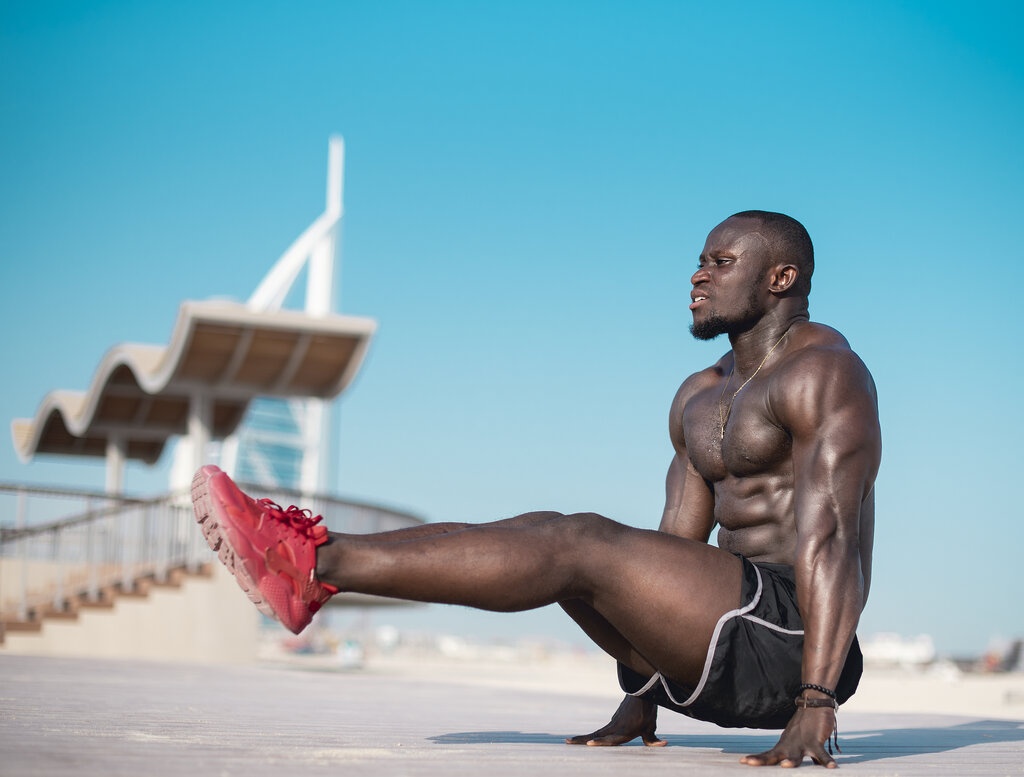
This holistic approach to fitness contributes to overall health and longevity. You're not just getting stronger for the sake of it; you're building a body that can serve you well for years to come.
Getting Stronger Without Weights
So if you're not adding more plates to a barbell, how do you get stronger? The key is a principle called progressive overload. This means you must continually increase the demands on your muscles to stimulate growth and adaptation. Your body is smart; if a workout is no longer challenging, it has no reason to change.
In calisthenics, you don't add weight. Instead, you manipulate your body and the exercise itself to make it harder. There are a few clever ways to do this.
One common method is to change your leverage. By altering the angle of your body, you can make an exercise significantly harder or easier. Think about a push-up. Doing one on your knees is easier than on your toes. Doing one with your feet elevated on a box is even harder.
Other methods include increasing the range of motion—for example, going deeper into a squat. You can also move toward more complex variations of a movement. This constant, gradual increase in difficulty is what tells your body to keep getting stronger.
Calisthenics
noun
A form of strength training consisting of a variety of movements that exercise large muscle groups, such as running, standing, grasping, pushing, etc. These exercises are often performed rhythmically and with minimal equipment, as they are intended to increase body strength, fitness, and flexibility through one's own body weight.
Ready to check your understanding?
What provides the primary resistance in calisthenics exercises?
Calisthenics exercises like push-ups and squats are known as 'compound movements' because they:
Calisthenics offers a powerful and accessible path to fitness. By understanding its core principles, you can unlock a new way to build a strong and resilient body, no matter where you are.