Calisthenics for the Martial Athlete
Mastering Scapular Control
The Stable Shoulder
In many striking arts, a loose, fluid shoulder is an asset. It allows for rapid, whip-like movements. For calisthenics, however, the goal is the opposite: creating a solid, stable platform. Think of your shoulder blades, or scapulae, as the foundation upon which all upper body strength is built. Without controlling them, you leak force and risk injury. Mastering their movement is non-negotiable for advanced skills.
Your scapulae can move in four primary ways:
- Protraction & Retraction: Imagine holding a pencil between your shoulder blades. Squeezing them together to grip the pencil is retraction. Pushing them apart, as if reaching forward to wrap your arms around a large tree, is protraction.
- Elevation & Depression: Shrugging your shoulders up to your ears is elevation. Actively pulling them down, away from your ears, is depression.
From Hanging Loose to Active Control
The first place to practice this control is with a simple hang. When you first grab a pull-up bar, your body defaults to a passive hang. Your shoulders are shrugged up by your ears (elevated) and your back muscles are relaxed. This position puts stress on your shoulder joints and ligaments.
An active hang is the foundation for all pulling movements. It's the opposite of a passive hang. Here, you actively pull your shoulder blades down (depression) and slightly back (retraction). This engages your powerful latissimus dorsi muscles, stabilizes the shoulder joint, and creates a solid base to pull from.
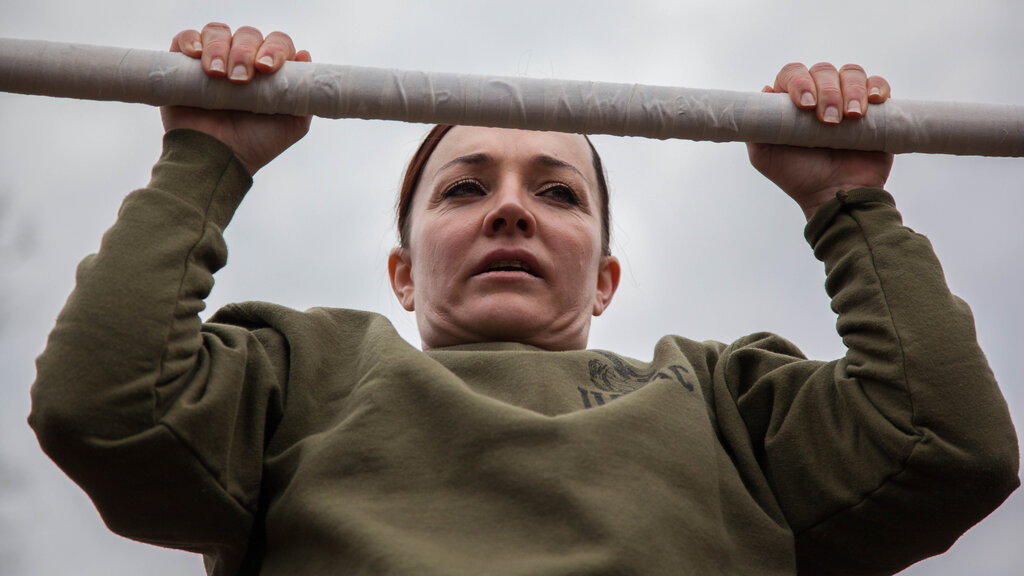
To master this, practice scapular pull-ups. Start from a passive hang and, without bending your arms, pull your shoulder blades down and back, lifting your body slightly. Hold for a moment, then slowly return to the passive position. This small movement isolates and strengthens the exact muscles needed for a strong, controlled pull-up.
The Pushing Foundation
Just as depression is key for pulling, protraction is crucial for pushing. The primary muscle for this is the serratus anterior. It originates on your ribs and attaches to the underside of your scapula. When it contracts, it pulls the scapula forward and flush against your rib cage. This prevents a common fault known as scapular winging, where the shoulder blade peels away from the back.
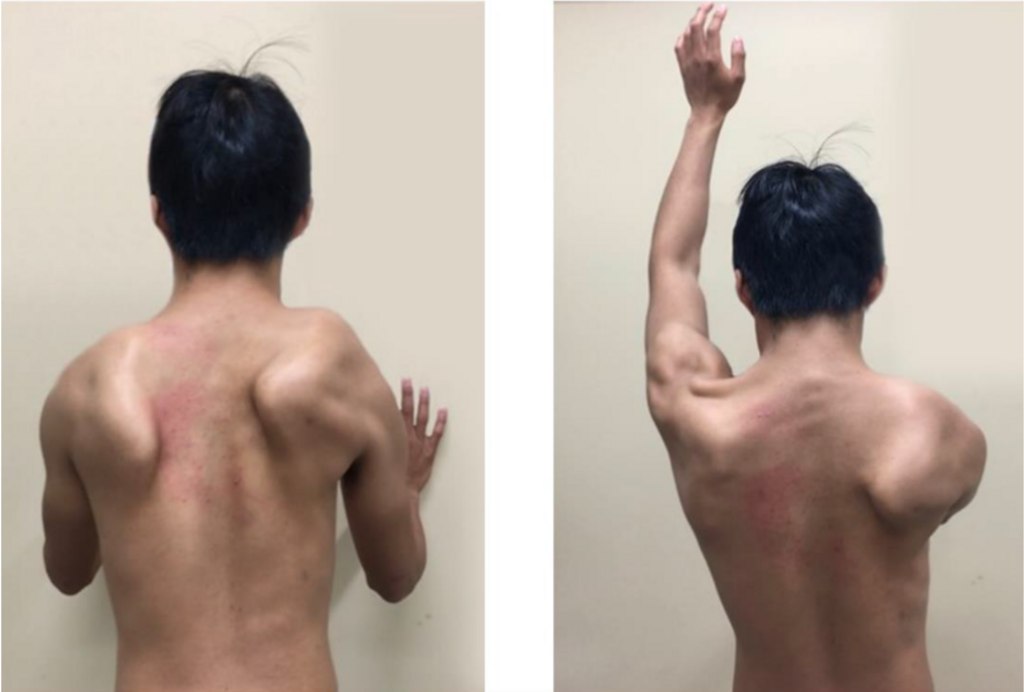
The best drill to strengthen this muscle and learn the movement is the scapular push-up. Get into a standard push-up or plank position with your arms straight. Keeping your elbows locked, sink your chest by squeezing your shoulder blades together (retraction). Then, push the ground away as hard as you can, rounding your upper back and pushing your shoulder blades apart (protraction). The entire movement should come only from your scapulae.
Another great exercise is the serratus slide. Stand facing a wall and place your forearms on it, elbows bent at 90 degrees. While maintaining pressure into the wall, slide your forearms up and out until they are overhead. Focus on keeping your shoulder blades wrapped around your rib cage throughout the movement.
Ready to test your knowledge?
What is the primary goal of scapular control in calisthenics, as described in the text?
Which pair of movements describes squeezing your shoulder blades together, then pushing them as far apart as possible?
Mastering these small, isolated movements—depression, retraction, and protraction—builds the neuromuscular control that underpins every advanced calisthenics skill. It’s the difference between struggling with instability and moving with power and precision.