California Government and Politics
Constitutional Foundations
California's Constitutional Blueprint
Every state has a constitution, but California's operates on a fundamentally different principle than the U.S. Constitution. The federal government works under a system of enumerated powers. This means it can only do what is explicitly listed in the U.S. Constitution. Think of it as a chef who is only allowed to cook from a specific list of recipes.
California, by contrast, operates on plenary powers This means the state government can do anything that isn't explicitly forbidden by the state constitution or federal law. Our chef now has a fully stocked kitchen and can create any dish they want, as long as it doesn't violate a few basic house rules. This distinction is crucial. It transforms the state from a mere administrator of federal policy into a sovereign laboratory for its own laws and social contracts.
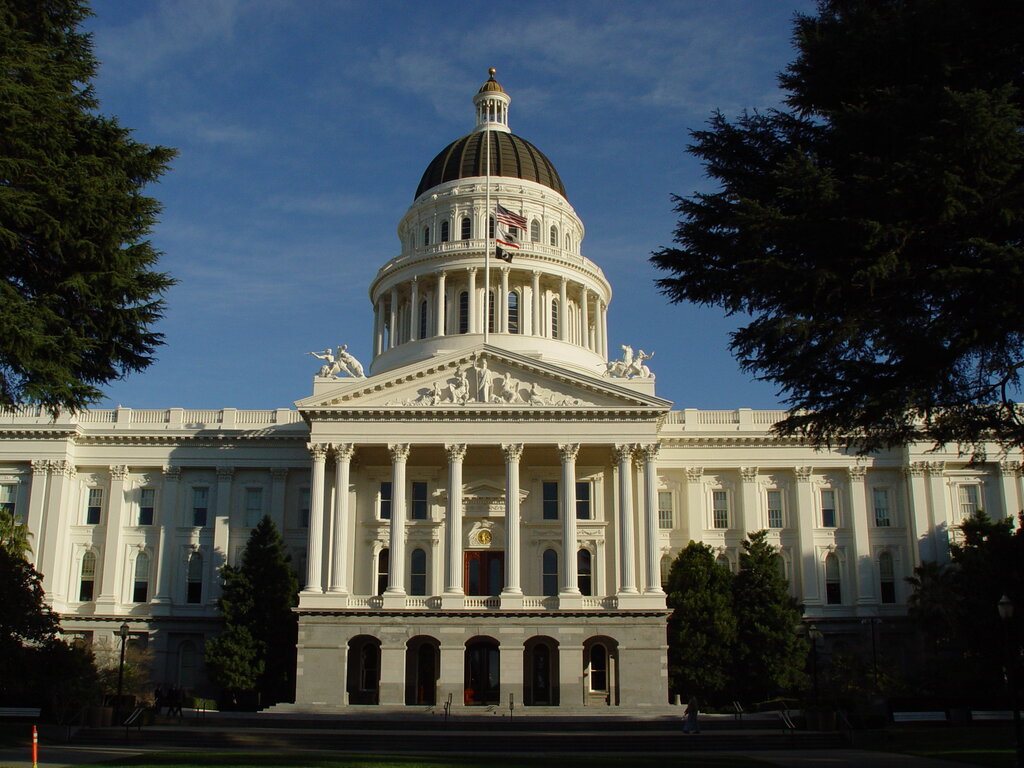
An Expansive Bill of Rights
Article I of the California Constitution is its Declaration of Rights. While it covers familiar ground like freedom of speech and religion, it goes much further than the U.S. Bill of Rights. It explicitly grants Californians the right to pursue and obtain "safety, happiness, and privacy." Following a 2022 amendment, it also explicitly includes the "fundamental right to choose to have an abortion and the fundamental right to choose or refuse contraceptives."
These are not abstract ideals; they are enforceable rights. This expanded list of protections is a legacy of the , which replaced the state's original 1849 constitution. The new document was a populist reaction to the overwhelming power of railroad monopolies and aimed to give more direct power and protection to the people.
This powerful state constitution allows California's courts to act independently. Using a doctrine known as , the California Supreme Court can interpret its own constitution to provide greater protections than those offered by the federal constitution. A landmark example is the right to free speech. The U.S. Supreme Court has ruled that the First Amendment does not protect speech in privately owned shopping malls. However, the California Supreme Court decided that our state's constitution does protect such activity, finding that large malls have become the modern equivalent of public squares.
Changing the Constitution
Given its detail, the California Constitution has to be a living document. There are two ways to change it: amendments and revisions. An amendment is a change to a single part of the constitution. It can be placed on the ballot by a two-thirds vote of the legislature or through a citizen-led initiative petition. A revision is a much broader, more fundamental change to the document's structure. Revisions can only be proposed by the legislature or by a new constitutional convention.
| Method | What It Is | How It's Done |
|---|---|---|
| Amendment | A targeted change to one or more provisions. | Proposed by 2/3 of legislature OR by citizen initiative. |
| Revision | A substantial alteration of the entire document. | Proposed by legislature OR a constitutional convention. |
This distinction matters. The California Supreme Court has the power to strike down an initiative that it deems a revision rather than an amendment, arguing that such a sweeping change cannot be made directly by the voters without going through the more deliberative revision process. This creates a check on the power of direct democracy, ensuring the fundamental structure of state government remains stable.
What is the primary difference in how the California Constitution and the U.S. Constitution grant power to their respective governments?
Which of the following is a right explicitly protected by the California Constitution's Declaration of Rights but not by the U.S. Bill of Rights?