Calculus Inverse Functions
Understanding Functions
The Function Rule
A function is one of the most fundamental ideas in mathematics. Think of it as a simple rule or a machine. You put something in, and you get exactly one thing out. For every input, there is a single, predictable output.
Imagine a vending machine. If you press the button for a soda (your input), you expect to get a soda (your output). You wouldn't expect to sometimes get a soda and other times get a bag of chips. Functions work the same way: one input, one specific output.
function
noun
A relation between a set of inputs and a set of permissible outputs with the property that each input is related to exactly one output.
We often write functions using notation like , which you read as "f of x." This doesn't mean f multiplied by x. It simply means we have a function named 'f' that uses the input 'x' to produce an output.
For example, if we have the function , it tells us to take any input 'x' and add 5 to it. If the input is 3, the output is . If the input is -2, the output is .
Domain and Range
Two other important terms go along with functions: domain and range. The domain is the set of all possible inputs a function can accept. The range is the set of all possible outputs it can produce.
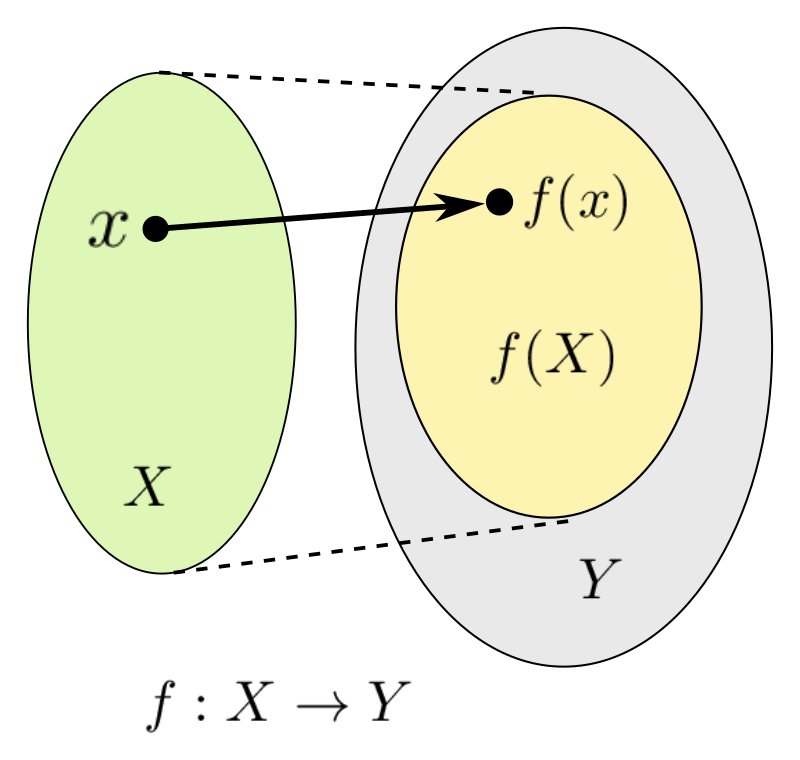
For our vending machine, the domain is all the buttons you can press that will actually give you an item. The range is all the different items available in the machine. If a button is broken, it's not in the domain. If the machine is out of candy bars, candy bars aren't in the range.
Let's look at our simple function again:
For this function, we can plug in any real number for . So, its domain is all real numbers. Since adding 5 to any real number will also result in a real number, the range is also all real numbers.
domain
noun
The set of all possible input values for a function.
range
noun
The set of all possible output values of a function.
Common Types of Functions
Functions come in many different shapes and sizes. Their graphs can be straight lines, graceful curves, or something else entirely. Let's explore a few of the most common types.
Linear Functions These are the simplest functions. Their graphs are always straight lines. The general form is:
Here, represents the slope of the line (how steep it is), and is the y-intercept (where the line crosses the vertical y-axis).
Think about a taxi fare. There might be a flat fee of $3 just to get in (), plus $2 for every mile you travel (). The total cost () for a trip of miles would be . This is a linear function.
Quadratic Functions These functions include a variable raised to the second power (). Their graphs are U-shaped curves called parabolas. The general form is:
Quadratic functions appear in many real-world situations, such as calculating the path of a thrown object or the shape of a satellite dish. The values of , , and determine the parabola's shape, direction, and position on the graph.
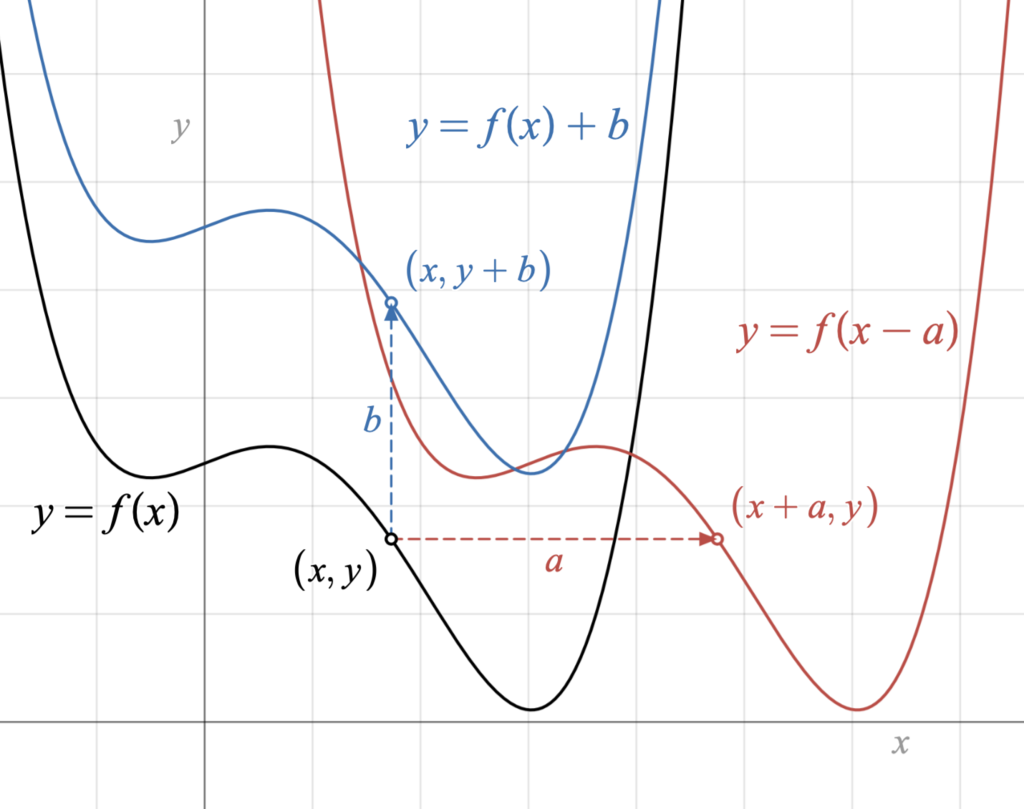
Exponential Functions In these functions, the variable appears in the exponent. They are used to model things that grow or shrink very quickly. The general form is:
A classic example is population growth. If a population of bacteria doubles every hour, its growth can be described by an exponential function. Compound interest in a savings account is another example where your money grows exponentially over time.
Now, let's test your understanding of these core concepts.
What is the defining characteristic of a mathematical function?
If a function is defined as , what is ?
Understanding what a function is, along with its domain and range, is a crucial first step. These ideas form the foundation for many other concepts in mathematics.