Calculus Fundamentals
Functions and Graphs
What Is a Function?
Think of a function as a simple machine. You put something in, it does something to it, and a single, predictable thing comes out. For example, imagine a machine that doubles any number you put into it. If you put in a 2, you get a 4. If you put in a 10, you get a 20. For every input, there is exactly one output. That's the core idea of a function.
In math, we write this relationship using function notation. For our doubling machine, we'd write it as . Here, 'f' is the name of our function, and 'x' is the placeholder for the input. The expression represents the output. So, .
The key rule for a function is that each input must have only one output. If you put 3 into a machine and sometimes get 6 but other times get 9, it's not a function.
Domain and Range
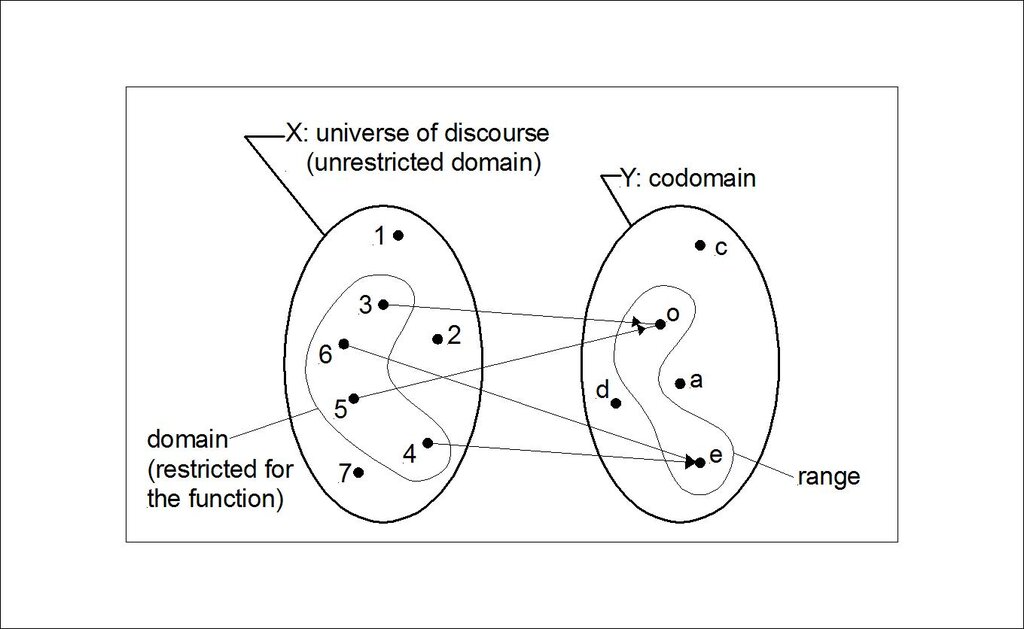
Two important terms that go with functions are domain and range. They simply describe what goes in and what comes out.
Domain
noun
The set of all possible input values (x-values) for a function.
Range
noun
The set of all possible output values (f(x) or y-values) for a function.
Consider our function . We can put any real number into it, so its domain is all real numbers. Since doubling any real number results in another real number, its range is also all real numbers.
However, some functions have restrictions. For the function , we can't take the square root of a negative number (without getting into imaginary numbers). So, its domain is all non-negative numbers (). The output is also always non-negative, so its range is all non-negative numbers ().
A Tour of Functions
Functions come in many families, each with its own characteristic equation and graph shape. Understanding these families helps you quickly grasp the behavior of a function just by looking at its formula.
Linear Functions These are the simplest functions. They represent a constant rate of change and their graphs are always straight lines. The general form is , where is the slope (how steep the line is) and is the y-intercept (where the line crosses the vertical axis).
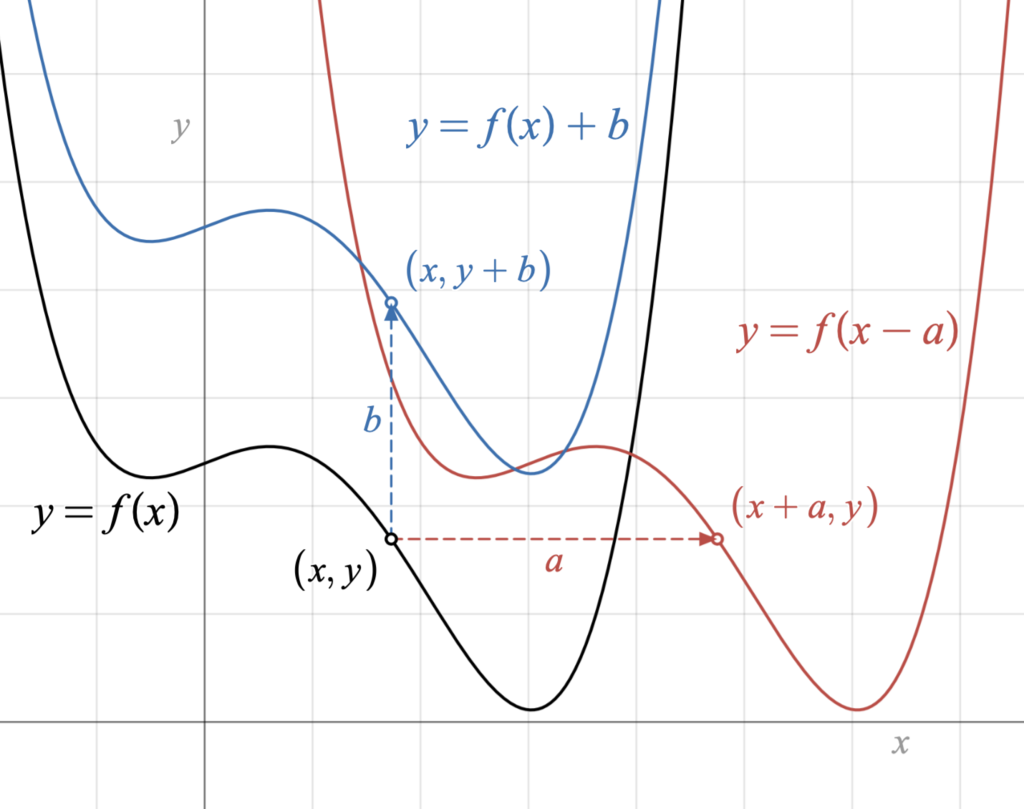
Quadratic Functions These functions have an term, and their graphs are called parabolas—smooth, U-shaped curves. The general form is . If 'a' is positive, the U opens upwards; if 'a' is negative, it opens downwards.
Polynomial Functions Linear and quadratic functions are types of polynomial functions. In general, a polynomial function involves sums of powers of x, like . Their graphs are smooth, continuous curves that can have various turns and wiggles. The highest power of x (the degree) influences the overall shape and number of turns.
Rational Functions These are fractions where the numerator and denominator are both polynomials, like or . Their graphs can be interesting, often having asymptotes—lines that the graph gets closer and closer to but never touches. This happens where the denominator is zero, as division by zero is undefined.
Exponential Functions Exponential functions model rapid growth or decay, like population growth or radioactive decay. Their form is , where the variable x is in the exponent. Their graphs start flat and then shoot up (or down) very quickly.
Logarithmic Functions Logarithmic functions are the inverses of exponential functions. If , then . They answer the question, "What exponent do I need to raise the base 'b' to in order to get 'y'?" Their graphs are the mirror image of exponential graphs across the line . They increase very slowly for large x-values.
Ready to check your understanding? Let's try a few questions.
What is the most fundamental property of a function in mathematics?
Given the function , what is the value of ?
Functions and their graphs are the visual language of calculus. Being able to recognize these basic types and understand what domain and range mean will give you a solid foundation for everything that comes next.