Calculus from Zero to One
Functions and Graphs
What Is a Function?
Think of a function as a simple machine. You put something in, it does something to it, and something new comes out. For every specific input, you get exactly one specific output. In math, we call the input 'x' and the machine 'f'. The output is then called 'f(x)', which you read as 'f of x'.
A function is a rule that assigns to each input exactly one output. No exceptions.
For example, let's say our function machine is . If you put in a 3, the machine adds 2 and gives you a 5. If you put in a -10, it gives you a -8. The relationship is consistent and predictable. This input-output pairing is the core idea behind every function.
Domain and Range
Every function machine has rules about what you can put into it and what it can produce. These sets of possible values are called the domain and range.
- Domain: This is the complete set of all possible inputs ( values) a function will accept.
- Range: This is the complete set of all possible outputs ( values) a function can produce.
Consider the function . You can square any number, so its domain is all real numbers. But what about the output? Since squaring a number, positive or negative, always results in a positive number (or zero), the range is all non-negative numbers.
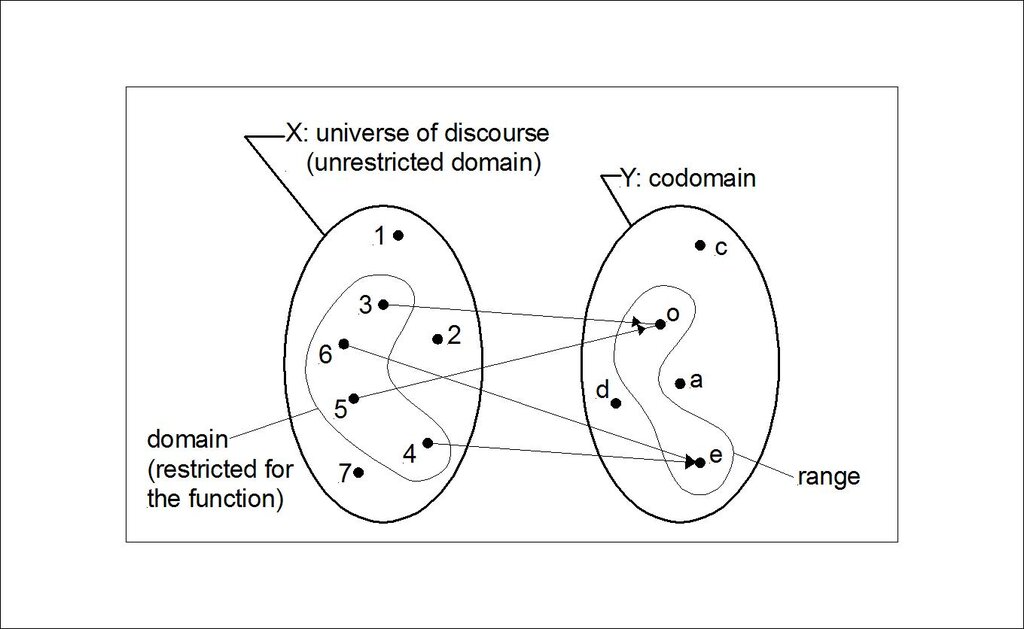
Some functions have restrictions. Take . You can't put 0 into this function, because dividing by zero is undefined. So, the domain is all real numbers except 0. Similarly, there's no input that will make the function output 0, so the range is also all real numbers except 0.
Types of Functions
Functions come in many flavors. Let's look at some of the most common types and what their graphs look like. A graph is just a visual way of showing the relationship between all the inputs and outputs of a function.
Graphs are a powerful way to understand calculus visually.
Linear Functions These are the simplest functions. They have the form and their graphs are always straight lines. The 'm' represents the slope (how steep the line is), and 'b' is the y-intercept (where the line crosses the vertical y-axis).
Quadratic Functions Next up are quadratic functions, which have the form . Their graphs are smooth U-shaped curves called parabolas. The 'a' value determines if the parabola opens upwards () or downwards ().
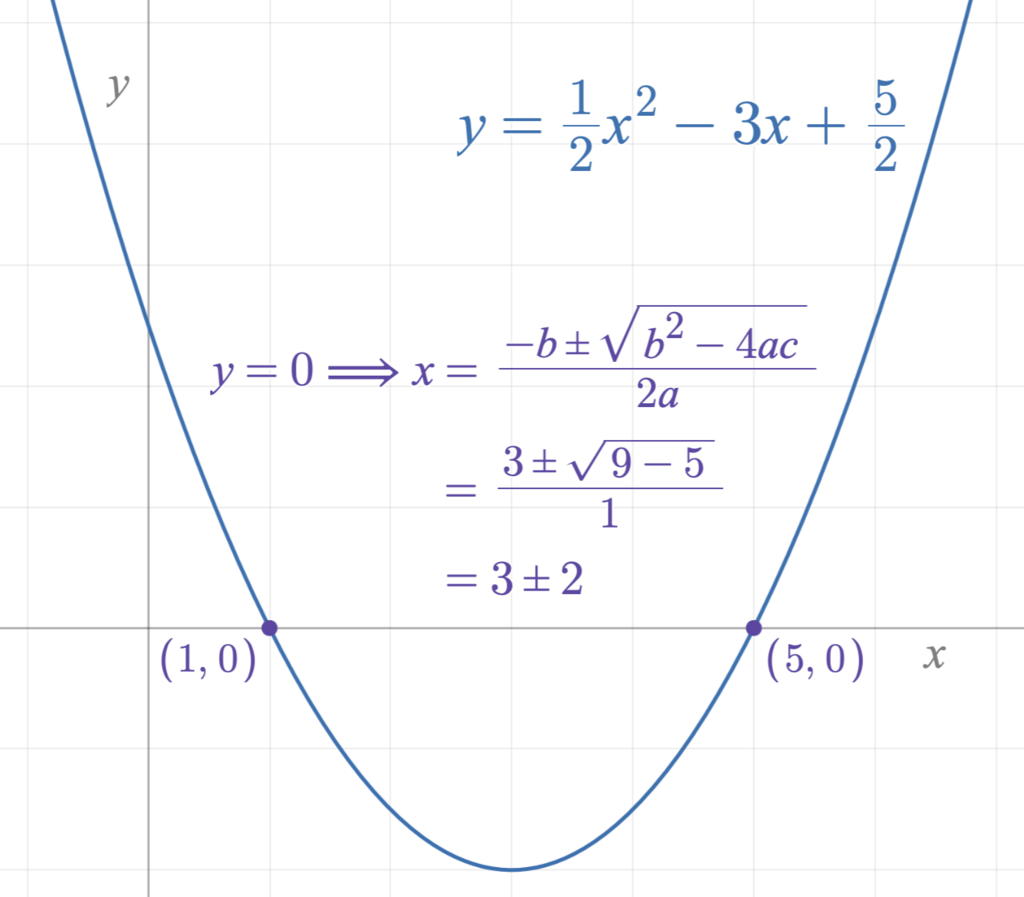
Polynomial Functions Linear and quadratic functions are both types of polynomial functions. A polynomial is a function with one or more terms, where each term consists of a coefficient and a variable raised to a non-negative integer power, like . The highest power is called the degree. The graphs of polynomials are smooth, continuous curves that can have various twists and turns.
Rational Functions A rational function is a ratio of two polynomials, like . Their graphs can be interesting because they often have asymptotes—lines that the curve approaches but never touches. These occur where the denominator is zero (in this case, at ).
Exponential Functions These functions, of the form (where the base 'a' is a positive constant), model rapid growth or decay. Think of population growth or radioactive decay. Their graphs start off flat and then shoot up (for growth) or start high and quickly drop towards zero (for decay).
Logarithmic Functions Logarithmic functions, like , are the inverses of exponential functions. They answer the question: "what exponent do we need to raise 'a' to, to get 'x'?" Their graphs are a reflection of exponential graphs across the line . They grow very slowly and are only defined for positive inputs.
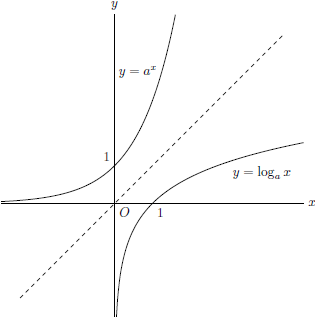
Understanding these basic function types and their graphical shapes is a fundamental skill. It allows you to visualize mathematical relationships and provides the groundwork for more advanced topics.
Ready to test your knowledge?
What is the defining characteristic of a mathematical function?
If a function is defined as , what is the value of ?
Grasping functions and how they look on a graph is the first major step into the world of calculus. With this foundation, you're ready to explore how functions change.