Calculus Essentials
Functions and Graphs
What Is a Function?
Think of a function as a simple machine. You put something in, and it gives you something back. For every specific input, you get exactly one specific output. A coffee grinder is a good analogy. You put in coffee beans (the input), and you get ground coffee (the output). You'd be very surprised if you put in beans and got out tea.
In math, this machine follows a specific rule. The input is usually a number, called , and the output is another number, often called (read as "f of x"). The letter is just the name of the function, and the parentheses don't mean multiplication. They just hold the input.
Function
noun
A rule that assigns to each input exactly one output.
For example, the function is a rule that says "take the input, , and add 5 to it." If you put in 3, you get out 8. If you put in -10, you get out -5. For each input, there's only one possible result.
Domain and Range
Every function has two important sets of values associated with it: its domain and its range.
Domain
noun
The set of all possible input values (x-values) for a function.
Range
noun
The set of all possible output values (f(x) or y-values) a function can produce.
Let's look at the function . You can square any number, so its domain is all real numbers. But what about the output? When you square any number (positive or negative), the result is always positive or zero. So, the range is all non-negative numbers ().
Some functions have restrictions. For example, with , the input cannot be 0, because division by zero is undefined. For the function , the input cannot be negative, because you can't take the square root of a negative number (in the real number system). Understanding the domain is key to knowing where a function can operate.
A Tour of Common Functions
Functions come in many flavors. Getting to know the basic types and what their graphs look like is a huge step toward understanding calculus. A graph is just a visual representation of a function, plotting all the pairs that satisfy its rule.
The graph of a function consists of all points in the coordinate plane.
Linear Functions
The simplest type of function is a linear function. Its graph is a straight line. The standard form is . Here, represents the slope (how steep the line is) and is the y-intercept (where the line crosses the vertical y-axis).
Quadratic Functions
These functions are written as , where , , and are constants and is not zero. Their graphs are U-shaped curves called parabolas. If is positive, the parabola opens upwards. If is negative, it opens downwards.
Polynomial Functions
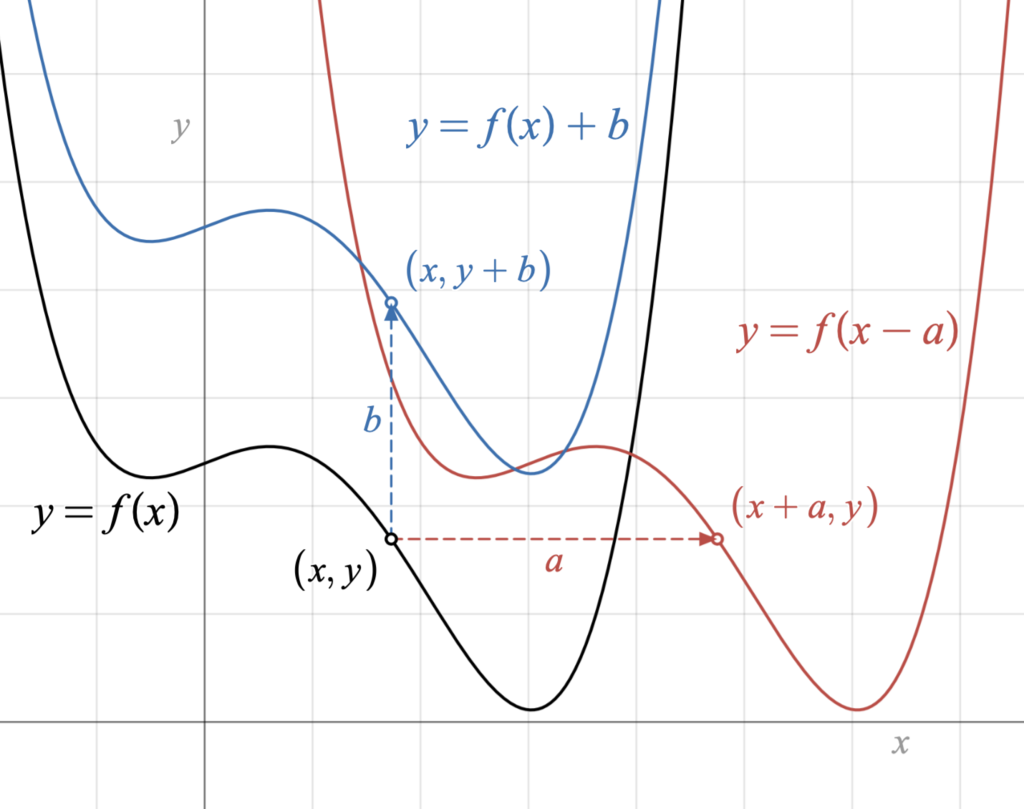
Linear and quadratic functions are actually types of polynomial functions. A polynomial is a function that involves only non-negative integer powers of , like . The graphs of polynomials are smooth, continuous curves that can have several turns and wiggles.
Exponential Functions
These have the form , where the base is a positive constant. Exponential functions model things that grow or shrink very quickly, like compound interest or radioactive decay. Their graphs either shoot up rapidly or fall steeply towards zero.
Logarithmic Functions
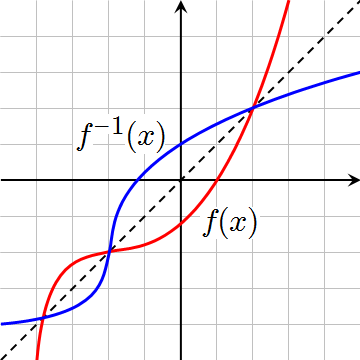
Logarithmic functions, like , are the inverses of exponential functions. They answer the question: "What exponent do I need to raise the base to in order to get ?" They are useful for measuring things that have a very wide range of values, like earthquake intensity (Richter scale) or sound levels (decibels).
Trigonometric Functions
Functions like sine (), cosine (), and tangent () are called trigonometric functions. They are periodic, meaning their graphs repeat in regular cycles. They are essential for describing anything that oscillates or moves in waves, from sound waves to the orbits of planets.
Having a mental picture of these basic function types and their graphs is a fundamental skill. It allows you to quickly understand the behavior of an equation just by looking at its form. This visual intuition is one of the most powerful tools you'll use in calculus.
What is the fundamental rule that defines a relationship as a function?
Which number is NOT in the domain of the function ?