Calculating Total Addressable Market
Understanding Market Segmentation
Finding Your People
You can't sell everything to everyone. Trying to do so is like trying to be best friends with every single person on the planet. It’s impossible, and you'd spread yourself too thin. Smart businesses don't shout their message into the void; they talk directly to the people most likely to listen. This is the core idea behind market segmentation.
Market segmentation is the process of dividing a broad market into smaller, more manageable groups of people, or segments, who share common needs, priorities, or characteristics.
By understanding these smaller groups, a company can tailor its products, messaging, and marketing efforts to resonate deeply with a specific audience. Instead of a one-size-fits-all approach, segmentation allows businesses to create a one-size-fits-one experience. This focus is crucial for developing an effective marketing strategy and building a strong foundation for your business.
Ways to Slice the Market
When we're talking about individual consumers, there are four classic ways to group them. Think of them as different lenses you can use to see your potential customers more clearly.
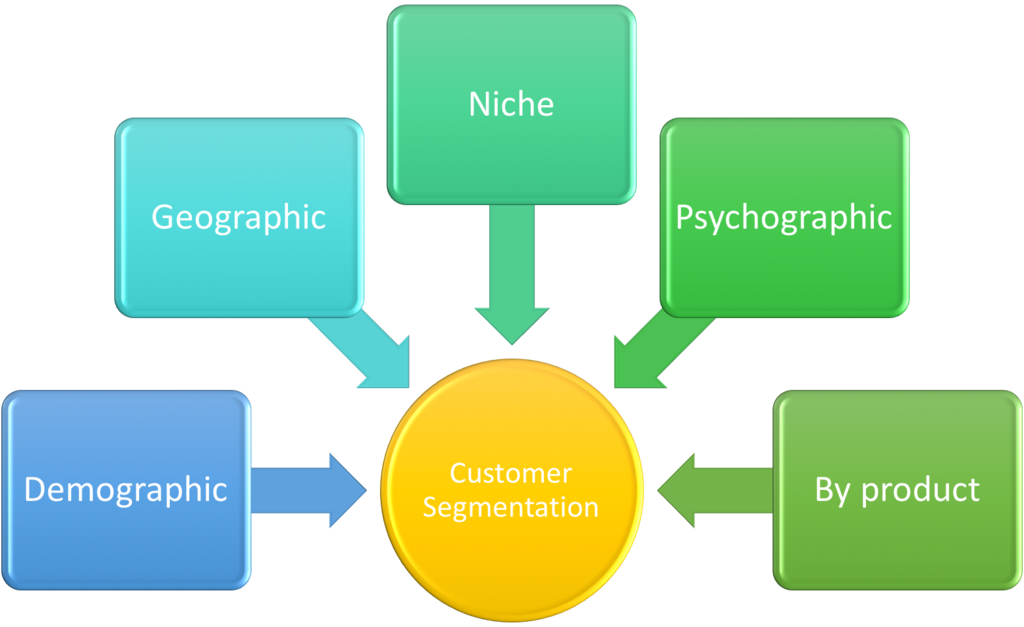
Demographic segmentation is the most straightforward. It groups people based on objective, factual data:
- Age
- Gender
- Income
- Education level
- Occupation
- Marital status
A company selling retirement planning services, for instance, would naturally focus on an older age demographic with a certain income level.
Geographic segmentation divides the market based on location. This can be as broad as a country or as specific as a neighborhood. A company selling surfboard wax isn't going to waste money advertising in Nebraska. Likewise, a restaurant chain might tailor its menu to local tastes, offering spicier options in regions where that's popular.
Psychographic segmentation goes deeper, looking at a person's internal traits:
- Lifestyle (e.g., active, minimalist, urban)
- Values and beliefs
- Interests and hobbies
- Personality traits
Patagonia, the outdoor clothing company, is a master of this. They don't just sell jackets; they sell a lifestyle of adventure and environmental responsibility, connecting with customers who share those values.
Behavioral segmentation focuses on actions. It groups people based on how they interact with a product or brand:
- Purchasing habits (e.g., frequent buyers, first-time customers)
- Brand loyalty
- Benefits sought (e.g., seeking quality, low price, or convenience)
- Usage rate (heavy user vs. light user)
Think of a coffee shop's loyalty program. It identifies and rewards frequent customers, a classic example of behavioral segmentation at work.
Segmenting Businesses
Segmenting a business-to-business (B2B) market follows similar logic, but the categories are different. Instead of looking at individual consumers, you're looking at entire organizations.
| Segmentation Basis | Description | Example |
|---|---|---|
| Industry | Grouping by the type of business they are in. | A software company creating different versions of its product for healthcare and finance industries. |
| Company Size | Segmenting by number of employees or annual revenue. | Offering a basic plan for startups and an enterprise solution for large corporations. |
| Location | The geographic location of the business. | A commercial cleaning service targeting businesses within a 50-mile radius. |
| Purchasing Approach | How the company makes buying decisions. | Targeting companies with a centralized purchasing department versus those where individual managers decide. |
By using these filters, B2B companies can focus their sales and marketing efforts on the organizations that are the best fit for their products or services.
Ready to test your knowledge? Let's see how well you've grasped these concepts.
What is the primary purpose of market segmentation?
A company that sells luxury watches targets individuals with high income and who are in managerial or executive occupations. Which type of segmentation are they primarily using?
Market segmentation isn't just an abstract exercise. It’s a practical tool that helps businesses use their resources wisely, create more compelling products, and communicate in a way that truly connects with people.