Caesar Augustus The First Emperor
Early Life
A Humble Start
The man who would become Rome's first emperor began life as Gaius Octavius. Born in 63 BC, his family was well-off but not part of Rome's ancient nobility. His father, also named Gaius Octavius, was a respected senator and the first in his family to achieve such a high rank, making him a novus homo, or "new man."
While respected, the Octavii family lacked the deep-rooted influence of clans like the Cornelii or Fabii. The key to young Octavius's future came from his mother's side. His mother, Atia, was the daughter of Julia Minor, the sister of none other than Gaius Julius Caesar.
This family connection was everything. It placed the young boy on the radar of Rome's most ambitious and powerful man.
An Emperor's Education
Octavius received a typical education for a Roman of his class. He studied rhetoric, the art of public speaking, which was essential for any aspiring politician. He also studied Greek language and philosophy. His upbringing was strict, and he was known to be a serious and disciplined child. But his most important teacher was his great-uncle.
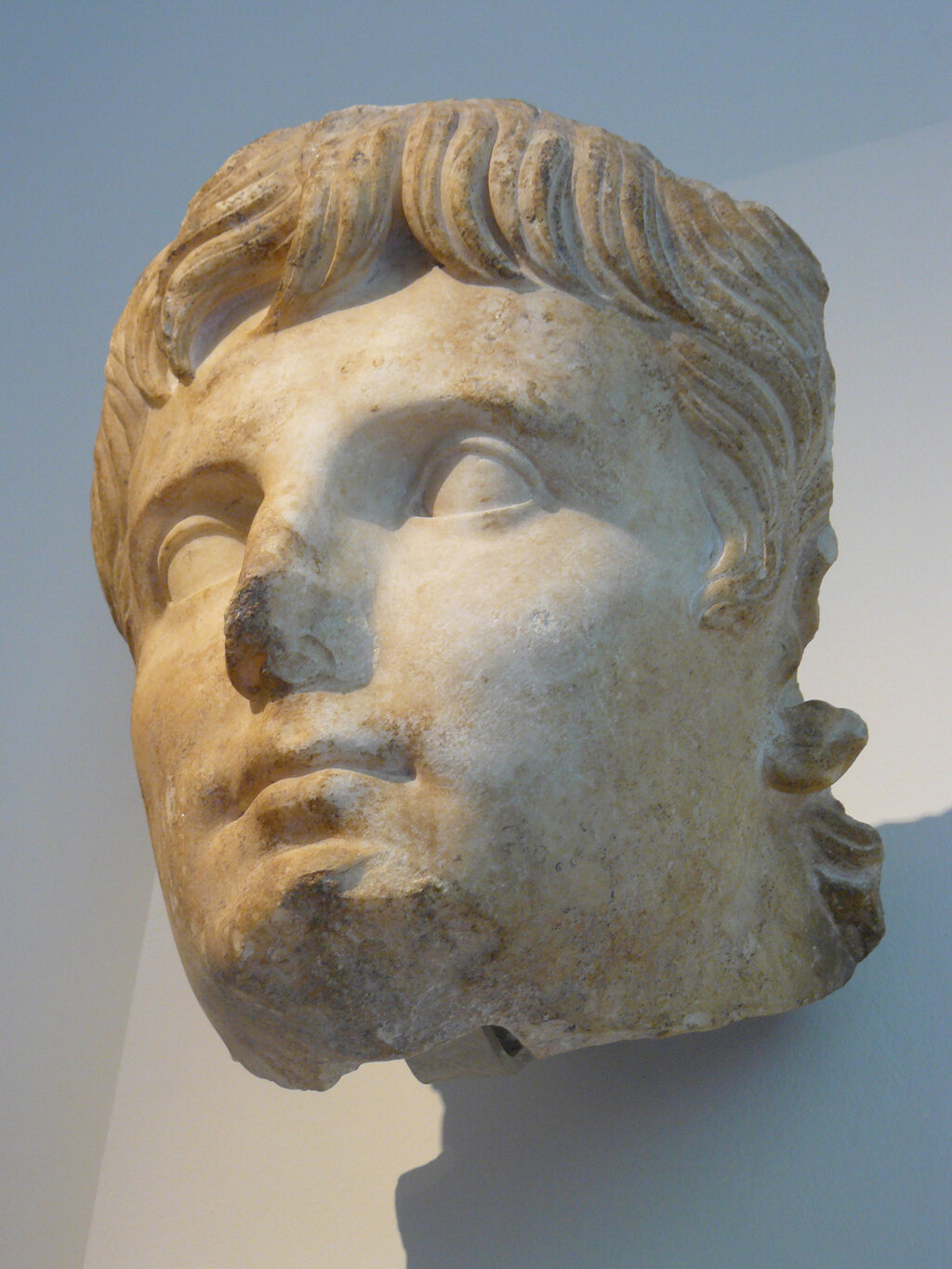
Julius Caesar, having no legitimate sons of his own, took a special interest in his grandnephew. He saw potential in the boy's sharp mind and quiet determination. As Octavius grew, Caesar began to involve him in his affairs. At sixteen, Octavius was elected to the College of Pontiffs, a prestigious religious body, an appointment secured by Caesar's influence.
This was a clear signal to the Roman world: Caesar was grooming the boy for something greater.
Early Ambitions
Octavius was eager to prove himself worthy of his great-uncle's attention. In 46 BC, he planned to join Caesar for his campaign in Africa but was forced to stay behind due to his mother's concerns. The next year, he was determined to join Caesar's campaign against the sons of Pompey in Spain. This time, he fell seriously ill.
Despite his poor health, as soon as he recovered, he set out to join Caesar's legions. He was shipwrecked along the way and had to cross enemy territory with only a few companions. His persistence in reaching his great-uncle's camp impressed Caesar immensely.
This journey demonstrated the ambition and resolve that would define his life. He was no longer just a boy in Caesar's shadow; he was a potential successor.
After the campaign, Caesar changed his will. He secretly adopted Octavius as his son and named him his primary heir. Octavius, sent to Apollonia in modern-day Albania to complete his military training, had no idea how drastically his life was about to change. He was still a student, a young officer-in-training, when news arrived that would set him on the path to becoming Augustus.
Let's test your knowledge of Octavius's formative years.
What was Octavius's crucial family connection that set the stage for his rise to power?
Octavius's father was the first in his family to become a senator, earning him what Roman title?
With the death of his great-uncle, Octavius's early life came to an abrupt end. The ambitious young man now faced the chaotic and dangerous world of Roman politics, not as a minor player, but as the heir to Caesar's name and fortune.