C++ for Embedded Systems
Introduction to Embedded Systems
What is an Embedded System?
Look around you. You're probably surrounded by dozens of computers you don't even recognize as computers. The little chip in your microwave that runs the timer, the controller in your car that manages the anti-lock brakes, and the electronics inside a TV remote are all examples of embedded systems.
An embedded system is a combination of computer hardware and software designed for a specific function. Unlike your laptop, which can run thousands of different applications, an embedded system typically does one thing and does it well. It's embedded as part of a complete device, often including hardware and mechanical parts.
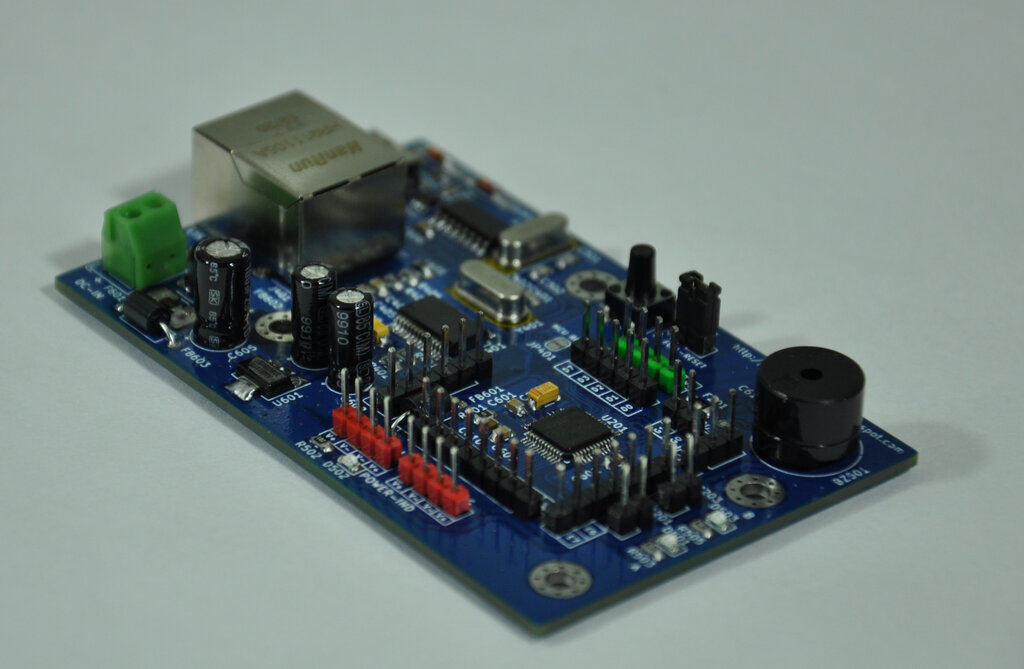
These systems have a few key characteristics. They are often resource-constrained, meaning they have limited memory, processing power, and energy consumption. They must be reliable and stable, sometimes for years without an update. Many are also real-time systems, which means they must respond to events within a strict, predictable timeframe. For a car's airbag system, a delay of a few milliseconds could be catastrophic.
Core Components
While designs vary wildly, most embedded systems share a basic architecture. At the heart is a processor, which acts as the brain of the operation. This is typically a microcontroller (MCU), a compact chip that integrates a processor, memory, and input/output peripherals on a single circuit.
Think of an MCU as a mini-computer on a single chip, perfect for dedicated control tasks.
The other main components include:
- Memory: This includes Read-Only Memory (ROM) or Flash to store the program code, and Random-Access Memory (RAM) for temporary data during operation. Both are usually much smaller than in a typical computer.
- Peripherals: These are the interfaces to the outside world. Input peripherals like sensors and buttons gather information, while output peripherals like motors, LEDs, and display screens perform actions.
Not Your Average Computer
The main difference between an embedded system and a general-purpose computer like a PC is specialization. A PC is a jack-of-all-trades, designed to be flexible. An embedded system is a master of one, optimized for a single job.
| Feature | Embedded System | General-Purpose Computer |
|---|---|---|
| Purpose | Single, dedicated function | Multi-purpose, runs various apps |
| Resources | Highly constrained (memory, power) | Abundant resources |
| Operating System | Often none, or a Real-Time OS (RTOS) | General OS (Windows, macOS, Linux) |
| User Interface | Minimal or none (e.g., a single button) | Rich graphical user interface (GUI) |
| Reliability | Must be extremely high and predictable | A crash is inconvenient but rarely dangerous |
The Role of C++
So where does C++ fit in? For decades, the C language has been a dominant force in embedded programming because it is fast, efficient, and provides low-level control over hardware. C++ is built on top of C, so it retains all of those powerful features.
Crucially, C++ also adds high-level concepts like objects and classes. This is known as abstraction. It allows developers to manage the growing complexity of modern embedded software—like the infotainment system in a car—without sacrificing the performance needed to run on constrained hardware.
C++ gives developers the power to write code that is both close to the metal and highly organized. You can directly manipulate hardware memory addresses if you need to, but you can also build reusable, modular software components. This makes it a versatile and powerful choice for a huge range of embedded applications.
Designing embedded systems requires an intimate understanding of both low-level programming and hardware architecture.
Now that you have a grasp of the fundamentals, it's time to check your understanding.
What is the primary characteristic that distinguishes an embedded system from a general-purpose computer like a laptop?
A system that must respond to events within a strict, predictable timeframe, like a car's airbag deployment system, is known as a:
Understanding what makes embedded systems unique is the first step. Next, we'll begin to explore how to use the C++ language to control them.