Business Strategy and Operational Excellence
Strategic Environmental Analysis
Scanning the Horizon
A business doesn't exist in a vacuum. It operates within a dynamic environment, constantly shaped by forces far beyond its control. A new law, a shift in consumer taste, or a breakthrough in technology can upend a market overnight. The practice of systematically tracking and interpreting these external variables is called environmental scanning. It’s about looking beyond the company’s walls to see what’s coming.
Think of it like a ship's captain scanning the horizon. Ignoring the weather (the macro-environment) is a surefire way to run into a storm. By understanding the broader context, a company can navigate threats, seize opportunities, and make smarter internal decisions about where to allocate its resources.
Mapping the Big Picture with PESTEL
To make sense of the complex world outside, strategists use frameworks. One of the most effective is the , an acronym that helps organize macro-environmental factors into six distinct categories. It’s a bird's-eye view of the landscape in which you operate.
| Category | Focus Area | Example Question |
|---|---|---|
| Political | Government policy, political stability, trade tariffs | How might the upcoming election impact industry regulations? |
| Economic | Interest rates, inflation, economic growth, consumer spending | How will rising inflation affect our material costs and customer budgets? |
| Social | Cultural trends, demographics, lifestyle changes, public opinion | Is the growing demand for sustainable products a trend we can leverage? |
| Technological | Innovation, automation, R&D, new technology adoption | Could a new AI technology automate a key part of our workflow? |
| Environmental | Climate change, weather, sustainability, pollution regulations | How do new carbon emission laws impact our manufacturing process? |
| Legal | Employment laws, health and safety, consumer rights | Are there new data privacy laws that affect how we handle customer info? |
Conducting a PESTEL analysis isn't just an academic exercise. The findings directly reveal potential opportunities and threats. For instance, a political move to subsidize electric vehicles is a massive opportunity for a battery manufacturer. Conversely, a new data privacy law is a threat to a company that relies heavily on user data for marketing.
Connecting the Outside World to Your Inside Strategy
Knowing the external landscape is only half the battle. The next step is to connect those macro trends to your company’s specific situation. This is where the comes in. It’s a simple but powerful framework that bridges the external environment with a firm's internal capabilities.
SWOT stands for Strengths, Weaknesses, Opportunities, and Threats.
- Strengths: Internal factors that give your company an edge (e.g., a strong brand, proprietary technology).
- Weaknesses: Internal factors that put you at a disadvantage (e.g., high debt, outdated equipment).
- Opportunities: External factors you can leverage for growth (e.g., a new market opening up).
- Threats: External factors that could harm your business (e.g., a new competitor, a recession).
The key insight here is the connection. The Opportunities and Threats you identify in a SWOT analysis are often direct outputs from your PESTEL scan.
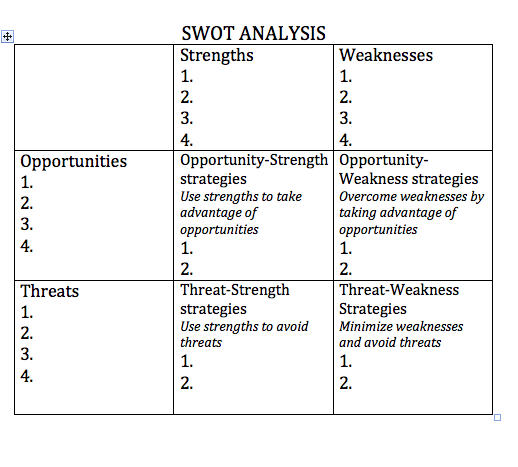
PESTEL tells you what's happening in the world. SWOT tells you what it means for your business.
Let's walk through an example. Imagine you run a small, local coffee shop.
- PESTEL Scan (Social factor): You notice a growing social trend toward plant-based diets and dairy alternatives in your city.
- SWOT Analysis (Opportunity): You identify this as an Opportunity. Your shop could attract a new, health-conscious customer segment.
- Micro-Decision: Based on this, you decide to allocate part of your budget to source high-quality oat and almond milk, train your baristas on new drinks, and launch a marketing campaign targeting local vegans.
An external macro trend (a social shift) was translated into a specific, actionable business decision (a micro decision) through the combined lens of PESTEL and SWOT. This is strategic alignment in action. Without this analysis, the coffee shop might have missed the trend entirely, while a more strategic competitor capitalized on it.
Ready to test your understanding of these strategic tools?
What is the primary purpose of environmental scanning in a business context?
A PESTEL analysis focuses on internal company factors.
By regularly scanning the external environment and honestly assessing your internal capabilities, you can build a strategy that is not only ambitious but also grounded in reality.