Business Problem Decomposition Mastery
Understanding Business Problems
Spotting the Real Issue
Every business, from a corner coffee shop to a global corporation, faces problems. A business problem is simply a gap between where a company is and where it wants to be. Maybe sales are flat, but the goal is to grow. Perhaps employee turnover is high, but the aim is to retain talent. Closing that gap is the core of business strategy.
The most critical step isn't finding a solution, it's correctly identifying the problem. Think of it like a doctor's diagnosis. Prescribing treatment without understanding the illness is a recipe for disaster. A cough could be a common cold or something far more serious. Similarly, treating a symptom like “low profit” with a price hike might ignore the real cause, like a decline in product quality or poor customer service.
The first and most crucial step in any problem-solving technique is accurately identifying and defining the problem.
Getting the problem wrong means wasting time, money, and energy on a solution that doesn't work. Before you can fix anything, you have to be brutally honest about what's actually broken.
The Anatomy of a Problem
Business problems are rarely simple or self-contained. They are often complex, with tangled roots that spread across different departments. A dip in website traffic isn't just a marketing problem; it could be tied to slow server speeds (IT), a confusing user interface (design), or uncompetitive pricing (strategy).
This complexity is a key characteristic of business challenges. The visible issue, or symptom, often masks a deeper, underlying cause. A decline in quarterly profits, for instance, is a symptom. The real problem could be anything from an inefficient supply chain driving up costs to a new competitor stealing market share.
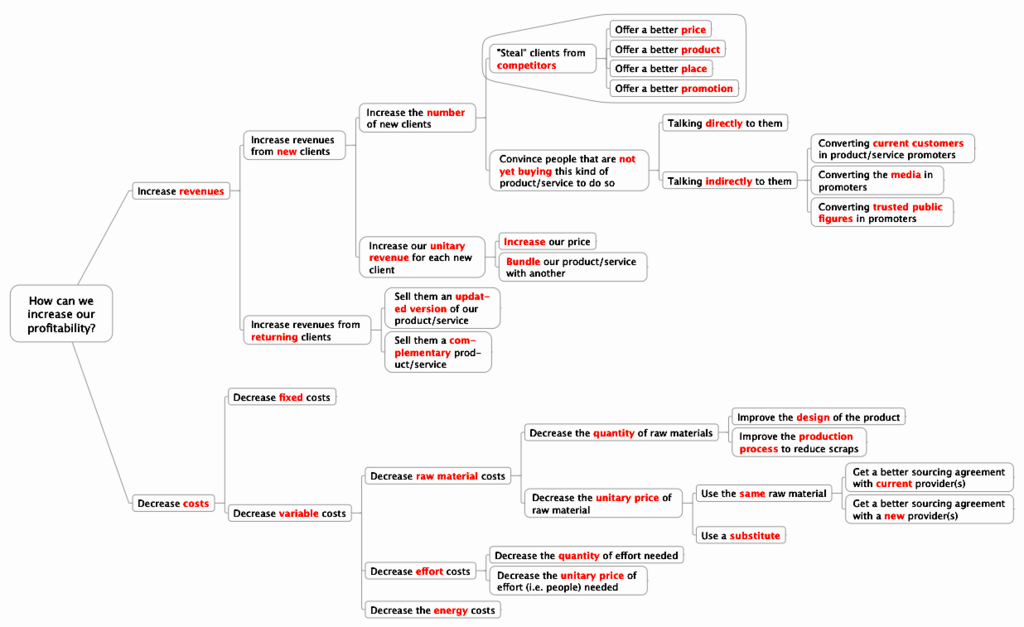
Unaddressed, these issues directly impact a company's performance. An inefficient process doesn't just waste time; it lowers output, frustrates employees, and can delay customer orders, damaging the company's reputation. What starts as a small operational snag can ripple outwards, affecting morale, customer loyalty, and ultimately, the bottom line.
Who Does This Affect?
A problem rarely exists in a vacuum. It always affects people, and these people are called stakeholders. Stakeholders are anyone with an interest or concern in the business. This includes owners, employees, customers, suppliers, and even the local community.
Understanding a problem requires looking at it from these different viewpoints. This is called stakeholder analysis. For example, a decision to automate a factory process to cut costs might seem like a straightforward solution to an efficiency problem. But how does it look to other stakeholders?
| Stakeholder | Perspective on Factory Automation |
|---|---|
| Employees | Concerned about job security and the need for new skills. |
| Customers | Hope for lower prices or better quality, but worry about potential disruptions. |
| Investors | See an opportunity for higher profits and a better return on their investment. |
| Suppliers | Wonder how it will change the orders they receive. |
Each stakeholder has a unique perspective on both the problem and any potential solution. Ignoring any of these groups means you're only seeing part of the picture. An employee on the factory floor might know about an operational issue that an executive in a boardroom would never see. A loyal customer can offer insights into a product flaw that internal testing missed.
Good communication is the bridge between a problem and a shared understanding of that problem. Once a problem is identified, it must be articulated clearly to everyone involved. Vague statements like “we need to improve sales” are useless. A better articulation would be: “Our sales in the western region have declined by 15% this quarter, primarily with our small business clients.”
This kind of clarity ensures everyone is focused on the same target. It defines the scope of the problem and provides a benchmark for measuring success. Without it, teams work in different directions, and the real issue remains unsolved.
What is the most accurate definition of a business problem?
A company notices that its employee turnover rate has increased significantly. This is most likely a...
Defining a problem is the first, and most important, part of solving it. By understanding its characteristics, its impact, and the people it affects, you lay the groundwork for finding a truly effective solution.