Building Your Own AI Chatbot
Introduction to Large Language Models
What Are Large Language Models?
At its core, a large language model (LLM) is an AI designed to understand and generate human-like text. Think of it as a highly advanced version of the autocomplete on your phone. While your phone might suggest the next word in a sentence, an LLM can write an entire essay, draft an email, or even create a piece of computer code.
These models are called "large" because of two things: the immense amount of text data they are trained on (often spanning a significant portion of the internet) and the massive number of parameters they contain. A parameter is like a knob or a dial that the model can tune during training to improve its performance. The more parameters, the more nuanced and complex the patterns in language it can learn.
A large language model (LLM) is an AI model trained on massive amounts of text data that can understand and generate human-like text, recognize patterns in language, and perform a wide variety of language tasks without task-specific training.
Their main purpose is to process language. This can mean translating from French to English, summarizing a long report, answering a question, or continuing a story you've started. They work by calculating the probability of which word should come next, given the sequence of words that came before it. This simple-sounding task, when done at an enormous scale, leads to surprisingly capable and creative results.
The Architecture of Understanding
The key breakthrough that enabled modern LLMs is an architecture called the Transformer. Before the Transformer, AI models struggled to keep track of context in long sentences. If a sentence started by mentioning a character named Jane, an older model might forget who "she" referred to by the end of the paragraph.
The Transformer solved this with a mechanism called attention. Attention allows the model to weigh the importance of different words in the input text when it's producing an output. It can "pay attention" to the most relevant words, no matter where they are in the sequence. This is how an LLM can understand that in the sentence "The cat, which had been sleeping all day on the warm, sunny windowsill, finally stretched and chased the mouse," the word "it" in a follow-up sentence likely refers to the cat, not the windowsill or the mouse.
This ability to handle long-range dependencies in text was a game-changer. Models could suddenly grasp grammar, context, and nuance far more effectively than before.
Training an LLM
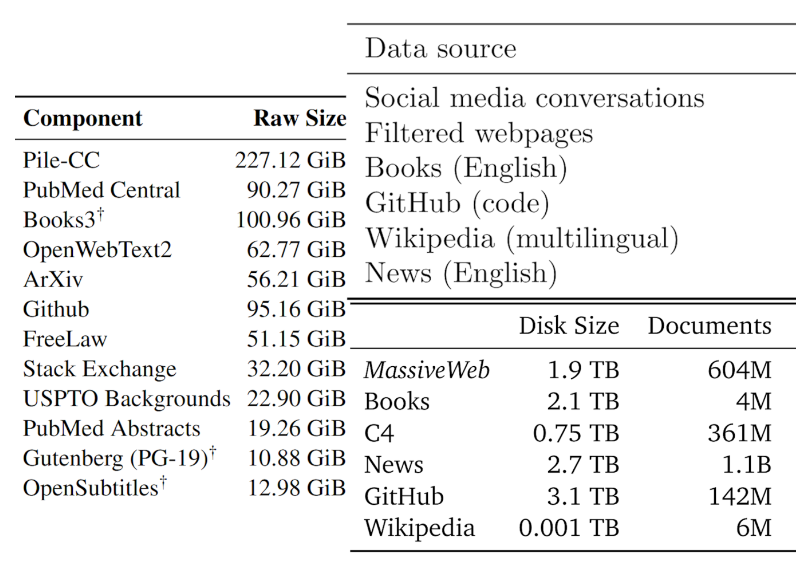
Training a large language model is a massive undertaking. It starts with a huge dataset of text and code. This data comes from books, articles, websites, and other sources, representing a vast swath of human knowledge and expression. The model learns by trying to predict the next word in a sentence from this data. It makes a guess, compares its guess to the actual word, and then adjusts its internal parameters to be slightly more accurate next time. This process is repeated billions or even trillions of times.
This initial phase is called pre-training. It's where the model learns grammar, facts about the world, reasoning abilities, and even some stylistic patterns. After pre-training, many models go through a second phase called fine-tuning, where they are trained on a smaller, higher-quality dataset to align their behavior with human expectations, making them more helpful and less likely to generate harmful content.
The evolution of these models has been rapid. Early models like GPT-1 (released in 2018) were impressive but limited. With each new version, like GPT-2, GPT-3, and now GPT-4, the models have grown larger, been trained on more data, and become exponentially more capable. They've gone from generating slightly awkward sentences to writing coherent articles, passing difficult exams, and creating functional software.
Risks and Responsibilities
With great power comes great responsibility. LLMs are powerful tools, but they also have significant risks. Because they are trained on data from the internet, they can inherit the biases present in that data. This can lead to them generating text that reflects stereotypes related to gender, race, or other attributes.
Another major issue is the tendency for LLMs to "hallucinate," or make up facts. They are designed to generate plausible-sounding text, not to be factually accurate. An LLM might confidently state an incorrect historical date or invent a scientific study that doesn't exist, all while sounding completely convincing.
There are also concerns about misuse, such as generating misinformation at scale, creating spam, or being used for malicious social engineering. As these models become more integrated into our lives, it's crucial for developers and users to be aware of these limitations and work to mitigate the potential for harm.
Ready to check your understanding? Let's see what you've learned.
What is the fundamental task a large language model performs to generate text?
The term "large" in Large Language Model refers to the physical size of the servers and the amount of electricity consumed.
Understanding these core concepts provides a solid foundation for exploring the rapidly evolving world of artificial intelligence and language.