Building Your First Rectifier
Electricity Basics
Electricity as Water in a Pipe
Think of electricity flowing through a wire like water flowing through a pipe. This simple analogy helps break down the two most important concepts in electricity.
Current
noun
The flow of electric charge. In our analogy, this is the amount of water moving through the pipe—the flow rate.
Current is measured in amperes, or amps (A) for short. More amps mean more electricity is flowing.
Voltage
noun
The pressure pushing the electric charge. In our analogy, this is the water pressure that makes the water flow.
Voltage is measured in volts (V). Higher voltage means more pressure pushing the electric current. Without voltage, the current won't flow, just like water won't move through a flat pipe without any pressure.
Two Flavors of Current
Not all electric current behaves the same way. It comes in two main types: direct current (DC) and alternating current (AC).
Direct Current (DC) is like a river. The water flows steadily in one direction. This is the kind of power you get from batteries. Your smartphone, laptop, and flashlight all run on DC power.
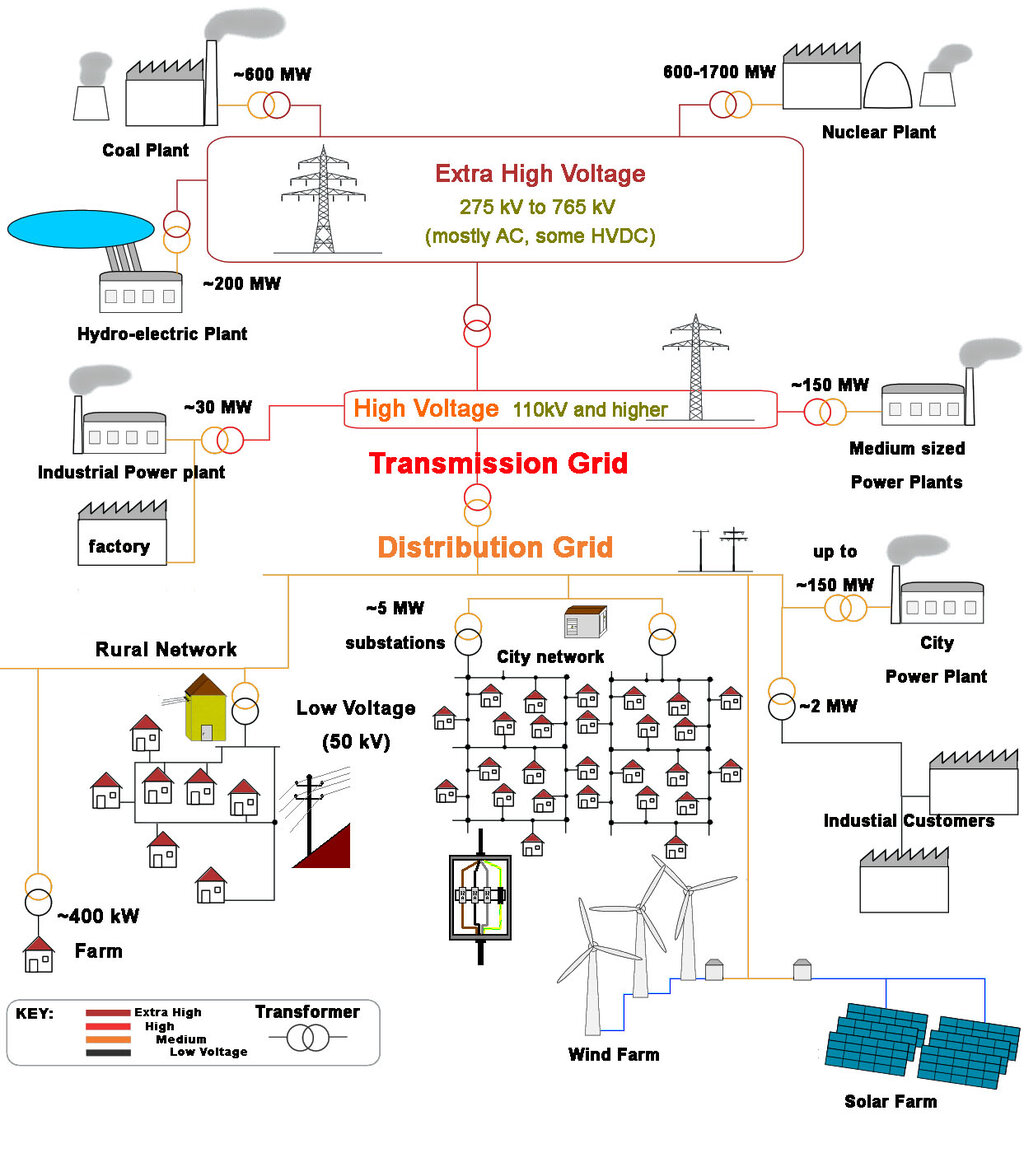
Alternating Current (AC) is different. Imagine the water in the pipe sloshing back and forth rapidly, constantly reversing its direction. This is the type of power that comes from the electrical outlets in your wall. Large power plants generate AC because it's much more efficient to send over long distances to power our homes and cities.
The AC to DC Problem
This brings us to a fundamental problem. The power grid supplies our homes with AC, but many of our most important devices—especially anything with a microchip, like a computer or a phone—need smooth, one-way DC power to function. Sending AC power directly into your laptop would be like trying to fill a water bottle from a pipe where the water is sloshing violently back and forth. It wouldn't work, and it would damage the electronics.
So, how do we solve this? We need a device that acts as a one-way valve for electricity, converting the back-and-forth flow of AC into the steady, one-way flow of DC . That device is called a rectifier. Every little black box, or 'wall wart,' that you plug in to charge your phone or power your laptop contains a rectifier. It's the unsung hero that bridges the gap between the power plant and your pocket.
Now that we understand the basics of what AC and DC are, let's test your knowledge.
Using the analogy of water flowing through a pipe, what does voltage represent?
What is the primary function of the 'wall wart' or power adapter for your laptop?