Building Your First Power Rectifier
AC vs DC
The Two Types of Electricity
Electricity isn't just one thing. It comes in two main flavors: Direct Current (DC) and Alternating Current (AC). Think of them as two different ways for energy to travel down a wire.
Direct Current (DC) flows in one steady direction. Alternating Current (AC) rapidly switches its direction, back and forth.
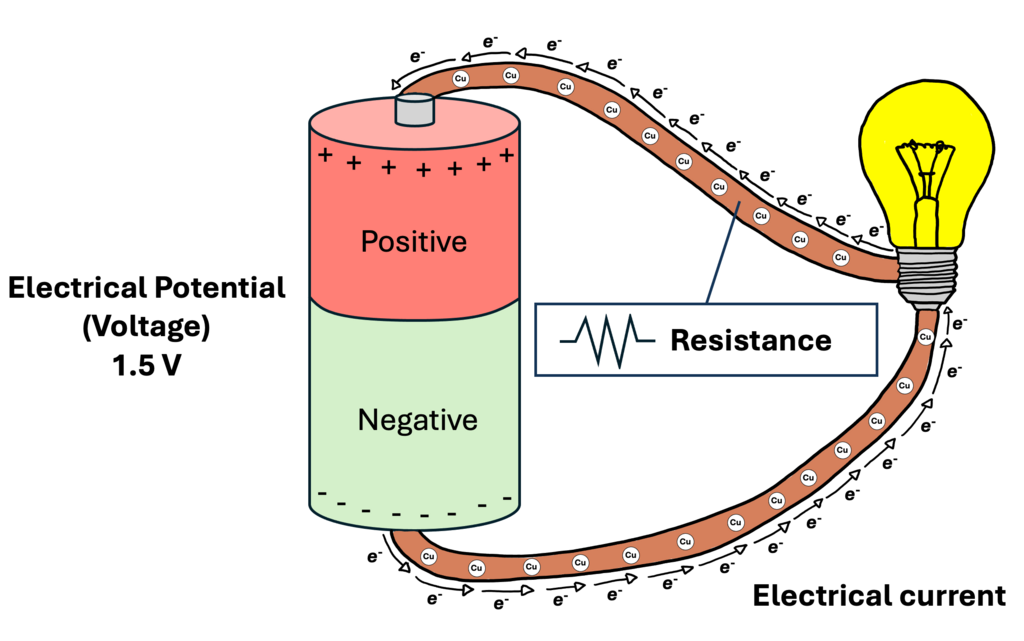
Batteries provide DC power. The electrons flow out of the negative side, travel through the device you're powering (like a flashlight bulb), and return to the positive side. It's a one-way street.
A Water Analogy
To make sense of this, let's imagine the wires are pipes filled with water. In this analogy, voltage is like the water pressure, and current is the flow of the water itself.
A DC circuit is like a river. The water flows from a high point to a low point, always in the same direction. It's a smooth, constant stream.
An circuit is different. Imagine a pipe where a piston at one end pushes and pulls the water, causing it to slosh back and forth very quickly. The water doesn't really travel far, but the energy from the movement does. That’s AC power. The electricity in your wall outlets switches direction 60 times every second.
From Wall to Gadget
Here's the puzzle: the AC power from your wall is great for long-distance travel, but nearly all of your electronics—phones, laptops, TVs—can't use it. They need the smooth, steady flow of DC power to work correctly.
Feeding raw AC into your phone's delicate circuits would be like trying to water a tiny plant with a firehose that's blasting on and off. It just wouldn't work and would instantly destroy the device.
So how do we get from the wall's AC to the gadget's DC? We use a converter.
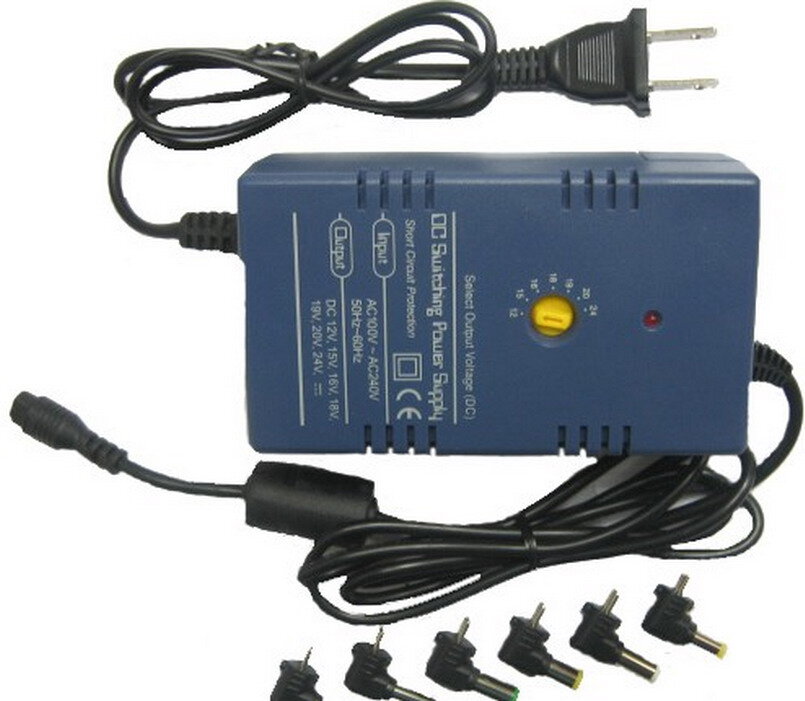
That little brick on your laptop charger or the cube you plug your phone's USB cable into is doing a critical job. It's a power adapter, and its main purpose is to convert the high-voltage AC from the outlet into the low-voltage DC your device needs. Inside that brick is a circuit called a that performs this conversion.
A Healthy Respect for Power
It's important to be extremely careful with the AC power from your wall outlets. The voltage is high enough to be very dangerous, even lethal. Never experiment with mains power or try to open up power supplies while they are plugged in.
The low-voltage DC that comes out of your chargers is much safer, which is why you can handle the end of a USB cable without any risk.
Understanding this difference between AC and DC is the first step. Now, we can start to explore how a rectifier circuit actually works.
What is the primary function of the power adapter (the brick or cube) for your laptop or phone?
In the analogy where wires are pipes filled with water, what does electrical 'current' represent?