Building Your First Learning AI
Introduction to Machine Learning
What is Machine Learning?
Machine learning teaches computers to learn from data, find patterns, and make decisions without being explicitly programmed for every task. Think of it like teaching a toddler to recognize a cat. You don't write a list of rules describing 'cat-ness'. Instead, you show them pictures of cats. Eventually, the toddler learns to identify a cat on their own.
Machine learning works the same way. We feed a computer program, called a model, lots of data. The model learns the patterns in that data so it can make predictions or decisions about new, unseen data. It's a subfield of Artificial Intelligence, focusing specifically on this ability to learn from experience.
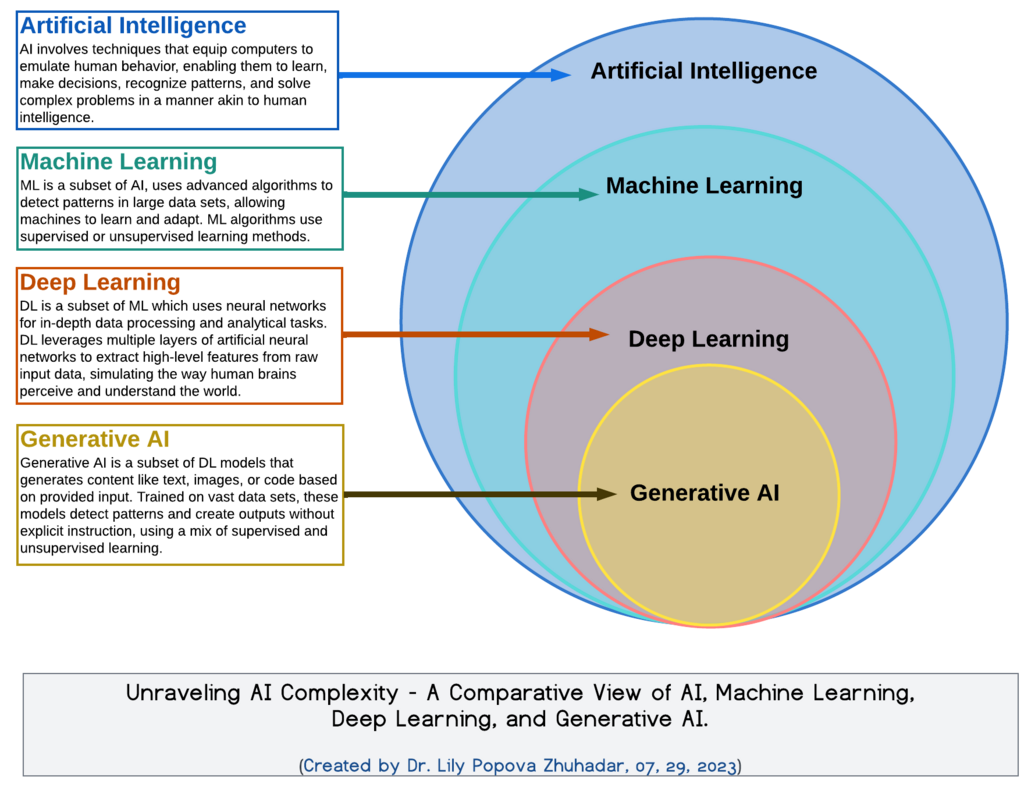
The core idea is simple: systems can learn from data, identify patterns, and make decisions with minimal human intervention.
Learning with a Teacher
The most common type of machine learning is called supervised learning. The 'supervised' part means the data we use for training is already labeled with the correct answers. It’s like using flashcards with the answers on the back to study for a test. The model looks at an input, makes a prediction, and then compares its prediction to the correct label. It adjusts its internal logic to get closer to the right answer next time.
This process is repeated thousands or even millions of times. The goal is for the model to get so good at finding the relationship between the inputs and the labels that it can accurately predict the label for brand new, unlabeled data.
A classic example is email spam filtering. The model is trained on a massive dataset of emails that have been labeled as either 'spam' or 'not spam'. It learns the features associated with spam (like certain keywords or sender patterns) and uses that knowledge to classify new incoming emails.
Learning on Your Own
What if you don't have labeled data? That's where unsupervised learning comes in. In this approach, the model is given a dataset without any explicit labels or correct answers. Its job is to find the hidden structure or patterns within the data all by itself. It’s like being handed a box of mixed Lego bricks and asked to sort them into piles. You might group them by color, size, or shape, discovering the categories on your own.
Unsupervised learning is powerful for exploring data and uncovering relationships you might not have known existed.
Customer segmentation is a common use case. An e-commerce company can use unsupervised learning to group its customers based on purchasing behavior. This might reveal distinct groups, like 'frequent bargain shoppers' or 'high-end weekend buyers', allowing the company to tailor its marketing strategies without ever starting with predefined labels.
Learning Through Trial and Error
The third main type is reinforcement learning. This method is all about learning to make a sequence of decisions in an environment to achieve a goal. The model, often called an 'agent', learns by doing. It performs an action and receives feedback from the environment in the form of a reward or a penalty. The agent's goal is to maximize its total reward over time.
Think of training a dog. When it performs a trick correctly (like 'sit'), you give it a treat (a reward). When it does something wrong, you might say 'no' (a penalty). Over time, the dog learns which actions lead to treats and performs them more often.
Reinforcement learning powers self-driving cars, which must make constant decisions about steering and speed to safely reach a destination. It's also used to train computers to play complex games like Chess or Go, where an agent learns winning strategies by playing against itself millions of times.
Now let's check your understanding of these different learning styles.
What is the primary goal of machine learning?
Which of the following is the best analogy for supervised learning?