Building Your First Fixed-Wing Drone
Introduction to Fixed-Wing Drones
The Gliders of the Drone World
When you hear the word “drone,” you probably picture a quadcopter, buzzing like a hummingbird. But there's another major category: fixed-wing drones. As the name suggests, their wings are stationary, just like on an airplane. They don't hover; they fly forward, using their wings to generate lift from the air moving over them.
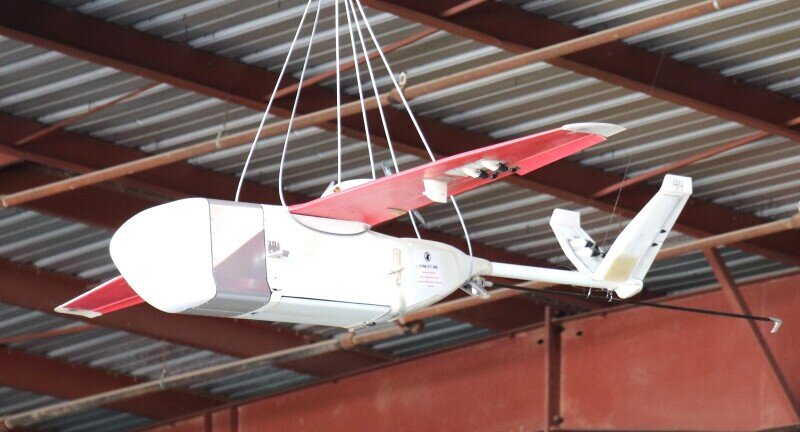
Instead of using motors to push air down for lift, a fixed-wing drone's motor provides forward thrust. This thrust pushes the drone through the air, and the shape of the wings creates a pressure difference that lifts the aircraft. This is the same fundamental principle of aerodynamics that allows a massive passenger jet to fly. The key takeaway is that they must always be moving forward to stay in the air.
A fixed-wing drone flies like an airplane, while a multi-rotor drone flies like a helicopter.
Trade-offs in Design
The design of a fixed-wing drone gives it a distinct set of advantages and disadvantages when compared to its multi-rotor cousins.
The biggest advantage is efficiency. Gliding is far less energy-intensive than constantly fighting gravity with spinning propellers. This means fixed-wing drones can stay in the air much longer and cover far greater distances. They are the marathon runners of the drone world, capable of flying for hours and covering hundreds of kilometers in a single trip.
However, this efficiency comes at the cost of maneuverability. Fixed-wing drones can't just stop and hover in place. They need to keep moving forward to generate lift. They also require either a runway for takeoff and landing or a special launcher, like a catapult. You can't just launch one from your backyard like a typical quadcopter.
| Feature | Fixed-Wing Drone | Multi-Rotor Drone |
|---|---|---|
| Lift Mechanism | Forward motion over wings | Downward thrust from propellers |
| Flight Time | Long (hours) | Short (minutes) |
| Range | Very long | Short |
| Takeoff & Landing | Requires runway or launcher | Vertical (VTOL) |
| Maneuverability | Low (cannot hover) | High (can hover, agile) |
Common Applications
Given their strengths, fixed-wing drones are the go-to choice for tasks that involve covering large areas. Their endurance makes them perfect for missions where stopping and starting isn't necessary.
One of the most common uses is in agriculture. A fixed-wing drone can fly over massive farms to monitor crop health, assess irrigation needs, or create detailed maps of the terrain. This would take a multi-rotor drone countless battery swaps to accomplish.
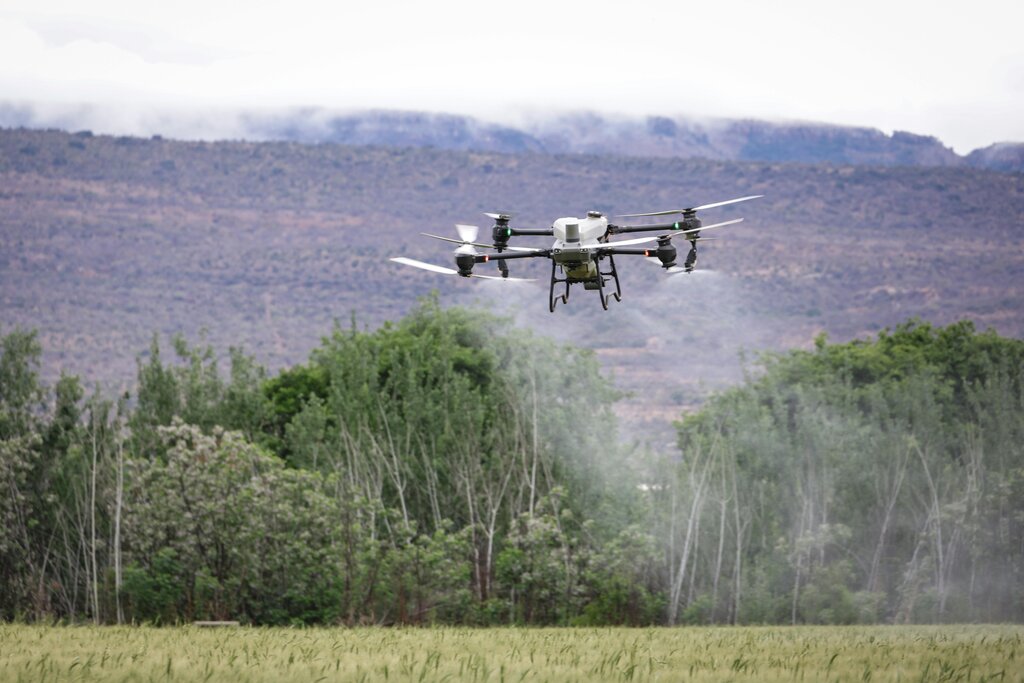
They are also essential for large-scale surveying and mapping, from monitoring pipelines and power lines to tracking coastal erosion. In disaster response, they can quickly survey a wide area to assess damage. Long-range delivery is another growing field, with companies using fixed-wing drones to transport medical supplies to remote locations where speed and range are critical.
What is the primary mechanism fixed-wing drones use to generate lift?
True or False: A major advantage of fixed-wing drones is their ability to hover in a single spot for detailed inspection.
In short, if a job requires endurance and covering a lot of ground, a fixed-wing drone is almost always the right tool.