Building Your First AI Agent
Introduction to AI Agents
Meet the AI Agent
At its core, an AI agent is a system that observes its environment and decides on the best action to take. Think of it as an autonomous entity, like a robot vacuum cleaner or a smart thermostat. It uses sensors to perceive its surroundings—a camera, a microphone, a thermometer—and then uses actuators to act—wheels, a speaker, a heating element.
The main goal of an agent is to operate on its own to achieve a specific goal without a human constantly telling it what to do.
All AI agents share a few key characteristics that make them "intelligent."
- Autonomy: Agents can operate independently without direct human intervention. They have control over their own actions and internal state.
- Reactivity: They perceive their environment and respond to changes in it in a timely way. A self-driving car sees a red light and stops.
- Proactivity: Agents don't just react; they take initiative. A smart assistant might remind you about a meeting without you asking, based on your calendar.
- Social Ability: Agents can communicate with other agents (and sometimes humans) to achieve their goals. This could be as simple as two robot vacuums coordinating to clean a large house.
A Spectrum of Intelligence
Not all agents are created equal. They range from very simple to incredibly complex. We can think of them as a progression, with each type building on the capabilities of the last. Let’s use the example of a robot vacuum to see how they differ.
Simple Reflex Agents are the most basic type. They operate on a simple "if-then" rule. If the sensor detects dirt, the vacuum turns on. They don't have memory or consider past actions.
Model-Based Reflex Agents are a step up. They maintain an internal "model" or understanding of the world. Our robot vacuum might remember the layout of the room so it doesn't bump into the same chair over and over.
Goal-Based Agents think about the future. They don't just react; they have a specific goal. The vacuum's goal is to clean the entire house. It will make decisions—like turning left instead of right—based on which action will get it closer to achieving that goal.
Utility-Based Agents choose actions that maximize their "utility," or happiness. For a vacuum, this might mean finding the most efficient path to clean the house to save battery life. If two paths lead to a clean floor, it will choose the shorter one.
Learning Agents are the most advanced. They can improve their performance over time. A learning vacuum might notice that the area around the kitchen table gets dirty every day and learn to clean that spot more frequently. It adapts its strategy based on experience.
Agents in the Wild
You interact with AI agents every day, even if you don't realize it. They are the technology behind many modern conveniences.
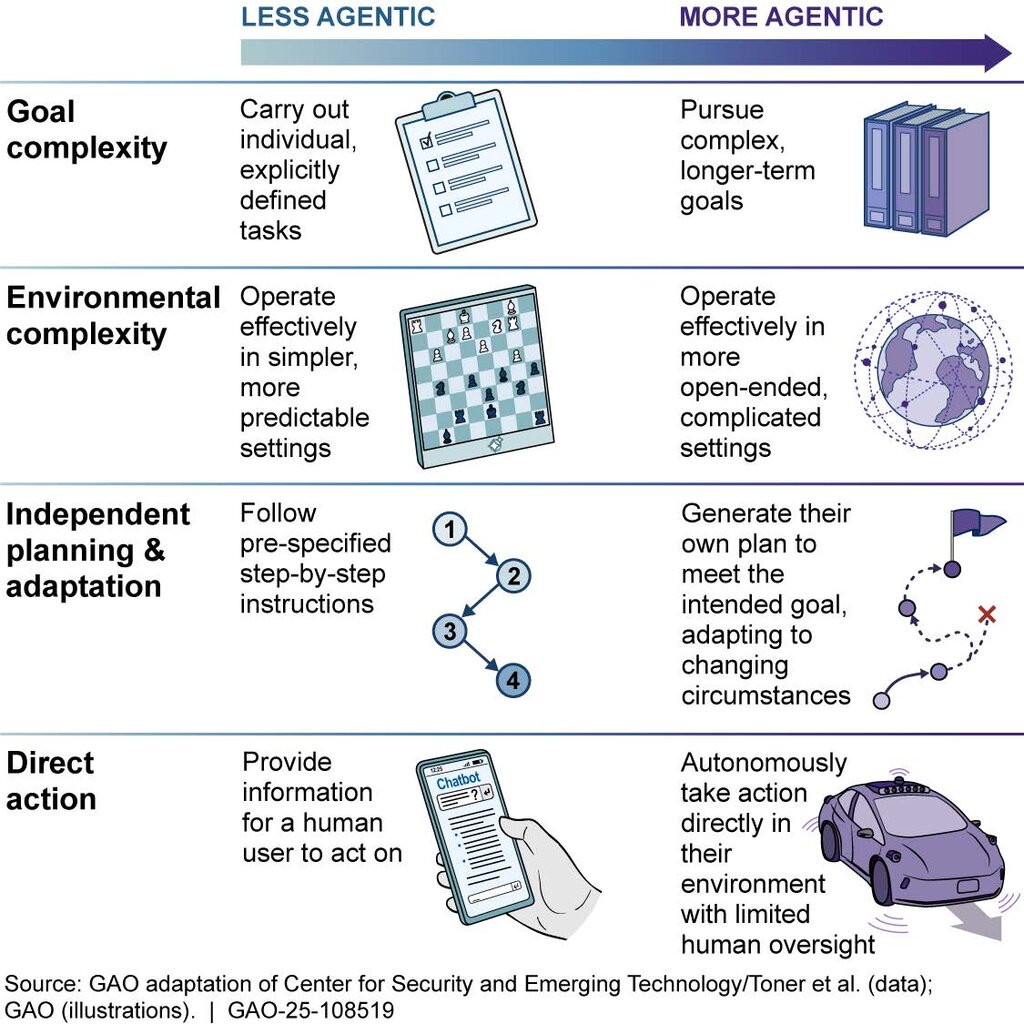
Customer support chatbots are often model-based or goal-based agents. They understand your query (the environment), search a knowledge base (their internal model), and provide an answer to solve your problem (their goal).
Autonomous vehicles are highly complex utility-based and learning agents. They process huge amounts of sensor data to navigate safely, choosing actions that maximize safety and efficiency while learning from every trip.
Virtual assistants like Siri and Alexa are also sophisticated agents. They listen for commands, understand your intent, and interact with other software (other agents) to book appointments, play music, or answer questions.
Ready to check your understanding?
At its most fundamental level, what does an AI agent do?
A self-driving car suddenly brakes to avoid a pedestrian who stepped onto the road. Which key characteristic of an AI agent is most clearly demonstrated here?
These agents, from the simplest thermostat to a complex self-driving car, are the building blocks that allow AI to actively participate in and shape our world.