Building Muscle Strength
Muscle Anatomy
The Building Blocks of Movement
Your muscles are complex structures, intricately designed for movement. At their core, they are made of bundles of long, thin cells called muscle fibers. Think of a large rope made from many smaller threads woven together. The rope is the muscle, and each thread is a muscle fiber.
These fibers are what contract and relax to create motion, from the blink of an eye to a powerful jump. But not all muscle fibers are the same. They come in different types, each specialized for a particular kind of work.
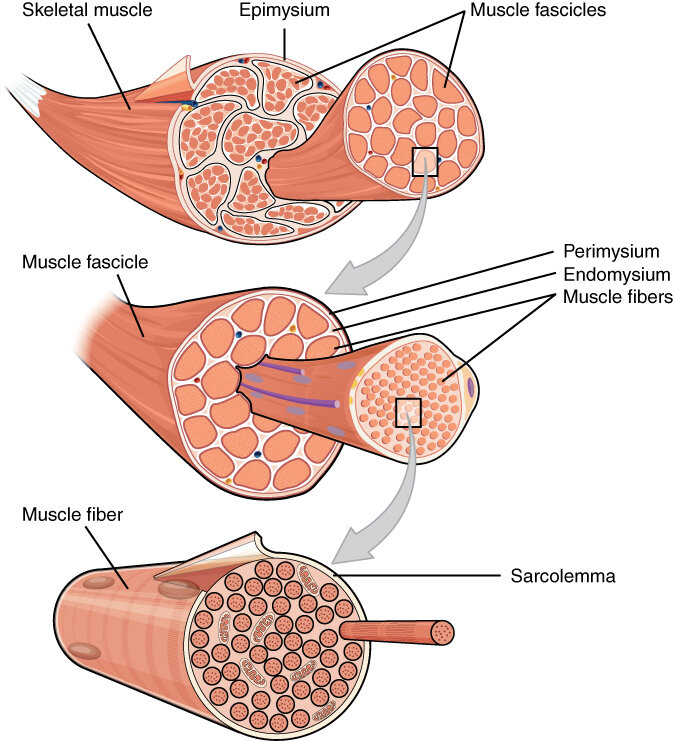
Slow-Twitch and Fast-Twitch Fibers
The two main categories of muscle fibers are slow-twitch and fast-twitch. Your body has a mix of both, but the ratio can vary from person to person and muscle to muscle.
Slow-twitch fibers (Type I) are your body's marathon runners. They are built for endurance and can work for long periods without getting tired. They use oxygen efficiently to generate fuel, which is why they are dense with capillaries and appear reddish. Activities like long-distance running, cycling, or holding a yoga pose rely heavily on these fibers.
Fast-twitch fibers (Type II) are the sprinters. They contract quickly and powerfully, providing short bursts of strength. They don't use oxygen for fuel, so they fatigue much faster. These fibers are essential for activities like lifting heavy weights, sprinting, or jumping. Because they have fewer blood vessels, they appear paler or whitish.
| Feature | Slow-Twitch (Type I) | Fast-Twitch (Type II) |
|---|---|---|
| Contraction Speed | Slow | Fast |
| Fatigue Resistance | High | Low |
| Primary Fuel | Oxygen | Stored energy (Glycogen) |
| Appearance | Red | White |
| Best For | Endurance activities | Power and strength |
| Example | Marathon running | Sprinting |
How Your Brain Calls the Shots
Muscles don't decide to contract on their own. They take orders from your nervous system. The process starts in your brain, which sends an electrical signal down your spinal cord to specialized nerve cells called motor neurons.
Each motor neuron connects to a group of muscle fibers at a point called the neuromuscular junction. When the signal from the motor neuron arrives, it releases a chemical messenger that tells the muscle fibers to contract. It's like flipping a switch: the signal arrives, and the muscle instantly responds.
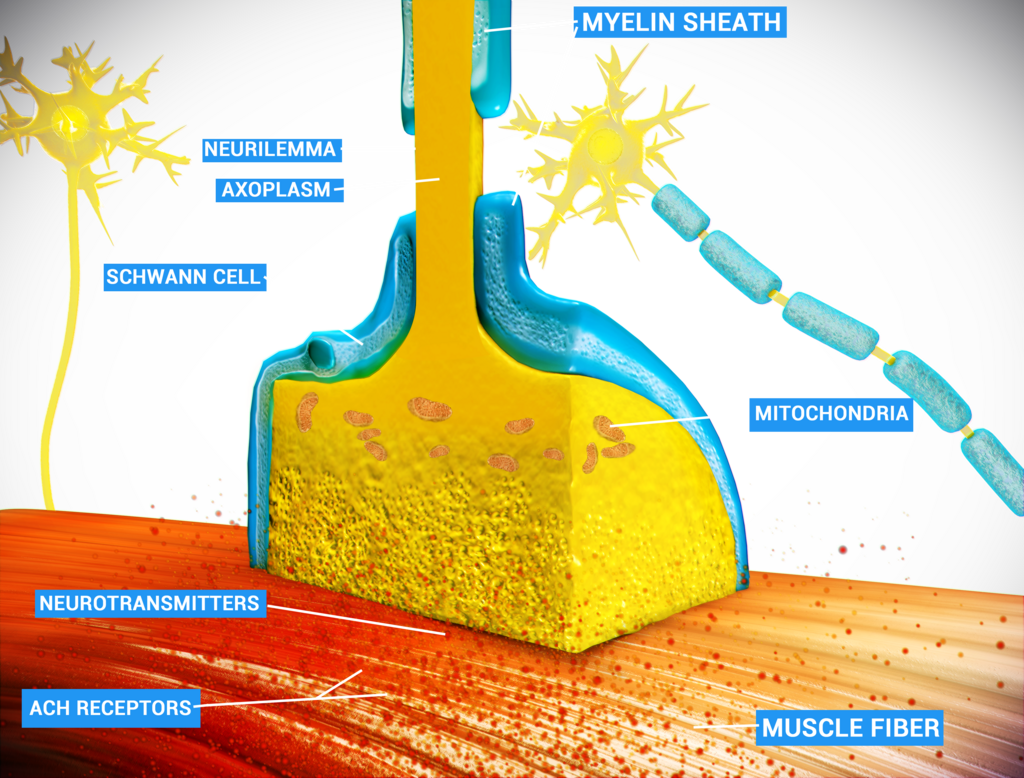
A single motor neuron and all the muscle fibers it controls form a 'motor unit.' Motor units can be small, with just a few fibers for fine control (like in your fingers), or large, with thousands of fibers for powerful movements (like in your thighs).
Recruiting Your Muscle Team
Your body is incredibly efficient. It doesn't use more energy than it needs to. This principle applies to how it uses, or "recruits," muscle fibers.
For low-effort tasks, like picking up a pencil, your brain only recruits a few small motor units, which are typically made of slow-twitch fibers. These are easy to activate and don't tire quickly, making them perfect for everyday actions.
But what if you need to lift a heavy box? Your brain sends a stronger signal. This signal activates the slow-twitch fibers first, and then, as more force is required, it calls in the big guns: the larger motor units containing the powerful fast-twitch fibers. This orderly process is called muscle fiber recruitment. Your body always starts with the smallest, most efficient fibers and adds larger, more powerful ones only as needed.
Now, let's test what you've learned about the building blocks of strength.
Which type of muscle fiber is characterized by its endurance, efficient oxygen use, and reddish appearance?
An athlete performs a single, explosive powerlift. Which muscle fibers are primarily recruited LAST to complete this lift?
Understanding these fundamentals—from the different fiber types to how your brain controls them—is the first step in learning how muscles function and adapt.