Building Lasting Family Wealth Through Investment
Investment Basics
What Is Investing?
At its core, investing is the act of using your money to buy something with the hope that it will be worth more in the future. Think of it as putting your money to work for you. While saving is about safely stashing away cash for short-term needs, investing is about growing your wealth over the long term.
Investing
verb
The act of allocating money with the expectation of generating a future income or profit.
The goal is for your investments to generate a return, which is the profit you make. This can come in different forms, such as price appreciation (the asset becomes more valuable) or income (like dividends from a stock or rent from a property).
Start With Your Goals
Before you invest a single dollar, it's crucial to know why you're investing. Your financial goals determine your investment strategy, including how much risk you can afford to take and how long you should stay invested. Without clear goals, you're just navigating without a map.
When defining your investment strategy, it’s important to reflect on what wealth means to you, what your short-term and long-term goals are, determine your target net worth and decide on the level of risk you are comfortable with.
Goals can be broken down by their time horizon.
| Time Horizon | Timeframe | Example Goals |
|---|---|---|
| Short-Term | 1-3 years | Vacation, new car, emergency fund |
| Medium-Term | 3-10 years | Down payment for a house, starting a business |
| Long-Term | 10+ years | Retirement, children's education |
Your time horizon is critical. If you need your money back in two years for a down payment, you'd likely choose less risky investments than if you were saving for retirement 30 years away. A longer timeframe gives your investments more time to recover from any downturns in the market.
Risk, Return, and Inflation
Investing always involves a trade-off between risk and return. In simple terms, risk is the chance that you could lose some or all of your original investment. Return is the money you make on your investment. Generally, the higher the potential return, the higher the risk involved.
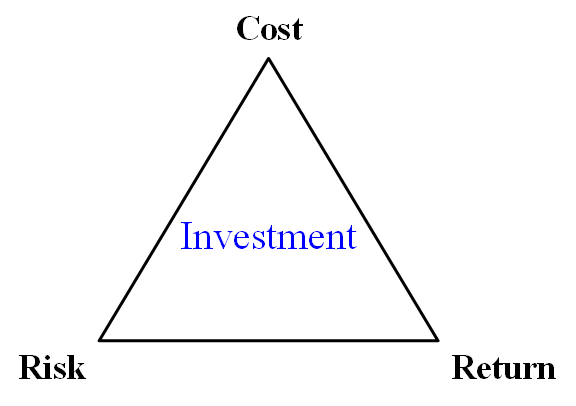
This relationship is fundamental. An investment that seems to offer high returns with no risk is almost always too good to be true. Your willingness to take on risk is called your risk tolerance. This depends on your financial goals, time horizon, and personal comfort with uncertainty. Someone close to retirement will likely have a lower risk tolerance than a recent college graduate.
There's another factor you must account for: inflation.
Inflation
noun
The rate at which the general level of prices for goods and services is rising, and subsequently, purchasing power is falling.
Inflation is the silent force that erodes the value of your money over time. If inflation is 3% per year, your money needs to earn more than 3% just to maintain its purchasing power. Money sitting in a low-interest savings account might actually be losing value when you account for inflation. This is a primary reason why investing is so important for building long-term wealth.
Where Can You Invest?
The things you can invest in are called assets. Different types of assets, known as asset classes, have different risk and return characteristics. Here are some of the most common ones:
Stocks: A stock (or share) represents a small piece of ownership in a public company. When you buy a stock, you're betting on the company's future success. If the company does well, the value of your stock may rise. Stocks are generally considered higher-risk but offer higher potential long-term returns. They are best suited for long-term goals.
Bonds: When you buy a bond, you are essentially lending money to a government or a corporation. In return, they promise to pay you back the full amount on a specific date, with regular interest payments along the way. Bonds are typically less risky than stocks and provide a more predictable, but lower, return. They can provide stability to an investment portfolio.
Real Estate: This involves buying physical property, such as a rental apartment or commercial building, with the goal of generating income from rent or selling it for a profit later. Real estate can be a good hedge against inflation but often requires a large amount of capital and can be difficult to sell quickly.
Alternative Investments: This is a broad category that includes everything that isn't a stock, bond, or cash. Examples include commodities like gold and oil, private equity, venture capital, and collectibles like art or wine. These assets often have a low correlation with the stock and bond markets, but they can be complex, risky, and illiquid.
Most investors build a portfolio containing a mix of these asset classes. This strategy, known as diversification, helps manage risk. The idea is that if one asset class is performing poorly, another might be doing well, smoothing out your overall returns.
What is the primary purpose of investing?
Generally, investments with higher potential returns also come with higher risk.
Understanding these core concepts is the first step on your investment journey. By defining your goals, understanding the relationship between risk and return, and familiarizing yourself with the basic asset classes, you're building a solid foundation for making informed financial decisions.