Building Language Servers
Introduction to LSP
Smarter Coding, Simplified
Think about your favorite code editor. How does it know how to autocomplete your code, find definitions of functions, or highlight errors as you type? For a long time, the answer was complicated. Each editor, like VS Code or Sublime Text, had to build a separate, custom extension for every single programming language. An extension for Python in VS Code was totally different from one for Python in Atom.
This created a ton of redundant work. If you invented a new programming language, you'd have to convince the creator of every popular editor to build support for it. It was a messy, inefficient system.
The Language Server Protocol (LSP) fixed this. It’s an open standard, originally developed by Microsoft, that acts as a universal translator between code editors and language-specific toolsets.
protocol
noun
A set of rules governing the exchange or transmission of data between devices.
With LSP, the system is split into two parts: the client and the server.
- The Client: This is your code editor or IDE (like VS Code, Neovim, or Eclipse).
- The Server: This is a separate program that deeply understands a specific programming language. The Python language server, for example, knows all about Python's syntax, libraries, and structure.
The client and server talk to each other using the protocol. When you type code, the client sends a message to the relevant language server, like "The user just typed . at this position." The server processes this and sends a message back with a list of autocomplete suggestions. All this communication happens over a standardized format called JSON-RPC.
The Benefits of a Standard
This separation of concerns has huge advantages. Language creators can now write a single language server, and it will work with any editor that supports LSP. Editor developers only need to implement the LSP client once to support dozens of languages.
For developers, this means we get powerful, consistent, IDE-like features for almost any language in our editor of choice. Features like smart code completion, go-to-definition, finding all references to a function, and real-time error checking are no longer exclusive to big, monolithic IDEs.
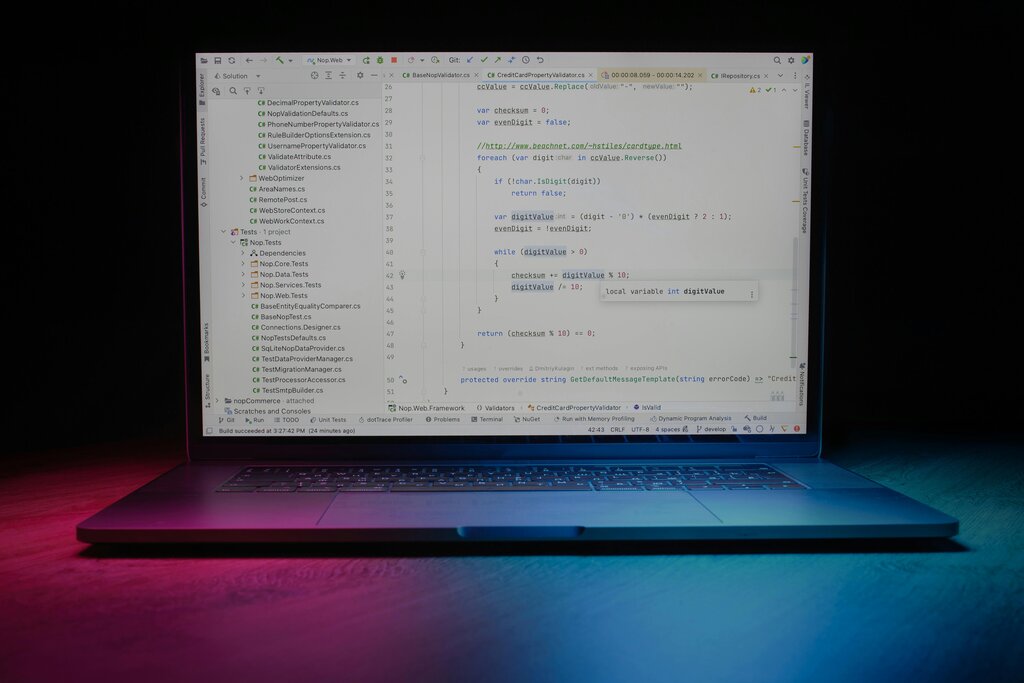
LSP decouples language-specific intelligence from the code editor, allowing the two to evolve independently.
This model allows a small team—or even a single person—to create a new programming language and provide a world-class editing experience from day one. They just need to build a language server, and the entire ecosystem of LSP-compatible editors is immediately available to their users.
Now, let's test your understanding of these core concepts.
What was the primary problem the Language Server Protocol (LSP) was designed to solve?
In the LSP architecture, which component is the 'client'?
By acting as a common language, LSP has revolutionized development tooling, making it more powerful and accessible for everyone.