Building Language Models with Andrej Karpathy
Introduction to Language Models
What Are Language Models?
At its heart, a language model is a tool that understands and generates human language. Think of it as a very advanced version of the autocomplete on your phone. Its fundamental job is to predict the next word in a sequence. Given the phrase "The cat sat on the...", a good language model knows that "mat" is a highly probable next word.
This simple predictive ability is the foundation for everything language models do, from translating languages to writing poems and answering complex questions.
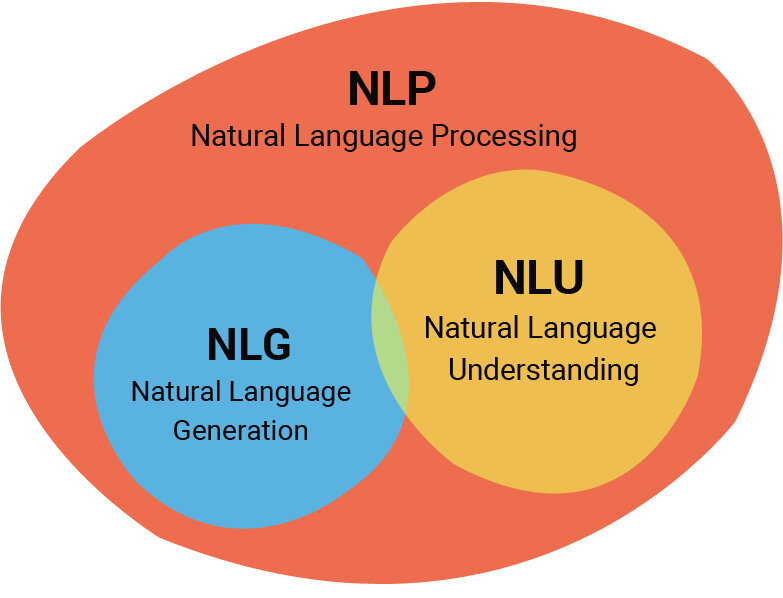
By repeatedly predicting the next word, these models can generate entire sentences, paragraphs, and articles. This core function allows them to perform a wide range of tasks within the field of Natural Language Processing (NLP), which is all about enabling computers to understand and use human language.
A Quick History
Language models aren't a new invention. Their journey began with simpler, statistical methods.
Early models, known as n-gram models, worked by counting. An n-gram is just a sequence of 'n' words. A 2-gram (or bigram) model would look at a two-word phrase like "thank you" and calculate the probability of the next word being "very" or "for" based on how many times it saw those sequences in its training data. It was a game of raw statistics.
| Model Type | How it Works | Limitation |
|---|---|---|
| Statistical (n-gram) | Calculates the probability of the next word based on the frequency of the preceding 'n' words. | Lacks deep context; can't understand grammar or meaning beyond simple word association. |
| Neural Network | Learns complex patterns and relationships between words using interconnected layers. | Requires vast amounts of data and computational power to train. |
These statistical models were useful but limited. They didn't truly understand language; they just knew which words tended to follow others. They struggled with long-range context and grammatical complexity.
The big leap forward came with the introduction of neural networks. Instead of just counting word frequencies, neural network-based models learn the relationships between words. They create numerical representations, called embeddings, for words that capture their meaning and how they relate to other words. This allows them to grasp context, syntax, and nuance in a much more sophisticated way.
Basic Architecture
So, how does a modern language model actually work? While the specifics can be incredibly complex, the basic process can be broken down into a few key stages.
-
Input & Embedding: First, the model takes a piece of text. Since computers work with numbers, not words, it converts each word into a unique set of numbers called a vector or an "embedding." This isn't just a random assignment; the embedding captures the word's meaning and its relationship to other words. For example, the embeddings for "king" and "queen" would be mathematically closer than the embeddings for "king" and "apple."
-
Processing: The embeddings are then fed into the neural network. This network is made of many interconnected layers of nodes, loosely inspired by the human brain. As the data passes through these layers, the network analyzes patterns, context, and grammatical structures.
-
Output: Finally, after all that processing, the model outputs a probability score for every word in its vocabulary, indicating how likely each word is to be the next one in the sequence. The word with the highest probability is chosen as the prediction.
What Are They Used For?
The simple act of predicting the next word unlocks a huge range of applications that are changing how we interact with technology.
Text Generation: This is the most direct application. Language models can write emails, create marketing copy, draft stories, and even generate computer code.
Machine Translation: By learning patterns from texts in multiple languages, models like Google Translate can convert text from one language to another with increasing accuracy.
Sentiment Analysis: Businesses use language models to analyze customer reviews or social media posts to determine if the sentiment is positive, negative, or neutral.
Summarization: They can read a long article or document and provide a short, coherent summary, saving time and effort.
These are just a few examples. As language models become more powerful, they are being integrated into chatbots, search engines, and countless other tools we use every day.
Ready to test your understanding? Let's see what you've learned.
What is the fundamental task of a language model?
How did early statistical language models, known as n-gram models, primarily work?
This foundational understanding of what language models are and how they evolved sets the stage for exploring the more advanced architectures that power today's most capable AI systems.