Building Better Habits
Understanding Habits
The Architecture of Habit
Think about your morning. Did you roll out of bed, stumble to the coffee maker, and scroll through your phone without much conscious thought? These actions are habits: automated behaviors that we perform with little to no deliberation. They are the brain's way of saving energy. By creating shortcuts for frequent tasks, the brain frees up mental resources for more complex challenges.
Habit
noun
A settled or regular tendency or practice, especially one that is hard to give up.
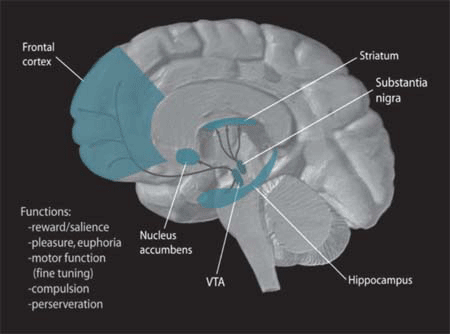
This automation happens in a part of the brain called the basal ganglia. When you perform an action repeatedly, especially if it results in a positive feeling, your brain strengthens the neural pathways associated with that action. Over time, the behavior becomes so ingrained that it happens on autopilot. You don't decide to do it; it just happens in response to a certain trigger.
The Habit Loop
If there is only one thing to remember about habits, it is this habit cycle:
This cycle is a simple neurological loop at the core of every habit. It consists of three parts that work together to create and sustain our automatic behaviors.
The reward is the most critical part of the loop. When you experience a reward, your brain releases dopamine, a neurotransmitter associated with pleasure and motivation. This dopamine hit tells your brain, "Hey, that was good. Remember what you just did so you can do it again." This reinforcement is what makes the cue-routine connection stronger over time, eventually turning the behavior into an automatic habit.
How Long Does It Take?
You might have heard the popular idea that it takes 21 days to form a new habit. While it’s a catchy number, it's a simplification. The reality is more complex.
A 2009 study published in the European Journal of Social Psychology found that the time it took for a new habit to feel automatic varied widely, from 18 to 254 days. The average time was 66 days. This shows that there is no magic number.
The time to form a habit depends on the person, the behavior, and the circumstances. Simple habits form faster than complex ones.
What influences this wide range? A few key factors are at play. Consistency is the most important. Missing a day here and there won’t derail your progress, but frequent skips make it much harder for the neural pathway to solidify. The complexity of the habit also matters. Drinking a glass of water after waking up is simpler to automate than going for a 30-minute run. Finally, the strength of the reward plays a huge role. If the behavior provides a strong, immediate sense of satisfaction, the habit loop will be reinforced much more quickly.
Let's check your understanding of how habits work.
Which part of the brain is primarily responsible for automating habitual behaviors?
What is the primary function of the reward in the habit loop?
Understanding the mechanics of habits is the first step. It's not about willpower or motivation alone; it's about understanding and working with your brain's natural tendency to create shortcuts.