Building and Adapting Large Language Models
Introduction to Large Language Models
What Are Large Language Models?
At its heart, a large language model (LLM) is a sophisticated text-prediction engine. Think of the autocomplete on your phone, but amplified a billion times. Instead of just guessing the next word, an LLM predicts the most probable sequence of words to follow a given prompt, allowing it to generate entire paragraphs, answer complex questions, and even write code.
A Large Language Model (LLM) is a type of artificial intelligence program designed to understand, generate, and work with human language.
The "large" in their name refers to two things: the enormous amount of text data they are trained on (think vast swathes of the internet) and the massive number of parameters they contain. A parameter is like a knob or a dial the model can tune during training. With billions of these parameters, LLMs can capture incredibly subtle patterns, grammar, facts, and reasoning styles from the data they learn from. This allows them to grasp context and nuance in a way that previous language technologies simply couldn't.
The Transformer Breakthrough
For years, a key challenge in AI was understanding long-range context in text. Early models could remember a few words back, but would quickly lose the thread in a long paragraph. Imagine trying to understand a story by only remembering the last five words you read. You'd miss the plot entirely.
A revolutionary architecture called the Transformer, introduced in 2017, solved this problem. Instead of processing words one by one in sequence, the Transformer can look at every word in a sentence at the same time. It uses a mechanism called "attention" to weigh the importance of different words when processing any single word. For example, in the sentence "The robot picked up the heavy wrench because it was strong," the attention mechanism helps the model understand that "it" refers to the robot, not the wrench.
This ability to manage context over long stretches of text is the key that unlocked the power of modern LLMs.
How LLMs Learn
Training an LLM is a massive undertaking. It begins with a process called pre-training. During this phase, the model is fed an immense dataset of text and its only job is to learn to predict the next word in a sequence. It's like giving someone a library with millions of books where some words are blanked out, and asking them to fill in the blanks.
For example, if the model sees the sentence "The cat sat on the ____", it might first guess "table" or "floor". By comparing its prediction to the actual word ("mat"), it slightly adjusts its internal parameters to make a better guess next time. This process is repeated billions of times across all the training data. Through this simple objective, the model learns grammar, facts, and even reasoning abilities.
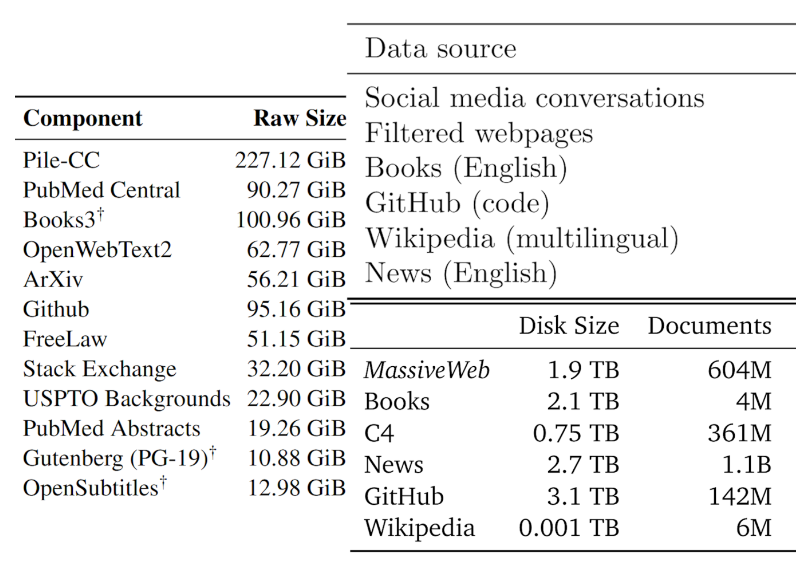
This training process is computationally expensive, requiring thousands of powerful processors running for weeks or months. The sheer scale of data and computation is what allows LLMs to develop such a comprehensive understanding of human language.
What Can LLMs Do?
The generalized nature of their training gives LLMs a surprisingly wide range of abilities. They are not programmed for specific tasks, but their deep understanding of language allows them to excel in many areas.
Text Generation: Writing emails, articles, marketing copy, and creative stories. Translation: Translating languages with more fluency and contextual awareness than older tools. Question Answering: Extracting answers from a provided text or drawing on its internal knowledge to respond to queries. Summarization: Condensing long documents into brief, coherent summaries. Code Generation: Writing snippets of code based on a natural language description.
These capabilities have led to LLMs being integrated into search engines, customer service chatbots, productivity software, and countless other applications. They represent a fundamental shift in how we interact with information and technology.
Let's check your understanding of these core concepts.
At its most fundamental level, what is a large language model (LLM) designed to do?
The 'large' in Large Language Model refers to two main aspects. What are they?