Building AI Apps with Foundational Models
Introduction to Foundation Models
What Are Foundation Models?
A foundation model is a large-scale artificial intelligence model trained on a massive amount of broad, unlabeled data. Think of it less like a specialized tool and more like a highly skilled apprentice who has read a giant library of books on every topic imaginable. This apprentice doesn't just memorize facts; it learns the underlying patterns, structures, and relationships within the data.
Because of this extensive, generalist training, a single foundation model can be adapted to perform a wide variety of tasks, from writing an email to generating computer code or creating an image from a text description. This adaptability is what makes them a “foundation” upon which many different, more specific AI applications can be built.
It is widely believed that foundation models will serve as the fundamental building blocks for future AI systems.
Their significance lies in this shift from single-purpose models to multi-purpose platforms. Instead of building a new AI model from scratch for every new problem, developers can start with a powerful foundation model and fine-tune it for a specific use case. This approach saves enormous amounts of time and resources, making sophisticated AI more accessible.
A New Kind of AI
To appreciate what makes foundation models special, it helps to compare them with the traditional machine learning (ML) models that came before them. Traditional models are specialists. You might train one model specifically to detect spam emails, another to recognize faces in photos, and a third to translate French to English. Each model is trained on a narrow, carefully labeled dataset and can only perform the one task it was designed for.
Foundation models are generalists. By training on vast swaths of the internet, they learn a bit about everything. The same model that can summarize a news article can also write a poem or answer a complex question about biology. It wasn't explicitly trained for any of these tasks, but it learned the patterns of language and information so well that it can handle them all.
| Traditional ML Model | Foundation Model | |
|---|---|---|
| Scope | Narrow, single task (e.g., sentiment analysis) | Broad, many tasks (e.g., chat, summarize, code) |
| Data | Small, labeled dataset | Massive, unlabeled dataset |
| Training | Trained from scratch for a specific task | Pre-trained on general data, then fine-tuned |
| Flexibility | Inflexible, cannot perform new tasks | Highly adaptable to new, unseen tasks |
The Transformer Architecture
The key technological breakthrough that enabled foundation models is an architecture called the Transformer. Originally developed for language translation, the Transformer is exceptionally good at handling sequential data like text. Its core innovation is a mechanism called “attention,” which allows the model to weigh the importance of different words in a sentence and understand their context and relationships, even if they are far apart.
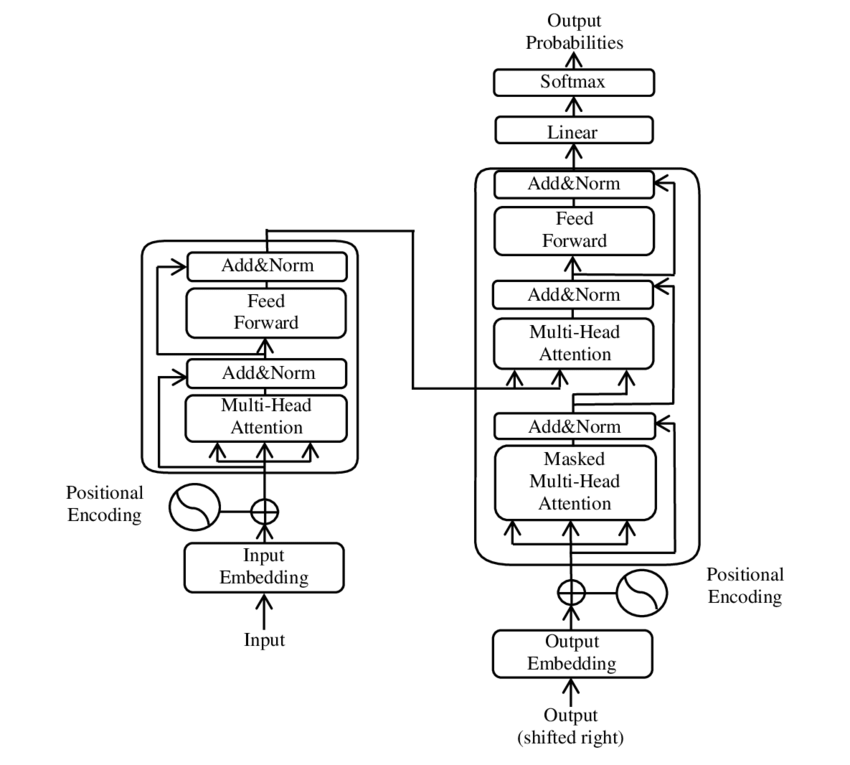
This ability to grasp context is crucial. It's what allows a model to understand that the word “bank” means something different in “river bank” versus “savings bank.” By applying this mechanism at a massive scale, Transformer-based models can learn intricate patterns in language, images, and code, forming the powerful base of today's foundation models.
Foundation Models in the Wild
You've likely already interacted with applications built on foundation models. They power many of the generative AI tools that have recently become popular.
-
GPT Series (Generative Pre-trained Transformer): These are language models that excel at understanding and generating human-like text. They are the foundation for chatbots like ChatGPT, writing assistants, and summarization tools.
-
BERT (Bidirectional Encoder Representations from Transformers): This model is particularly good at understanding the context of words in a sentence. Google uses it to better understand search queries.
-
DALL-E & Midjourney: These are text-to-image models. They take a written description and generate a corresponding image, showcasing their ability to connect language concepts with visual representation.
These models represent a fundamental change in how we can build AI systems, moving us toward more capable and versatile artificial intelligence.
Let's check your understanding of these core concepts.
What is the primary characteristic that distinguishes a foundation model from a traditional machine learning model?
The core technological innovation that enabled the development of powerful foundation models is called the 'attention' mechanism. What does this mechanism allow the model to do?
Foundation models provide a versatile and powerful base for a new generation of AI tools.