Building AI Agents
Introduction to AI Agents
What Is an AI Agent?
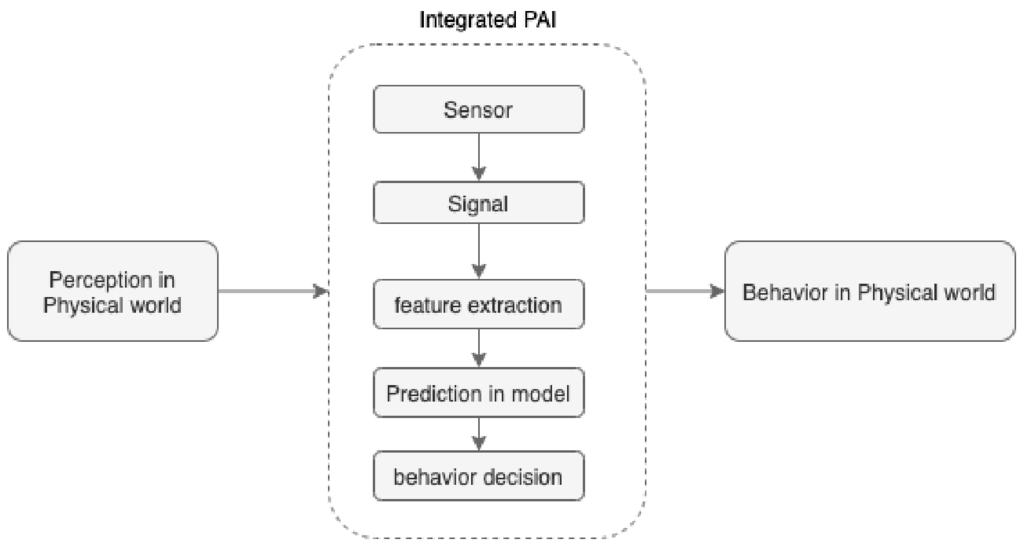
At its core, an AI agent is a system that can perceive its environment, make decisions, and take actions to achieve specific goals. Think of it less like a simple tool and more like an autonomous helper. Instead of just following a rigid set of instructions, an agent can operate independently to get a job done.
At their heart, AI agents are autonomous systems powered by artificial intelligence that perceive their environment, process data, and take actions to achieve specific goals, without constant human oversight.
What makes a program an agent? It comes down to a few key characteristics:
- Autonomy: Agents can operate on their own without direct human control. You give them a goal, and they figure out the steps to reach it.
- Reactivity: They can perceive their environment and respond to changes in real time.
- Pro-activeness: Agents don't just wait for something to happen. They take initiative to achieve their goals.
These traits allow agents to handle complex, multi-step tasks that go far beyond what a simple program can do.
Agents vs. Traditional AI
You've likely interacted with traditional AI, like a chatbot that answers specific questions or a recommendation algorithm that suggests movies. These systems are powerful, but they're mostly reactive. They wait for your input and provide a direct output.
AI agents are a step beyond that. They are given a broader objective and can plan and execute a series of actions to accomplish it. The key difference is the ability to reason and act over time, not just respond to a single prompt.
| Feature | Traditional AI System | AI Agent |
|---|---|---|
| Operation | Responds to direct prompts | Pursues long-term goals |
| Scope | Executes a single, defined task | Completes multi-step, complex tasks |
| Autonomy | Requires human input for each step | Operates independently |
| Example | Translating a sentence | Planning and booking an entire vacation |
This ability to plan and act makes agents uniquely suited for tasks that require strategy and adaptation.
Types of AI Agents
Not all agents are created equal. They fall into different categories based on how they make decisions. Let's look at the three main types.
Reactive Agents These are the simplest agents. They operate on a simple "if-then" logic, reacting directly to what they perceive in the moment. They don't have a memory of past events or a complex internal model of the world. A good example is a thermostat; if the temperature drops below a certain point, it turns on the heat.
Reactive agents are fast and reliable for simple tasks but can't handle situations that require planning or context.
Deliberative Agents These agents are more sophisticated. They maintain an internal model of the world and can think ahead, planning a sequence of actions to achieve their goals. They consider the consequences of their actions before they take them. A GPS navigation app is a deliberative agent. It uses a map (its world model) to plan the best route to your destination.
Deliberative agents are excellent planners, but their decision-making process can be slower, which isn't ideal for situations requiring split-second reactions.
Hybrid Agents As the name suggests, hybrid agents combine the best of both worlds. They have a reactive layer for quick, instinctual responses and a deliberative layer for long-term planning. This layered approach allows them to handle complex, dynamic environments effectively. A self-driving car is a perfect example. It needs to react instantly to a sudden obstacle (reactive) while simultaneously planning its overall route (deliberative).
Agents in the Real World
AI agents are already at work across many industries, often behind the scenes. They're not just a futuristic concept; they're solving real problems today.
In finance, agents automate stock trading by analyzing market data, predicting trends, and executing trades to meet investment goals. They can process vast amounts of information far faster than any human.
In healthcare, agents help manage patient appointments, monitor health data from wearable devices, and even assist in diagnostics by analyzing medical images for signs of disease.
In customer service, sophisticated agents manage complex queries that go beyond a simple chatbot. They can access customer history, process returns, and update orders, all without human intervention.
And in logistics, agents optimize supply chains by tracking shipments, managing warehouse inventory, and rerouting deliveries in response to traffic or weather delays. Each of these applications relies on an agent's ability to perceive a situation, decide on a course of action, and execute it autonomously.
Ready to test your knowledge?
What is the primary function that defines an AI system as an 'agent'?
An AI agent that takes initiative to achieve its goals, rather than simply waiting for something to happen, is demonstrating which key characteristic?