Building AI Agents
Introduction to AI Agents
What Is an AI Agent?
An AI agent is a system that can observe its environment, make decisions, and take actions to achieve a specific goal. Think of it as an autonomous entity that does things. A simple thermostat is a basic agent. It senses the room's temperature (environment), decides if it's too hot or cold (decision), and turns the heat or AC on or off (action).
Agent
noun
An entity that perceives its environment through sensors and acts upon that environment through actuators.
All agents, from simple to complex, follow a fundamental loop: they perceive, think, and act. The 'thinking' part is what makes them intelligent. The agent's architecture enables this loop.
This diagram shows the core components. Sensors gather information from the environment, like a camera on a car or a microphone on a smart speaker. Actuators are what the agent uses to perform actions, like the wheels of a car or the speaker that plays music. The environment is the world the agent operates in, which can be physical, like a factory floor, or virtual, like a chessboard or the internet.
Types of AI Agents
Agents come in different flavors, depending on how they make decisions. Their complexity ranges from simple reactive machines to systems that can learn and adapt.
Simple Reflex Agent This is the most basic type. It makes decisions based only on the current situation, ignoring past events. It follows simple "if-then" rules. A robotic vacuum that changes direction only when it bumps into a wall is a simple reflex agent.
Model-Based Reflex Agent A step up in complexity, this agent maintains an internal 'model' of the world. It uses this model to keep track of things it can't see right now. For example, our robotic vacuum might remember where it has already cleaned, building a map of the room to avoid repeating its path. This internal state helps it make better decisions.
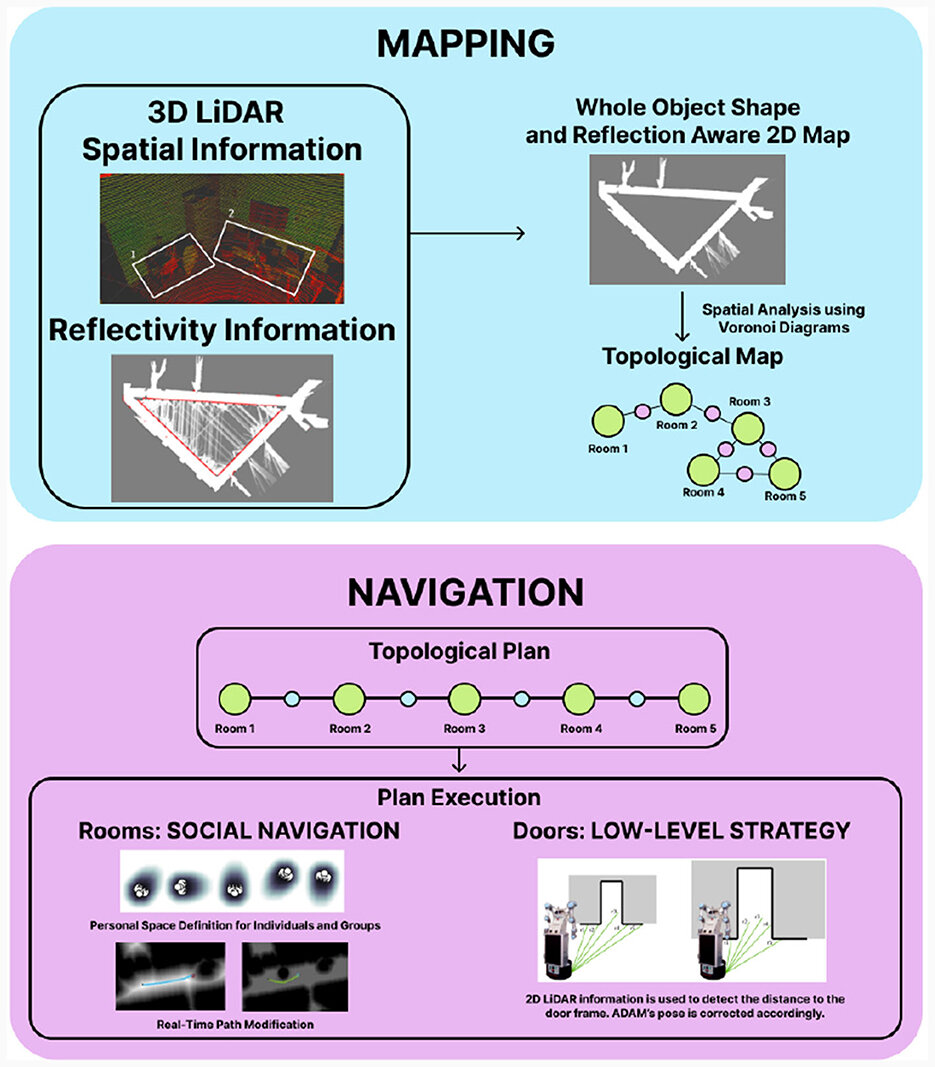
Goal-Based Agent This type of agent has a specific goal it wants to achieve. Its decisions are based on actions that will bring it closer to that goal. Think of a GPS navigation app. Its goal is your destination. It considers different routes and traffic conditions to find a path that gets you there. The future matters to a goal-based agent.
Utility-Based Agent Sometimes, reaching a goal isn't enough. A utility-based agent aims to maximize its 'utility,' which is a way of measuring how good an outcome is. Our GPS app might be a utility-based agent if it tries to find the best route, not just any route. 'Best' could mean fastest, most fuel-efficient, or most scenic. It chooses the path with the highest utility score, making it happier, in a sense.
Learning Agent This is the most advanced type. A learning agent can improve its performance over time through experience. It has a 'learning element' that analyzes feedback and modifies its decision-making process. A spam filter is a classic example. When you mark an email as spam, the agent learns from this feedback to get better at catching similar emails in the future.
| Agent Type | How It Works | Example |
|---|---|---|
| Simple Reflex | If-then rules, based only on current perception. | Thermostat turning on heat when it's cold. |
| Model-Based | Uses an internal model of the world. | A self-driving car tracking other cars it can't currently see. |
| Goal-Based | Acts to achieve a specific goal. | A chess AI planning moves to checkmate the opponent. |
| Utility-Based | Aims to maximize its own 'happiness' or utility. | A trip planner finding the cheapest and fastest flight. |
| Learning | Improves its performance with experience. | A movie recommendation system learning your tastes. |
Agent Environments
An agent's environment is just as important as its internal programming. Environments can be described in several ways:
- Static vs. Dynamic: Does the environment change while the agent is thinking? A crossword puzzle is static. A busy highway is dynamic.
- Discrete vs. Continuous: Are the possible actions and states limited and distinct? Chess is discrete. Driving a car is continuous, with a smooth range of steering and acceleration options.
- Fully vs. Partially Observable: Can the agent see the entire state of the environment at all times? A chess game is fully observable. A poker game is partially observable because you can't see other players' cards.
- Single-agent vs. Multi-agent: Is the agent acting alone, or are there other agents in the environment? A robot navigating an empty warehouse is single-agent. A soccer game is multi-agent.
The type of environment heavily influences what kind of agent is needed for a task. A dynamic, partially observable, multi-agent world requires a much more complex agent than a static, fully observable, single-agent one.
Now that you understand the different kinds of agents and their worlds, let's test your knowledge.
What are the three fundamental steps in an AI agent's operation loop?
In a self-driving car, the cameras and lidar systems are examples of ______, while the steering wheel and brakes are examples of ______,
Understanding these foundational concepts of agents and environments is the first step to grasping how more complex AI systems perceive, reason, and interact with the world.