Building Agentic Workflows
Introduction to Agentic Workflows
What Are Agentic Workflows?
Imagine you're managing a project. In a traditional setup, you have tools you must operate directly. You use one program to gather data, another to analyze it, and a third to write a report. You are the one doing all the thinking and connecting the steps.
Now, imagine you have a team of autonomous specialists. You give the team a high-level goal, like "analyze last quarter's sales data and identify growth opportunities." The research specialist gathers the data, the analyst specialist crunches the numbers, and the writing specialist drafts the report. They coordinate with each other, solve small problems on their own, and only come back to you with the final result. That's the essence of an agentic workflow.
Agentic workflows use AI "agents" – specialized programs designed to reason, plan, and execute tasks to achieve a goal with minimal human intervention. Instead of just responding to a single prompt, these agents can handle complex, multi-step projects on their own.
Agentic AI, representing a shift from merely assistive technologies to autonomous systems capable of executing complex, multi-step tasks with minimal human oversight, stands at the forefront of this technological upheaval.
This approach is different from a simple chatbot. A chatbot reacts to your input. An AI agent, on the other hand, is proactive. It doesn't just answer a question; it takes action to complete a mission.
The Core Traits of an Agent
For an AI system to be considered an agent, it needs to possess a few key characteristics. These traits are what allow it to operate independently and effectively within a workflow.
| Trait | Description | Real-World Analogy |
|---|---|---|
| Autonomy | Operates without direct, constant human control. | A self-driving car navigating to a destination. |
| Reactivity | Senses and responds to changes in its environment. | A smart thermostat adjusting the temperature when a window is opened. |
| Proactivity | Takes initiative to achieve its goals. | A project manager who anticipates delays and reassigns tasks ahead of time. |
| Social Ability | Communicates and collaborates with other agents or humans. | A team of chefs coordinating in a busy kitchen to prepare a meal. |
These four traits work in concert. An agent uses autonomy to execute its plan, reactivity to adapt to new information, proactivity to stay on track toward its goal, and social ability to leverage the skills of other agents. This combination turns a simple tool into a dynamic, problem-solving partner.
Where Agentic Workflows Shine
The power of agentic workflows lies in their ability to automate not just simple tasks, but entire processes that require reasoning and decision-making. This makes them valuable across many different fields.
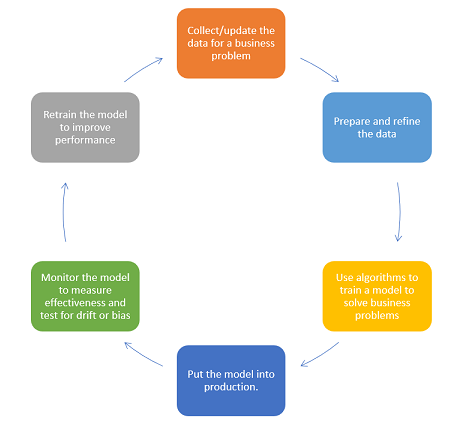
In software development, an agentic workflow could take a user's request for a new feature, write the necessary code, run tests to check for bugs, and even deploy the update. Multiple agents could collaborate: one for front-end design, one for back-end logic, and another for quality assurance.
For market research, you could task an agentic system with a goal like, "Find the top three competitors for a new fitness app and summarize their marketing strategies." An agent could scour the web for data, another could analyze social media sentiment, and a third could synthesize the findings into a concise report.
In content creation, a workflow could generate a blog post from a simple idea. One agent would research the topic, another would write a draft, a third would find or create relevant images, and a final agent would optimize the post for search engines.
Benefits and Hurdles
The primary benefit of agentic workflows is a massive boost in efficiency. By automating complex cognitive tasks, they free up human experts to focus on strategy, creativity, and high-level oversight. This can lead to faster project completion, more consistent output, and the ability to scale operations without a proportional increase in headcount.
However, implementing these systems comes with challenges. Building a reliable agentic workflow requires careful design to ensure agents understand their goals and can handle unexpected situations. There are also important considerations around control and trust. Since agents are autonomous, it's crucial to have safeguards in place to prevent errors and ensure their actions align with the intended objectives. As the technology matures, finding the right balance between agent autonomy and human oversight will be key.
What is the primary function of an agentic workflow?
Which of the following scenarios best illustrates the use of an agentic workflow?