Building Agentic Enterprises
Introduction to Agentic Organizations
The Rise of the Self-Driving Company
Imagine a business that can run itself. Not just automate simple tasks, but make complex decisions, adapt to market changes, and pursue goals with minimal human direction. This isn't science fiction; it's the concept behind an agentic organization.
An agentic organization uses a network of intelligent AI systems, or 'agents,' to manage and execute operations autonomously.
In a traditional company, decisions flow up and down a human hierarchy. This can be slow and rigid. In an agentic model, AI agents are empowered to act independently within their domains. A marketing agent might adjust ad spend in real-time based on performance data, while a supply chain agent could automatically reorder materials when inventory runs low. These agents communicate and coordinate with each other, creating a dynamic, self-managing system.
The Need for Speed and Autonomy
Why is this shift happening now? The business world is faster and more complex than ever. Relying solely on human decision-making for every operational detail creates bottlenecks. Autonomy is the key to keeping pace.
Think of it like the difference between a crewed ship and an autonomous drone. The ship requires a full crew, constant communication, and a captain to make every course correction. An autonomous drone, however, can be given a destination and navigate obstacles, adjust for weather, and optimize its path on its own. It's faster, more efficient, and can operate in conditions a human crew couldn't.
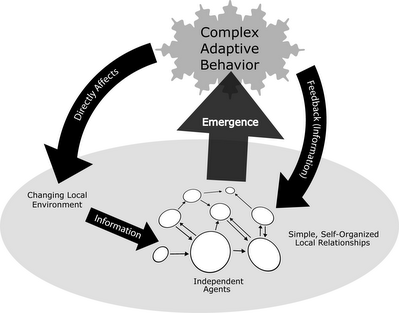
This is the power of autonomy in business. It allows an organization to react to opportunities and threats at machine speed, rather than human speed. This operational agility is becoming a critical competitive advantage.
What Does an Agentic Organization Look Like?
Agentic organizations are not defined by a single technology, but by a set of core principles that guide their operations. They are built to be intelligent, responsive, and goal-focused from the ground up.
Here are the key characteristics:
- Autonomous Decision-Making: AI agents are trusted to make operational decisions based on real-time data and predefined goals, freeing up human teams for more strategic work.
- Adaptive Operations: The organization can modify its workflows on the fly. If a supplier is delayed, the system automatically finds an alternative without waiting for a manager's approval.
- Integrated Systems: Departments are no longer silos. Agents share data across sales, marketing, logistics, and finance to create a single, coherent view of the business.
- Goal-Oriented Behavior: The entire organization is aligned toward clear objectives. Every action taken by an AI agent is a calculated step toward achieving a specific business outcome, whether it's increasing profit, improving customer satisfaction, or reducing waste.
The Benefits of Going Agentic
Adopting an agentic model is a major shift, but it comes with significant advantages that go beyond simple automation. The goal is to build an organization that is not just efficient, but also intelligent and resilient.
| Benefit | Description |
|---|---|
| Hyper-Efficiency | Automates complex workflows, not just tasks, reducing errors and operational costs. |
| Increased Resilience | Adapts instantly to disruptions like supply chain issues or sudden market shifts. |
| Faster Innovation | Frees human talent from routine management to focus on creativity and strategy. |
| Scalability | Grow operations without being limited by the speed of human hiring and training. |
Ready to check your understanding of these foundational concepts?
What is the primary characteristic that distinguishes an agentic organization from a traditional one?
The text compares an agentic organization to an autonomous drone. What key advantage does this analogy highlight?
By embracing autonomy and intelligent systems, businesses can evolve from rigid hierarchies into dynamic organisms that learn, adapt, and thrive.